Estate of Claudia Edwards Bethel v Attorney General of The Bahamas: Privy Council upholds vicarious liability ruling against immigration authorities
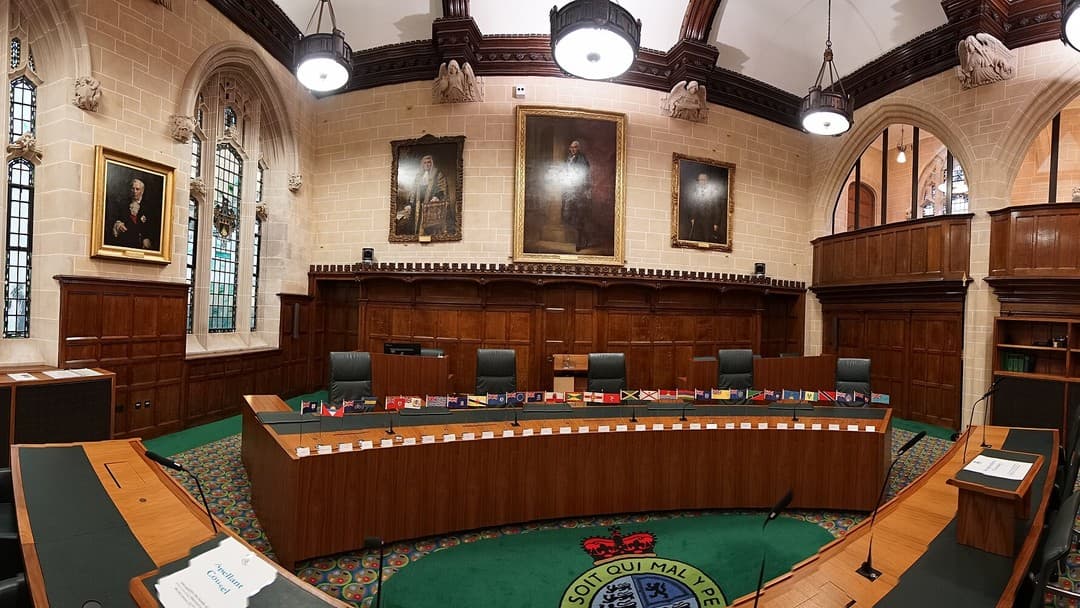
Bahamian state held liable for immigration officer's false imprisonment and rape of detained Jamaican woman.
The Judicial Committee of the Privy Council has dismissed the Bahamian state's appeal against findings that the arrest of a Jamaican woman was unlawful and that the immigration authorities were vicariously liable for the false imprisonment and rape she subsequently suffered at the hands of a senior immigration officer.
In The Estate of Claudia Edwards Bethel v Attorney General of The Bahamas and another [2026] UKPC 26, the Board upheld the Court of Appeal's decisions on both issues, confirming that the initial arrest of the late Claudia Bethel lacked lawful basis and that her employer's close connection test for vicarious liability was clearly satisfied on the facts.
The arrest and initial detention
In the early hours of 13 December 2014, police raided a bar in The Bahamas and arrested a group of Jamaican women for immigration purposes. Mrs Bethel, who held a copy spousal permit confirming her lawful status as the wife of a Bahamian national, was arrested alongside women who were suspected of unlawful entry in connection with exotic dancing. She produced her permit before arrest. She was nevertheless detained and transferred to an immigration detention centre later that afternoon, where she remained until the following Monday.
The Board, delivering its judgement jointly through Lord Burrows and Dame Amanda Yip, agreed with the Court of Appeal majority that the trial judge had erred in holding the arrest lawful. Section 9 of the Bahamas Immigration Act requires that an arresting officer have reasonable cause to suspect commission of an immigration offence and that immediate arrest be necessary to prevent the ends of justice being defeated. Neither requirement was established on the evidence. The arresting superintendent had kept his distance from the women, had not spoken to Mrs Bethel personally, and had not examined the documents she produced. The intelligence underpinning the raid concerned exotic dancers in unlawful entry, a category from which Mrs Bethel's dress and role as a bartender plainly distinguished her. The Board also noted the practical impossibility of verifying her permit over the weekend, the Immigration Office being closed, which further undermined any suggestion that immediate arrest was necessary.
The Board took the opportunity to clarify that an arrest for "immigration purposes" is not automatically insufficient as a statement of reasons; adequacy will always depend on context. That point did not arise on the facts.
Vicarious liability
The more significant issue concerned whether the immigration authorities were vicariously liable for what followed. After being released from the detention centre into his custody on Monday 15 December, senior immigration officer Norman Bastian, having deceived his superior into granting him custody of Mrs Bethel, took her to multiple locations before arriving at his home, where he detained and raped her overnight. He raped her again the following morning before returning her to her home on the Tuesday afternoon. Throughout that period he maintained to Mrs Bethel, and stated to a police officer, that she remained under arrest.
The trial judge held that Bastian had abandoned his post and was on a "frolic of his own". The Board firmly rejected that characterisation. Applying the close connection test confirmed by the UK Supreme Court in BXB v Trustees of the Barry Congregation of Jehovah's Witnesses [2023] UKSC 15, the Board identified eight interlocking reasons why the test was satisfied. Bastian had been expressly authorised by a superior officer to take Mrs Bethel into his custody. He purported throughout to exercise his statutory powers of detention, telling her she could not return to her children. He never relinquished his role as the officer responsible for her. The rapes were committed while she remained under his control and in fear of the immigration authorities, and were a direct manifestation of the domination that control afforded him. He also owed Mrs Bethel a continuing common law duty of care to protect her from harm for as long as she remained in his custody, a duty the trial judge had incorrectly overlooked.
The Board distinguished BXB, where the rape arose from an abuse of personal friendship unconnected to the tortfeasor's institutional role. Here the only relationship between Mrs Bethel and Bastian was that of detainee and immigration officer, and the abuse was an exploitation of precisely that relationship. The appeal was dismissed.
 Copyright & permissions


.png&w=3840&q=60)


.jpg&w=3840&q=60)