Entain v Liquidity Trading: High Court strikes out betting group's copyright claim over brand logos
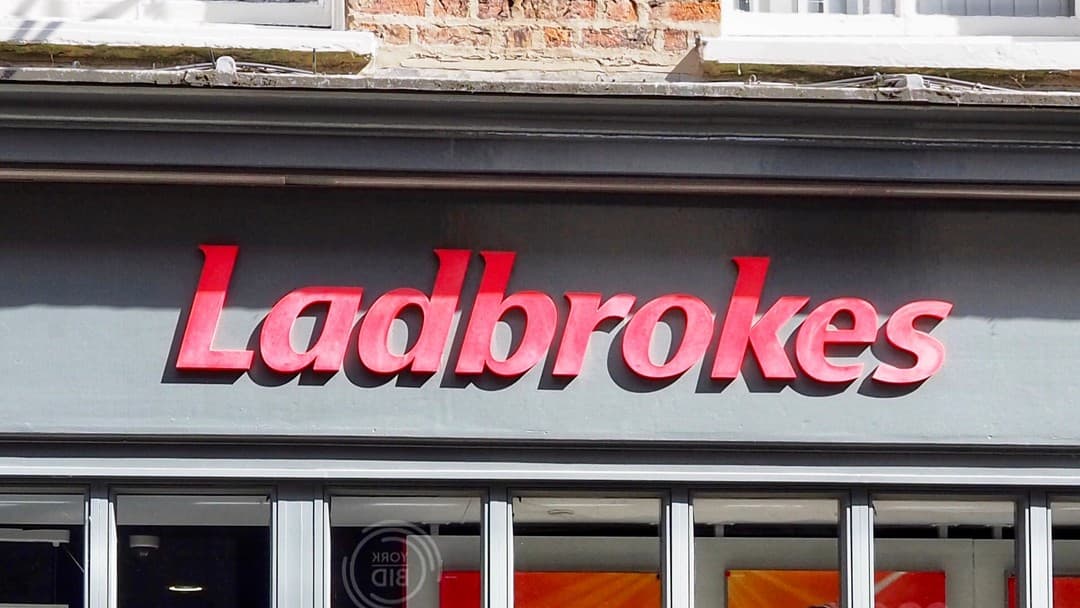
IP judge strikes out Entain's copyright claim over Ladbrokes and Coral logos pending re-pleading.
The Intellectual Property List of the Chancery Division has struck out copyright infringement claims brought by Entain Group companies over their Ladbrokes, Coral, Sportingbet and other brand logos, finding the pleaded case failed to properly establish who owned the copyright or what was original about the current versions of decades-old designs.
Handing down judgement in Entain Operations Limited & Ors v Liquidity Trading Limited & Ors [2026] EWHC 2330 (Ch), Mr Justice Cawson ruled on cross-applications to strike out parts of each side's statements of case, in a dispute concerning the operation of "matched betting" websites that used the claimants' sports and casino logos to link users through to betting offers.
The claimants, part of the Entain Group, allege that the defendants' websites, including Outplayed and OddsMonkey, infringed both trade marks and copyright by reproducing the group's logos and screenshots of its websites. The defendants did not challenge the trade mark claims, accepting they were adequately pleaded, but applied to strike out the copyright claims entirely, arguing that the particulars of claim failed to identify the relevant works, their authors, when they were first published, or how ownership had passed to any particular claimant company.
Mr Justice Cawson agreed that the pleading was fundamentally deficient on the question of title to sue. The claimants had pleaded that ownership of copyright in each logo could simply be inferred collectively across all claimant companies, based on historic acquisitions, associated trade mark registrations and long, unchallenged use. The judge found this insufficient, noting that a transfer of a business does not automatically carry copyright with it absent an express assignment, that trade mark ownership says little about copyright ownership, and that long use is, at most, consistent with ownership rather than proof of it. The position was complicated further by evidence that several logos, including those for Ladbrokes, bwin, Sportingbet and Gala Bingo, appeared to have been designed by third party agencies rather than the claimants' own employees, contrary to what had originally been pleaded under a statement of truth, with no assignments from those agencies identified.
The judge was similarly unpersuaded that the claimants could fall back on statutory presumptions under section 104 of the Copyright, Designs and Patents Act 1988, since these required identification of a first publication date and publisher that had not been pleaded. He also found the assertion that the logos and websites were original works, reflecting their authors' free and creative choices, to be an unparticularised recitation of the statutory test, particularly problematic given the logos' long iterative histories stretching back, in some cases, to the 1970s.
Rather than dismissing the copyright claims outright, the judge ordered that they be struck out unless the claimants file compliant amended particulars addressing these defects within a short prescribed period.
Turning to the claimants' own application to strike out parts of the defendants' defence and counterclaim, the judge declined to remove the bulk of the material, including introductory paragraphs relating to the trade mark claim and conditional pleadings concerning two newer trade marks still within their non-use grace period, finding case management reasons favoured dealing with all potential revocation issues together. He did order deletion of a mistaken reference to section 10(2) of the Trade Marks Act 1994 in one paragraph, but allowed other references to consumer confusion to stand, accepting the defendants' argument that confusion remained relevant to their referential use and honest concurrent use defences even without a standalone confusion-based infringement claim.
The judge indicated that, had the copyright claims not already been struck out, he would likely have required the defence's introductory paragraphs addressing that claim to be substantially redrafted in any event.
 Copyright & permissions