Edgware Road v Tera Westend: when both parties behave badly, the one that lies loses
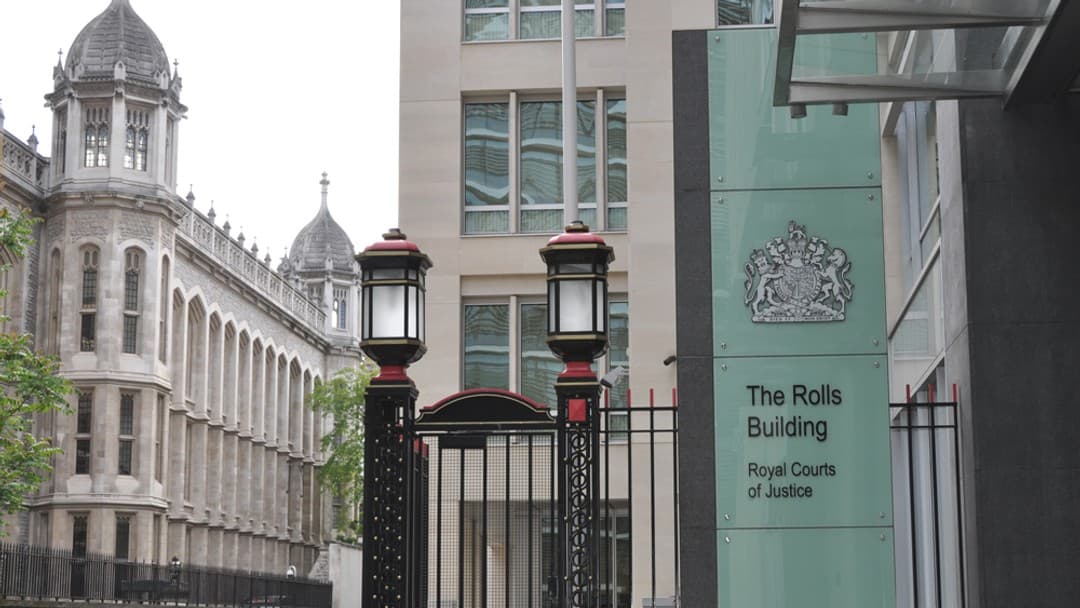
High Court dismisses landlord's forfeiture appeal after finding it spent rent deposit funds and gave false evidence about it.
Two parties, both of whom behaved badly, went to trial in a landlord and tenant dispute in central London. The tenant brought a fraudulent claim for lost profits it had never earned. The landlord withdrew £43,800 from a rent deposit account when there were no arrears, spent the money, and then told the court under a statement of truth that the account remained intact. The High Court has now confirmed on appeal that, in a competition between dishonesty and dishonesty, the landlord came off worse.
The essential story in Edgware Road (2015) Ltd v Tera Westend Ltd is straightforward despite the procedural complexity that surrounds it. The tenant, Tera Westend, held a lease of restaurant premises on Edgware Road. When COVID struck, rent stopped being paid. The landlord, Edgware Road (2015) Ltd, made two withdrawals from a rent deposit account: £65,000 in July 2020 to cover rent that was genuinely due, and £43,800 shortly afterwards when there were no arrears at all. It was the second withdrawal that proved fatal to the landlord's case.
In May 2022, the landlord re-entered the premises purporting to forfeit the lease by reference to unpaid service charge of just over £1,000 and disputed rent arising from a rent cesser clause. The county court judge found that, taking the £43,800 into account, there were in fact no arrears at all, and the forfeiture was therefore invalid. The landlord appealed.
Mr Justice Richards dismissed the appeal, but the route to that conclusion involved working through several interconnected problems, each of which deserves attention.
The most significant issue was what to do with the £43,800 that the landlord had wrongly withdrawn and apparently spent. The landlord argued that, under the terms of the rent deposit deed, money could only reduce arrears if it was formally withdrawn for that purpose, and since this withdrawal was not made for any permitted purpose, it simply could not count against arrears. Richards J rejected that argument. The relevant clause in the rent deposit deed was concerned with sums that remained in the account, not with sums that had been improperly removed from it. To accept the landlord's analysis would have allowed it to take and spend the tenant's money and then rely on that same money as continuing to sit notionally in the account, producing a result that was inconsistent with commercial reality and plainly unjust.
The landlord also argued that the £43,800 should be allocated against protected rent falling due in September and December 2020, rather than against the non-protected rent and service charge at issue in 2022. Had that been accepted, the COVID arbitration award would already have dealt with those earlier debts, and there would have been nothing left to set against the 2022 arrears. The court disagreed. There was no finding that the tenant even knew the £43,800 had been withdrawn in 2020. Had it known, it might have taken a different position in the COVID arbitration, which produced an outcome considerably less favourable to it than it should have been. Allowing the landlord to dictate the allocation of funds it had secretly misappropriated, in a way that maximised the tenant's disadvantage, was not something the court was willing to countenance.
The question of relief from forfeiture was addressed in the event the court was wrong on arrears, and here the tenant's conduct came into sharp focus. The tenant had brought a claim for lost profits that it knew to be fraudulent, the restaurant business having been run throughout by a different entity. The court found this to be truly exceptional conduct, sufficient in principle to displace equity's strong inclination to grant relief from forfeiture on payment of arrears. Fraud in litigation, advanced as a means of exploiting the landlord/tenant relationship itself, is the kind of conduct that equity is entitled to regard as disqualifying.
The case leaves two lasting impressions. First, landlords who mishandle rent deposits cannot use the technical language of those deposits to insulate themselves from the consequences of their own misconduct. Second, tenants who advance fraudulent claims do so at the risk of losing equitable relief they might otherwise have been entitled to as a matter of course.
Edgware Road (2015) Ltd v Tera Westend Ltd [2026] EWHC 1485 (Ch), Mr Justice Richards, 17 June 2026.
 Copyright & permissions