Drelle v Servis-Terminal: Supreme Court allows bankruptcy petitions based on unrecognised foreign judgements
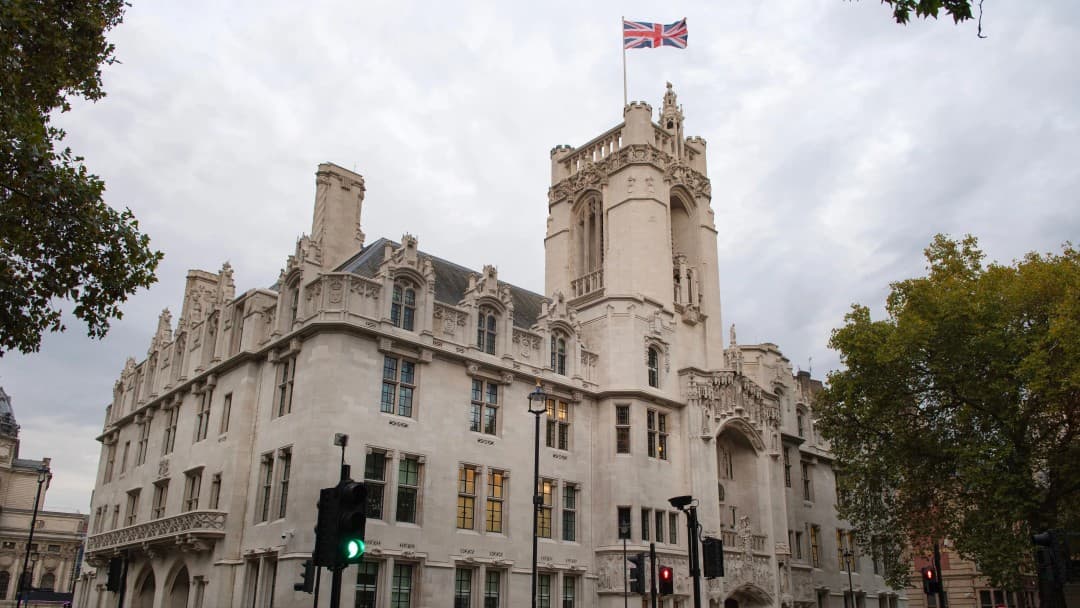
Supreme Court rules foreign judgement debts can found UK bankruptcy petitions without recognition.
The Supreme Court has ruled that a creditor holding an unrecognised foreign judgement can present a bankruptcy petition in England and Wales without first bringing separate recognition proceedings, overturning a Court of Appeal decision that had threatened to complicate cross-border insolvency claims involving judgements from jurisdictions outside reciprocal enforcement regimes.
In Valeriy Ernestovich Drelle v Servis-Terminal LLC (In Liquidation in the Russian Federation) [2026] UKSC 29, Lord Briggs and Lord Hamblen, giving the judgement of the court with which Lord Sales, Lord Stephens and Lord Doherty agreed, held that a Russian judgement for RUB 2 billion against the former director general of a bankrupt Russian company constituted a "debt" capable of founding a bankruptcy petition under section 267 of the Insolvency Act 1986, notwithstanding that the judgement had never been the subject of recognition proceedings in England and was not registrable under the Foreign Judgements (Reciprocal Enforcement) Act 1933.
The underlying dispute arose after Servis-Terminal LLC advanced a loan of RUB 2 billion to a company whose owner also chaired a Russian bank that subsequently collapsed, causing Servis-Terminal substantial losses. Russian courts, across four levels including the Supreme Court of the Russian Federation, found that Valeriy Drelle, the company's former director, had acted unreasonably and in bad faith in approving the loan, ordering him to repay the full sum. When Servis-Terminal sought to found a bankruptcy petition in England on that judgement, an Insolvency and Companies Court judge found the debt was not genuinely disputed and made a bankruptcy order. Drelle's challenge succeeded before the Court of Appeal, which held that an unrecognised foreign judgement could not be used offensively, as a "sword", to found insolvency proceedings, reasoning that judicial acts reflect an exercise of foreign sovereign power that has no direct operation in England absent recognition.
The Supreme Court disagreed, reviving what it termed the "obligation principle", tracing back to nineteenth-century authorities including Williams v Jones and Godard v Gray, under which a foreign judgement for a debt or definite sum of money itself creates an immediate legal obligation to pay, quite apart from any process of recognition or registration. That obligation, the court held, arises the moment a final and conclusive judgement is given and exists independently of the separate question of how it might be enforced by execution. The judgement distinguished the absence of "direct operation" in England, which the court said concerned only the unavailability of direct enforcement mechanisms such as charging orders, from the underlying legal effect of the judgement itself.
The court also rejected an analogy drawn by the Court of Appeal with the revenue rule, which bars English courts from enforcing foreign tax claims as an assertion of sovereign power. Servis-Terminal's claim, the justices found, was a straightforward private law claim of the kind any citizen could bring, with no element of sovereign assertion. A further argument advanced by Servis-Terminal, that Article 13 of the UNCITRAL Model Law on Cross-Border Insolvency independently required equal treatment for foreign judgement creditors, was rejected as unnecessary to the outcome and, in any event, unpersuasive, the court finding "foreign" in that context refers to geographical location rather than the governing law of the underlying claim.
Because the Court of Appeal had not addressed Drelle's remaining grounds of challenge, including whether the Russian proceedings themselves were tainted by bias or procedural unfairness such that the debt was genuinely disputed, the Supreme Court has remitted those issues for determination.
 Copyright & permissions







.jpg&w=3840&q=60)