Devall v English Electric: court dismisses mesothelioma claim for want of direct asbestos exposure evidence
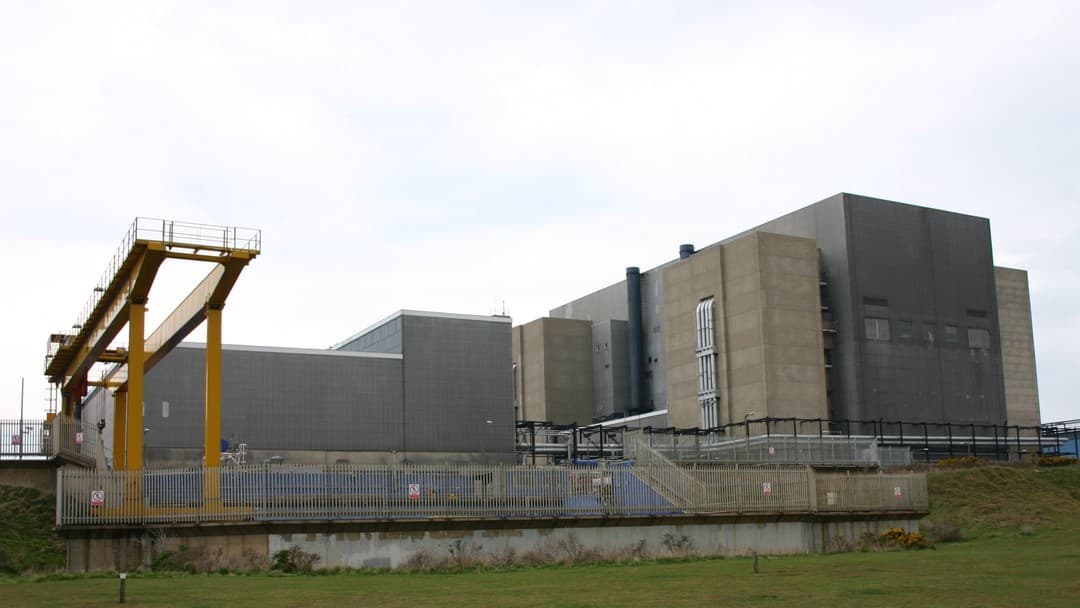
Claimants fail to establish on the balance of probabilities that the deceased was exposed to asbestos dust at Sizewell A nuclear power station.
The High Court has dismissed a mesothelioma claim brought by the family of Richard Devall, a former apprentice electrical engineer who died in April 2022, after finding that the claimants had not established on the balance of probabilities that he was exposed to asbestos during his placement at Sizewell A nuclear power station in 1965.
The claim was brought by Mr Devall's widow and two sons as executors of his estate under the Law Reform (Miscellaneous Provisions) Act 1934 and the Fatal Accidents Act 1976. Quantum had been agreed at £215,081 inclusive of interest and deductible benefits, leaving liability as the sole issue for determination.
The background
Mr Devall, then aged 21, worked for English Electric Company Limited as an apprentice electrical engineer. The claimants contended that between March/April and July 1965 he was based at Sizewell A on an industrial placement, commissioning alternators in the turbine hall whilst lagging teams carried out insulation work in close proximity. The case turned entirely on whether mixing of dry asbestos paste had taken place in the turbine hall whilst he was present — the claimants accepted that exposure arising only from the application of wet paste or asbestos mattresses at some distance would be unlikely to establish breach of duty prior to what the Court of Appeal in White v Secretary of State for Health and Social Care [2024] EWCA Civ 244 described as the "watershed" publication of the Newhouse and Thompson article in October 1965.
There was no lifetime witness statement from Mr Devall. He had told medical practitioners in both 2018 and 2022 that he could not recall any asbestos exposure during his working life, despite being an enquiring man who had researched his earlier diagnosis of idiopathic pulmonary fibrosis with care.
The evidence
The claimants' factual case rested almost entirely on the evidence of Mr John Bryant, Mr Devall's brother-in-law, who had himself undertaken a contemporaneous industrial placement at Hinkley Point A nuclear power station in Somerset. Mr Bryant gave evidence of witnessing bags of dry asbestos being emptied, creating clouds of dust some ten metres away in that turbine hall, and of laggers applying wet paste to steam pipes.
Accepting Mr Bryant as an honest witness, the court nonetheless found that his evidence in relation to Sizewell A was, on analysis, almost entirely conjecture. Under cross-examination he accepted that he had no recollection of Mr Devall describing any detail of the insulation work at Sizewell A beyond a passing reference that lagging was being applied to the turbines rather than the steam pipes. Crucially, he did not recall Mr Devall mentioning clouds of dust, any mixing activity, the type of insulation material used, or the proximity of laggers to his work station. The broad assertions in his written statements that Mr Devall had confirmed a similar experience at Sizewell A were not maintained in oral evidence.
Both experts agreed that asbestos insulation had been used at Sizewell A and that the mixing of asbestos paste generated significantly higher dust concentrations than its wet application. However, both deferred entirely to the court on the factual question of whether any such mixing had taken place in Mr Devall's vicinity.
The court's analysis
Clare Padley, sitting as a Deputy High Court Judge, applied the well-established caution required in historic asbestos exposure cases, drawing on Sloper v Lloyds Bank [2016] EWHC 483 (QB) and the principles in Gestmin SGPS S.A. v Credit Suisse (UK) Ltd [2013] EWHC 3560 (Comm). She noted that the two power stations differed materially in configuration, scale, construction timetable, and the nature of the commissioning work being undertaken — differences that precluded any reasonable inference from Mr Bryant's Hinkley Point experience to conditions at Sizewell A.
The judge also attached significance to the absence of any reported exposure to dust by Mr Devall himself. Given his scientific disposition and his awareness in 2018 of the relevance of occupational dust exposure, it was considered more probable than not that he would have recalled visible clouds of dust in the turbine hall had he encountered them.
The claim was dismissed. The judgement serves as a reminder that, whilst the Fairchild exception modifies the rules of causation in multi-employer mesothelioma claims, no corresponding relaxation applies to the primary fact-finding exercise. The burden of proving actual exposure remains squarely on the claimant and must be discharged on conventional principles.
 Copyright & permissions
.png&w=3840&q=60)




.jpg&w=3840&q=60)