Dairy UK Ltd v Oatly AB: Supreme Court clarifies "designation" in dairy term protection
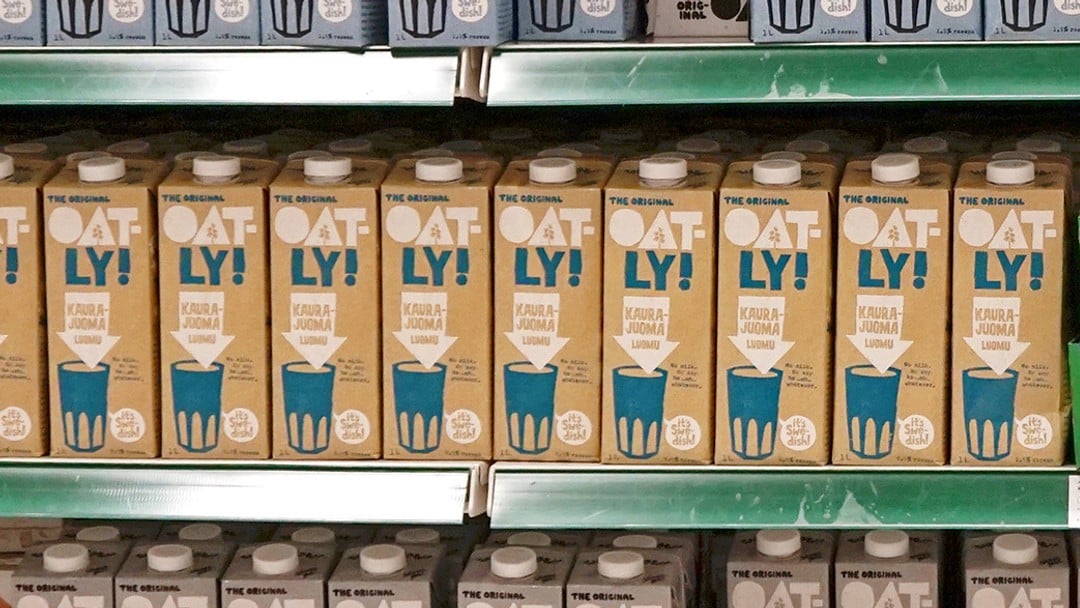
The Supreme Court unanimously dismisses Oatly's appeal on trade mark validity.
The Supreme Court has delivered an important judgement on the interpretation of EU-derived regulations protecting dairy terminology in trade marks. In Dairy UK Ltd v Oatly AB [2026] UKSC 4, the Court unanimously held that the Swedish plant-based food company's registered trade mark "POST MILK GENERATION" cannot lawfully be used for oat-based food and drink products.
Oatly registered "POST MILK GENERATION" as a trade mark in April 2021 for oat-based food and drink products (classes 29, 30, and 32) and T-shirts (class 25). Dairy UK, the trade association for the UK dairy industry, challenged the registration's validity under section 3 of the Trade Marks Act 1994, arguing it violated Point 5 of Parliament and Council Regulation (EU) No 1308/2013—now assimilated law following Brexit.
The Intellectual Property Office hearing officer initially found the registration invalid for food and drink products. Richard Smith J reversed this decision in the High Court, but the Court of Appeal reinstated the finding of invalidity. Oatly's subsequent appeal raised two grounds before the Supreme Court.
The central issue: meaning of "designation"
Point 5 of the 2013 Regulation prohibits using "designations" of milk and milk products for any product other than those specified in the Regulation, subject to certain exceptions. Oatly contended that "designation" means the name of a product, and since "POST MILK GENERATION" does not name or describe any food or drink, the prohibition did not apply.
Lord Hamblen and Lord Burrows (with whom the other justices agreed) rejected this narrow interpretation. The Court held that "designation" bears its natural meaning in context—referring to the use of a term in respect of food or drink, rather than merely naming it. Point 5 prohibits designations being "used for" non-dairy products, which is broader than prohibiting their use as product names.
The Court emphasised that Point 2(a) and (b) of the Regulation expressly use the term "names", whilst Point 5 uses "designations", indicating Parliament's intention that these terms carry different meanings. Similarly, references to "sale description" meaning "the name of the food" throughout Annex VII reinforce this distinction.
Significantly, the Court clarified that Point 5's purpose extends beyond consumer protection to establishing fair conditions of competition in the dairy sector, as indicated by Recital 76. The prohibition operates strictly and is not dependent on whether consumers would actually be deceived—a finding the IPO had made in Oatly's favour regarding consumer perception.
The proviso exception
Oatly's alternative argument relied on Point 5's second limb proviso, which permits designations "clearly used to describe a characteristic quality of the product". Oatly submitted that "POST MILK GENERATION" clearly describes the milk-free nature of its products.
The Court disagreed. The trade mark primarily describes targeted consumers—particularly younger generations with concerns about dairy production—rather than any product characteristic. Any reference to the product being milk-free is oblique and insufficiently clear to satisfy the proviso's requirements.
Two considerations supported this conclusion. First, even if interpreted as referring to milk content, the mark fails to clarify whether products are entirely milk-free or merely low in milk. Second, the mark's validity for T-shirts demonstrates it describes consumers rather than product qualities, as it makes perfect sense on clothing proclaiming membership of an "anti-milk generation" despite T-shirts having no relevant characteristics.
The appeal was dismissed on both grounds, confirming that dairy terminology protection under assimilated EU law remains robust and broadly construed in favour of the dairy industry's competitive interests.
 Copyright & permissions