

Dacorum Borough Council v Persons Unknown: High Court upholds Green Belt injunction against Gypsy and Traveller site
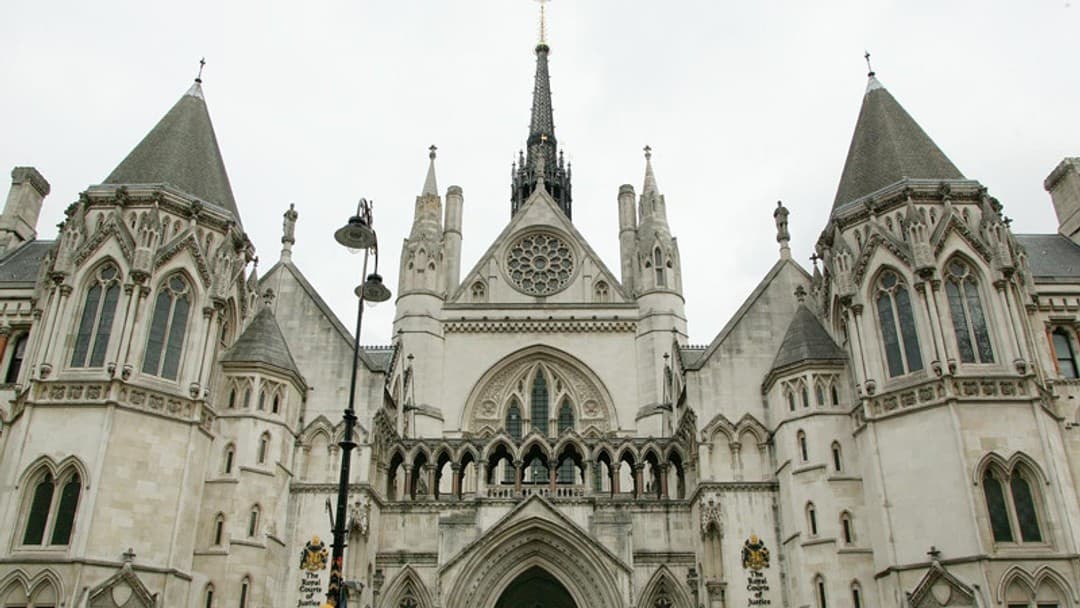
High Court continues interim planning injunction after finding occupants moved onto land in flagrant breach of an existing court order.
A High Court judge has refused to discharge or vary an interim injunction restraining unauthorised development of Green Belt land in Hertfordshire, finding that the intended defendants occupied the site after the injunction was granted and misled the court about the timing of their arrival.
In Dacorum Borough Council v Persons Unknown [2026] EWHC 1174 (KB), Mr Jonathan Glasson KC, sitting as a Deputy Judge of the High Court, continued the injunction originally made by Cheema Grubb J on 5 April 2026 under section 187B of the Town and Country Planning Act 1990. The land in question sits within the Metropolitan Green Belt, a Special Landscape Area, and the Chiltern Area of Outstanding Natural Beauty.
Background
The case arose when Dacorum Borough Council received reports on Easter Saturday, 4 April 2026, of extensive works being carried out on agricultural land off Friendless Lane, Markyate. A planning application for 14 residential Gypsy and Traveller pitches had been submitted the previous day, Good Friday, but had not been validated. When a Temporary Stop Notice was served that afternoon, those present refused to accept it. Works continued the following day, prompting the without notice injunction application to the duty judge on Easter Sunday.
Twenty-two individuals were subsequently named as intended defendants and sought either discharge of the injunction on grounds of material non-disclosure, or a variation permitting them to remain pending determination of their planning application.
Full and frank disclosure
The intended defendants argued that the claimant had failed in its duty of full and frank disclosure at the without notice stage, principally by not drawing the court's attention to evidence suggesting occupation had already begun. The judge rejected this comprehensively. Cheema Grubb J had been expressly aware that "potentially residential units" were being brought onto the land, and the contemporaneous photographic evidence showed no signs of habitation. The argument that a comma in a witness statement implied occupied touring caravans was described as "not a credible interpretation."
Occupation and clean hands
The central factual dispute concerned whether the intended defendants were already in occupation on 3 April 2026, before the injunction was made. Each witness statement asserted occupation from that date. The judge found this "flatly contradicted" by the photographic record and drew adverse inferences from significant discrepancies between the witness statements and the planning application. The suggestion that caravans had been brought onto the land during evening hours, avoiding daytime photography, was rejected as having no evidential basis whatsoever, and was directly contradicted by a neighbour photograph taken at 18:06 on 4 April.
Applying the equitable doctrine of clean hands, the court found the intended defendants had not come before it with candour, a factor that significantly diminished the weight to be given to their Article 8 arguments.
Balance of convenience
Conducting the American Cyanamid analysis, the judge held the balance of convenience firmly favoured continuation. Characterising the conduct as a "flagrant violation" of the injunction and echoing the language of Mid-Bedfordshire District Council v Brown [2005], he noted that the defendants had "cocked a snook at the court" to achieve the very situation the order was designed to prevent. Whilst not ruling out a full Porter assessment at trial, the judge found that the qualified nature of the Article 8 right carried limited weight where the land had never been the defendants' home prior to the injunction.
Expert evidence from Dr Violet Cannon, offered as welfare and cultural impact reports, was ruled inadmissible. No direction for expert evidence had been made, and the judge aligned with a recent decision in Tandridge District Council v King in finding Dr Cannon's honorary doctorate insufficient to qualify her as an independent expert.
The injunction was continued against both the named parties and persons unknown, with the judge indicating a speedy trial would be ordered to allow a full hearing on the merits.
 Copyright & permissions



.jpg&w=3840&q=60)



__WEB.jpg&w=3840&q=60)





.jpg&w=3840&q=60)