Courtyard RTM Company v Rockwell: Court of Appeal rules on vertical division test in right to manage claims
Court of Appeal dismisses both appeals, clarifying when shared basement structures prevent right to manage claims succeeding
The Court of Appeal has dismissed two consolidated appeals raising the question of when part of a building qualifies as a "self-contained part" for the purposes of the right to manage under the Commonhold and Leasehold Reform Act 2002. The judgement in The Courtyard RTM Company Ltd & Ors v Rockwell (FC103) Ltd & Anor [2026] EWCA Civ 712, handed down on 9 June 2026 by Lord Justice Miles, with whom Lords Justice Singh and Foxton agreed, provides important guidance on the vertical division requirement under section 72(3) and on the meaning of independent redevelopment.
The two appeals, both from the Upper Tribunal (Lands Chamber), arose in different factual contexts but raised closely related issues. The first concerned three residential blocks at Plaza Boulevard, a purpose-built development on the southern fringe of Liverpool city centre. The second concerned 14 Park Crescent and its associated mews in central London, a Regency terrace recently redeveloped for residential use following decades of office occupation.
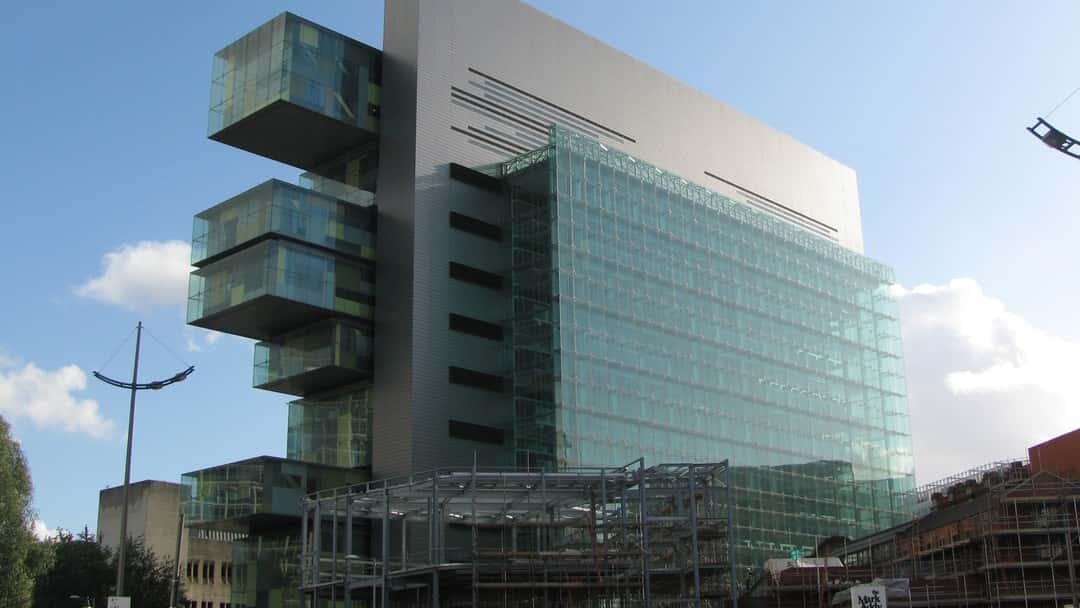
In the Plaza Boulevard appeal, the RTM companies sought to establish that each of three blocks, The Courtyard, The Studios and The Terrace, constituted a self-contained part of the wider estate. The blocks are structurally attached to a central podium and sit above a large shared underground car park, which extends beneath all of them without internal subdivision. Parking spaces are allocated across the whole car park without reference to individual blocks, and third parties hold parking rights in areas beneath blocks where they are not tenants. The Upper Tribunal had found that the blocks satisfied neither the vertical division test nor the practical demands of the statutory scheme, given the undivided car park.
The Court of Appeal upheld that conclusion. Lord Justice Miles drew a clear distinction between two types of case: one where an actual physical dividing feature such as a party wall exists, and a notional line is used only to identify its outer boundary; and another where no physical division exists and a notional line would be required to create one from nothing. Section 72(3)(a) requires an actual, physical, vertical division. Drawing a line on a plan through open, undivided car park space does not satisfy that test. The court agreed with the Upper Tribunal that the open-plan basement, through which a person could step or drive unimpeded between areas nominally beneath different blocks, was not self-contained in any ordinary sense of that word. Practical consequences reinforced the analysis: dividing management of a shared car park between an RTM company and a landlord would be unworkable, a concern the Supreme Court had flagged in analogous terms in Settlers Court RTM Co Ltd v FirstPort Property Services Ltd [2022] UKSC 1.
In the No. 14 appeal, the landlords argued that new foundations spanning beneath neighbouring party walls, movement joints misaligned with those walls, and a projecting balcony at the rear of the building each prevented a valid vertical division. The Court of Appeal rejected all three arguments. The vertical division test is purely physical, concerned with built structures and not land ownership. Where a party wall divides a terrace, a notional line through its centre identifies the boundary of the claimed premises, and the same notional line can be extended through foundations beneath it. An insistence that foundations spanning beneath party walls prevent a vertical division would effectively exclude all terraced buildings from the right to manage regime, a result plainly at odds with the legislation's purpose.
On independent redevelopment, the court rejected the argument advanced in both appeals that the test requires the hypothetical complete demolition of every structural element down to foundations. Whether a proposed scheme amounts to redevelopment is a question of fact and degree, to be assessed by the specialist property tribunal with its surveying expertise. The statute does not require that works be possible without affecting neighbouring owners, nor does it preclude the use of temporary supports.
Both appeals were dismissed.
The Courtyard RTM Company Ltd & Ors v Rockwell (FC103) Ltd & Anor [2026] EWCA Civ 712. Winston Jacob and Chelsea Sparks (directly instructed) for the appellants in CA-2025-000587; Simon Allison KC and Sophie Gibson (JB Leitch) for the second respondent. Justin Bates KC and Peter Sibley (Northover Limited) for the appellants in CA-2025-000775; Philip Rainey KC (Wallace LLP) for the respondent.
 Copyright & permissions
.png&w=3840&q=60)







.jpg&w=3840&q=60)