Court of Appeal rules Upper Tribunal lacked jurisdiction in Guerrero abandonment appeal
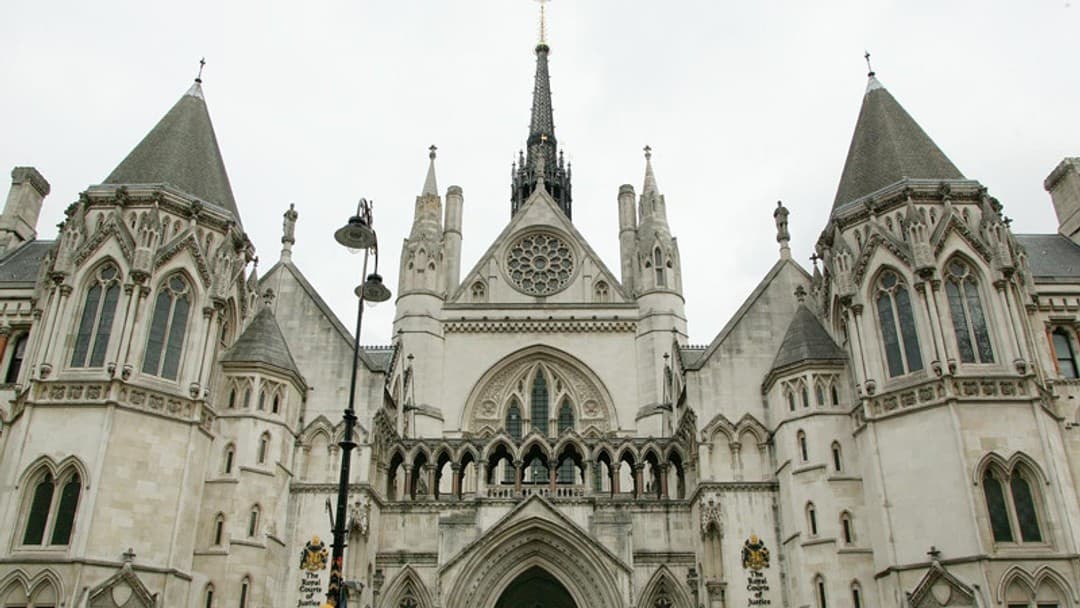
Court of Appeal finds FTT abandonment rulings are preliminary decisions excluded from Upper Tribunal appeal.
The Court of Appeal has ruled that the Upper Tribunal had no jurisdiction to hear an appeal against a First-tier Tribunal decision treating an asylum claim as abandoned, in a judgement clarifying the boundary between preliminary and final dispositive decisions in the immigration appeals system.
In Guerrero v Secretary of State for the Home Department [2026] EWCA Civ 953, Lady Justice May, with whom Lord Justice Arnold and Lady Justice King agreed, allowed the appellant's appeal on jurisdictional grounds, restoring the First-tier Tribunal's original finding that his asylum appeal had been abandoned.
The appellant, a national of Trinidad and Tobago, entered the UK as a visitor in September 2020 and claimed asylum in January 2021 on the basis of his sexual orientation. The Secretary of State accepted he was openly gay but refused the claim in August 2023. Days later, the Home Office issued him with a Biometric Residence Permit describing his status as "Refugee Leave to Remain", an error the department later attributed to a "system error".
The First-tier Tribunal treated the resulting question, whether the erroneous permit amounted to a valid grant of leave, as a preliminary issue, since section 104 of the Nationality, Immigration and Asylum Act 2002 provides that an asylum appeal is deemed abandoned once leave to remain is granted. The tribunal judge found in March 2024 that the permit did constitute valid leave, meaning the appeal was abandoned by operation of law. The Secretary of State successfully appealed to the Upper Tribunal, which found the permit had been issued in error and remitted the case for a fresh hearing.
Before the Court of Appeal, the central question was not the validity of the permit itself but whether the Upper Tribunal had jurisdiction to entertain the appeal at all. Article 3(m) of the Appeals (Excluded Decisions) Order 2009 removes any right of appeal against a "procedural, ancillary or preliminary decision" made in an asylum appeal. Counsel for the appellant, Zane Malik KC, argued that the abandonment ruling fell squarely within that description, pointing to the FTT judge's own characterisation of it as a "preliminary issue" and drawing on the Upper Tribunal's earlier reasoning in VOM (Nigeria) [2016] UKUT 00410 (IAC), since approved in several Court of Appeal decisions.
For the Home Secretary, Mathew Gullick KC argued that a decision bringing proceedings to a definitive end should be treated as final and dispositive, carrying a right of appeal.
Lady Justice May accepted that the FTT's ruling was not procedural or ancillary but agreed it was preliminary, since it preceded and did not resolve the substantive merits of the asylum claim itself, which concerned the appellant's sexuality and fear of persecution on return. She held that section 104 of the 2002 Act draws a clear distinction between an appeal that is "finally determined" and one that is "abandoned", and that the deeming provision under section 104(4A) fell into the latter category. The fact that abandonment brought the appeal to an end did not make it a final determination for jurisdictional purposes.
The court noted that parties in this position are not left without recourse, since decisions on abandonment remain challengeable by way of judicial review, as had occurred in R (Chowdhury) v First-tier Tribunal [2024] EWCA Civ 1380. Having decided the appeal on jurisdictional grounds, the court found it unnecessary to consider the separate ground concerning the validity of the erroneously issued permit.
 Copyright & permissions







.jpg&w=3840&q=60)