Court of Appeal rules SIAC has no power to award costs in citizenship review cases
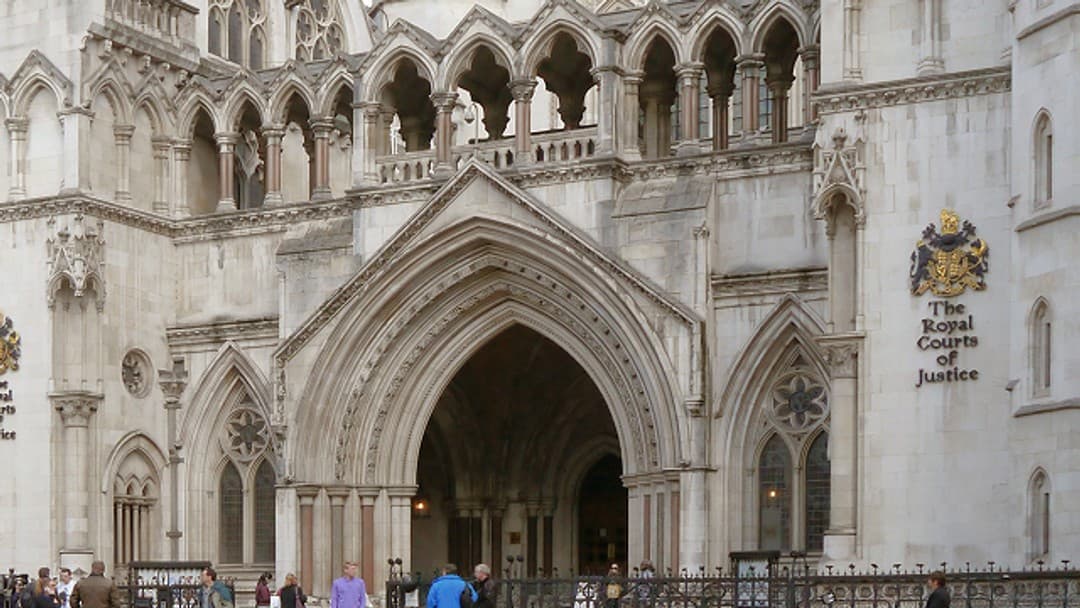
Court of Appeal confirms Special Immigration Appeals Commission cannot order costs without new rules from the Lord Chancellor.
The Court of Appeal has ruled that the Special Immigration Appeals Commission has no power to award costs when reviewing the Home Secretary's naturalisation and citizenship decisions, dismissing a challenge brought by two anonymised appellants and upholding the Divisional Court's earlier decision.
Sir Geoffrey Vos, Master of the Rolls, giving the lead judgement with which Lord Justice Bean and Lord Justice Singh agreed, heard the appeal following a judicial review brought by the Home Secretary against SIAC itself. The dispute originated in the case of FGF, whose citizenship application was refused on good character grounds and who applied to SIAC for a review after the Home Secretary certified that her decision relied on information that could not be made public. When the Home Secretary later withdrew her original refusal to reconsider FGF's evidence, SIAC held that it retained jurisdiction to award him his costs, both where an application succeeded and where the underlying decision was withdrawn. The Home Secretary challenged that ruling by judicial review, and the Divisional Court quashed it. Although FGF did not participate due to lack of funding, two other applicants awaiting their own costs decisions, referred to as H7 and H15, were permitted to make submissions and subsequently brought this appeal.
The central issue turned on the construction of section 2D of the Special Immigration Appeals Commission Act 1997, inserted by the Justice and Security Act 2013, which provides that SIAC must apply judicial review principles in deciding whether to set aside a certified decision, and that if it does so it may make any order or give any relief available in judicial review proceedings. H7 and H15 argued this broad wording, read alongside the ordinary judicial review costs regime under section 51 of the Senior Courts Act 1981, was wide enough to encompass costs orders, and that Parliament could not have intended to strip away costs protection when it moved these decisions from the Administrative Court into SIAC.
The Master of the Rolls rejected that reading. He held that sections 2D(3) and (4) were concerned with SIAC's substantive jurisdiction to determine and remedy the underlying decision, mirroring the powers found in section 31 of the Senior Courts Act, rather than with ancillary procedural matters such as costs. Procedure and costs, he found, remained the exclusive province of section 5 of the 1997 Act, which empowers the Lord Chancellor to make rules governing SIAC proceedings, including costs, by statutory instrument subject to parliamentary approval. Since no such rules had ever been made, no costs jurisdiction existed. This approach was consistent with the Court of Appeal's earlier reasoning in C7 v Secretary of State for the Home Department regarding SIAC appeals, which the court held applied with equal force to reviews.
The appellants' fallback argument, that section 3 of the Human Rights Act 1998 required section 2D to be read compatibly with the right against discrimination under article 14 of the European Convention, also failed. The Master of the Rolls found the argument could not overcome the fact that the 1997 Act already provided a mechanism, through the Lord Chancellor's rule-making power, for introducing a costs regime if desired. He further held that applicants before SIAC, who benefit from closed material procedures and free special advocates, were not in an analogous position to ordinary judicial review claimants, and that any difference in treatment was in any event justified. Because no costs jurisdiction existed at all, the appellants' separate argument concerning the effect of a withdrawn decision under rule 11A did not arise.
In a concurring judgement, Lord Justice Singh addressed the appellants' standing to bring the appeal, finding they were entitled to challenge orders made directly against them by the Divisional Court, and observed that a "no costs" regime carries genuine advantages for applicants by removing the risk of adverse costs orders, a consideration properly left to the Lord Chancellor's discretion rather than the courts.
 Copyright & permissions