Court of Appeal rules against HS2 on tunnel extension planning permission in North Warwickshire case
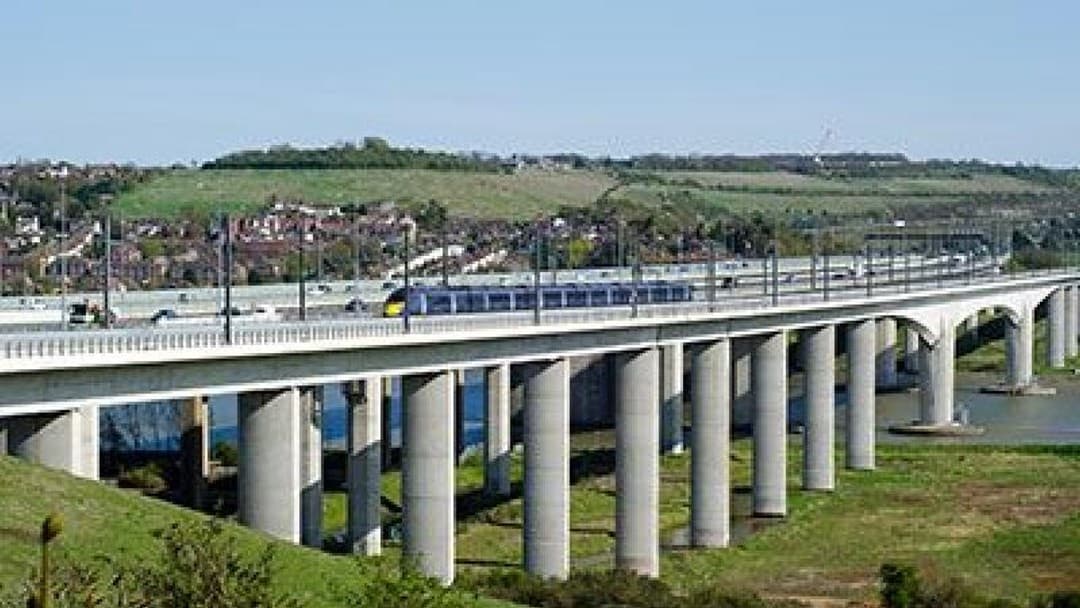
Court of Appeal finds HS2's Bromford Tunnel extension lacks deemed planning permission under 2017 Act.
The Court of Appeal has ruled that High Speed 2's extended Bromford Tunnel and its relocated eastern portal do not benefit from the deemed planning permission granted by the High Speed Rail (London-West Midlands) Act 2017, overturning part of a High Court decision that had upheld the government's approach to environmental assessment for revised HS2 works.
In R (North Warwickshire Borough Council) v Secretary of State for Transport & Anor [2026] EWCA Civ 832, Lord Justice Holgate, with whom Lady Justice King and Lord Justice Bean agreed, allowed North Warwickshire Borough Council's appeal on the question of deemed planning permission, while dismissing its challenge to whether the works were authorised at all under the 2017 Act. The case concerned HS2 Limited's decision to extend the Bromford Tunnel by a further 2.9 kilometres, doubling its length and relocating the eastern portal to emerge at Water Orton rather than at Castle Bromwich Business Park as originally authorised by Parliament.
The court unanimously held that the extended tunnel and portal fell within section 2 of the 2017 Act, which permits the nominated undertaker to carry out non-scheduled works necessary or expedient for the scheduled works or otherwise for Phase One purposes. Lord Justice Holgate rejected the council's argument that section 2 should be confined to works ancillary to the scheme authorised by section 1, finding the statutory language deliberately broad and noting that nothing in the Act excluded tunnels from its scope.
The more significant finding concerned section 20 of the 2017 Act, which deems planning permission to be granted for authorised development but withdraws that deemed permission for non-scheduled works likely to have significant environmental effects unless those works are covered by the environmental assessment conducted for the original Bill. The Secretaries of State for Transport and for Housing, Communities and Local Government had concluded, agreeing with HS2 Limited's own screening assessment, that the works were covered by the original assessment because they would not generate environmental effects greater than those already assessed, even though the specific scheme had never been presented to Parliament.
Lord Justice Holgate held this construction was wrong in law. Drawing on the statutory definition in section 68(4) of the Act and the established environmental impact assessment jurisprudence in cases including R (Buckinghamshire County Council) v Secretary of State for Transport and R (Finch) v Surrey County Council, the court found that development is only covered by the original environmental assessment if information about that specific development was contained in a deposited statement at the time of the Bill's passage. The judgement rejected the government's reliance on the so-called Rochdale envelope principle from R v Rochdale Metropolitan Borough Council, ex parte Milne, finding that the comparison drawn by the Secretaries of State between the overall effects of the original and revised schemes did not satisfy the requirement for a project-specific environmental assessment under the EIA Directive.
The court noted with some concern that the Secretary of State for Transport had originally reached the opposite conclusion in a screening decision in March 2021, only for the joint decision letter in May 2024 to adopt HS2 Limited's preferred test without explaining the change in legal position. Lord Justice Holgate emphasised that the correct interpretation should not be used by opponents of the scheme to obstruct or delay a nationally important infrastructure project, and stressed the importance of efficient cooperation between HS2 Limited and local planning authorities in handling any further applications.
The court granted a declaration that the deemed planning permission under section 20(1) does not apply to the Bromford Tunnel Extension or its eastern portal, while declining to quash the underlying decision given that construction had already been substantially completed.
 Copyright & permissions