Court of Appeal rejects compelling reasons test for striking out stalled claims in Blackberry v Optiemus
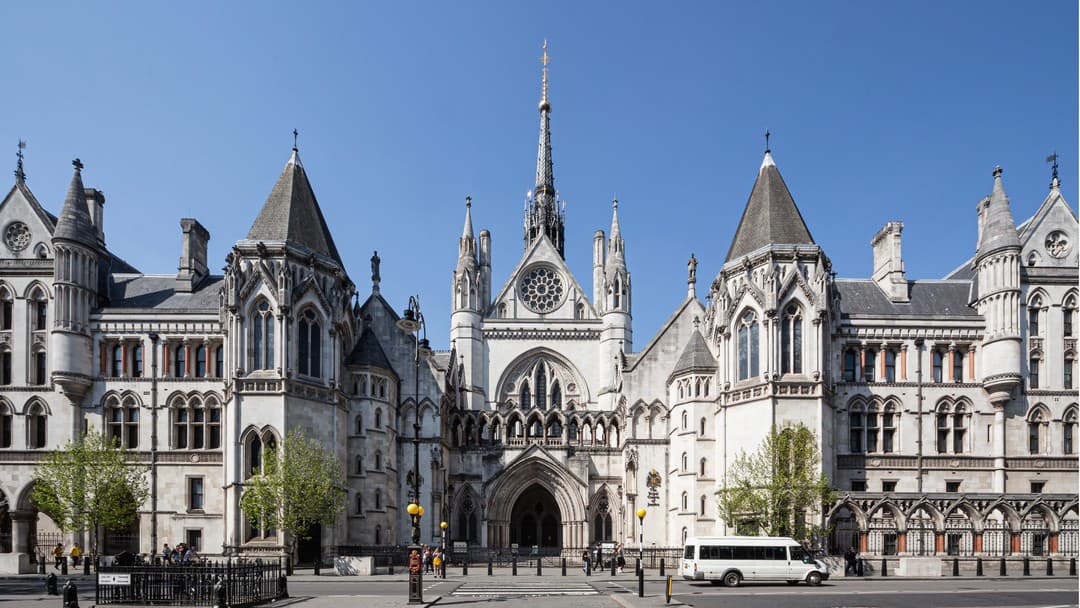
Court of Appeal clarifies when courts may strike out claims left dormant for years, rejecting a rigid legal test.
The Court of Appeal has dismissed a challenge to a decision allowing BlackBerry's claim against an Indian handset manufacturer to proceed despite a four-year period during which the claim was left entirely dormant, providing significant clarification on the approach courts should take to so-called Grovit abuse, the practice of commencing litigation without genuinely intending to bring it to a swift conclusion.
Lord Justice Miles, with whom Lord Justice Foxton and Lord Justice Jeremy Baker agreed, heard the appeal from a decision of Paul Stanley KC sitting as a deputy High Court judge in the Commercial Court. BlackBerry had issued proceedings in 2019 claiming unpaid licence fees from Optiemus Infracom under a software agreement, successfully served the claim in India, but then took no further steps for around four years after learning in March 2020 that service had been effective, largely due to concerns about Optiemus's ability to satisfy any judgement during a period of pandemic disruption and financial uncertainty. An automatic stay took effect under CPR 15.11 in July 2020. When BlackBerry finally applied in 2024 to revive the claim, Optiemus sought to have it struck out as an abuse of process.
The deputy judge found that BlackBerry had made a deliberate decision not to progress the claim from around September 2020 onwards, and that its reasons, chiefly a general and unmonitored concern about Optiemus's finances, were not objectively strong enough to justify a delay of that length. He nonetheless declined to strike the claim out, concluding that doing so would be disproportionate given the absence of specific prejudice to Optiemus beyond a quantifiable interest point, the substantial prejudice BlackBerry would suffer in losing an admittedly arguable claim worth over $6 million, and Optiemus's own complete disengagement from the litigation throughout the same period.
Optiemus's central argument on appeal was that once a court finds Grovit abuse, established authority requires the claimant to demonstrate compelling reasons why the claim should not be struck out, relying on a passage from the Court of Appeal's 1997 decision in Board of Governors of the National Heart and Chest Hospital v Chettle. Lord Justice Miles rejected this reading, conducting a detailed review of the authorities from Grovit v Doctor onwards and concluding that the reference to compelling reasons in Chettle was simply a comment on the facts of that case rather than a statement of general legal principle. He preferred the reasoning of HHJ Keyser KC in Lloyd v Hayward over that of Richards J in Watford Control Instruments v Brown, the only two post-CPR decisions to have grappled directly with the point, finding that the introduction of the Civil Procedure Rules had deliberately broadened the range of case management responses available to courts and embedded proportionality as a central consideration, displacing any earlier rigid presumption in favour of striking out.
The court held that the correct approach involves two distinct stages, first whether the claimant's conduct amounts to an abuse of process at all, and second, only if it does, a genuinely discretionary assessment of the appropriate response having regard to the overriding objective, with striking out remaining a frequent but not automatic outcome. Lord Justice Miles drew support from the court's recent decision in Pliego v Astor Asset Management, which similarly declined to impose a default presumption of striking out for a different, arguably more serious, category of abuse involving dishonestly obtained privileged information.
Having rejected the compelling reasons argument, the court found no basis to interfere with the deputy judge's detailed factual findings on prejudice, including his conclusions regarding the death and departure of Optiemus witnesses, its accounting treatment of provisions, and the disallowance of interest, all of which the court held were rationally open to him on the evidence. The appeal was dismissed on all grounds.
 Copyright & permissions










.jpg&w=3840&q=60)