Court of Appeal rejects builder's partnership claim in E J W Builders v Marshall dispute
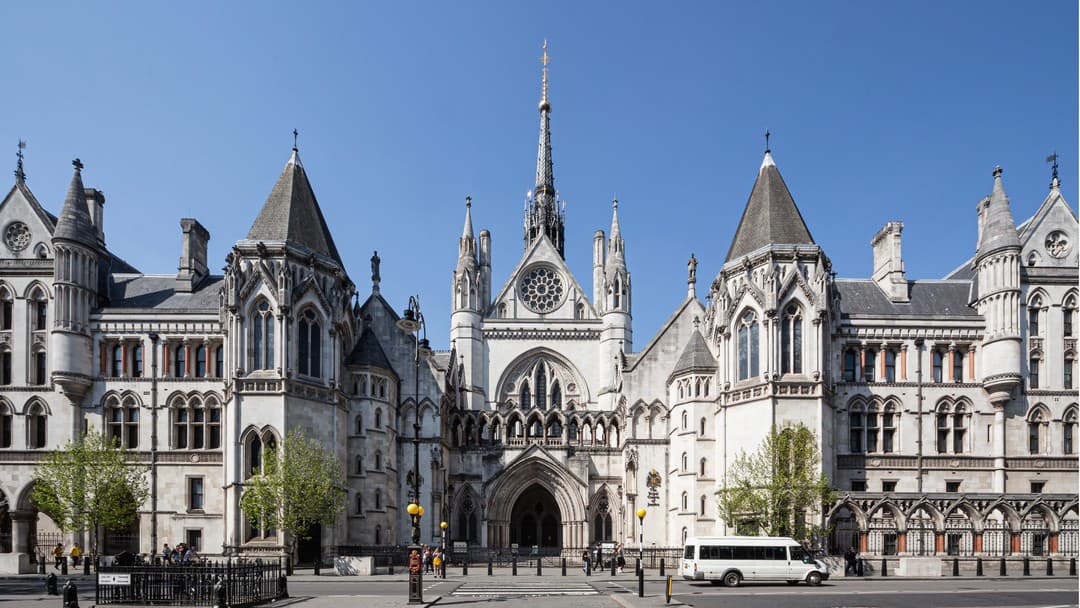
Judges reaffirm the high bar for overturning factual findings despite disputed contemporaneous documents.
The Court of Appeal has dismissed a claim by a Wiltshire builder that he had entered into a partnership or profit-sharing joint venture with the former owners of a Trowbridge hotel, upholding a trial judge's ex tempore findings after a two-day hearing, in a judgement handed down on 20 July 2026.
The case, E J W Builders Limited & Anor v Audrey Marshall & Ors [2026] EWCA Civ 911, arose from the redevelopment of the former Hilbury Court Hotel into townhouses. Eamonn Wynne, sole director of E J W Builders Limited, claimed that he and his company had orally agreed with Audrey and Edward Marshall, on or before 8 February 2019, to carry out the building work in exchange for reimbursed costs, a weekly salary, and a one third share of development profits, with the hotel property itself becoming a partnership asset. Mr and Mrs Marshall, who were made bankrupt shortly after the claim was issued, denied any such arrangement, relying instead on a JCT building contract signed in June 2019 at a fixed price with no reference to profit sharing or salary.
At trial, HHJ Paul Matthews, sitting as a judge of the High Court, found that the JCT contract represented the only binding agreement between the parties. He described Mr Wynne as an unsophisticated witness with a poor recall of events whose evidence could not be relied upon except where independently corroborated, in contrast to the Marshalls and their son, Ian Lucas, whom he found to be straightforward and truthful. The judge held that no partnership had been formed, since neither side could be said to have contributed the necessary elements of a shared business, and that while various documents referred to profit sharing, none demonstrated that a concluded agreement had been reached, still less one struck within days of a previous prospective purchaser withdrawing from the deal, before Mr Wynne and the Marshalls had even been introduced.
On appeal, the claimants argued across five grounds that the judge had made findings unsupported by the evidence, had failed properly to grapple with contemporaneous documents including WhatsApp messages, solicitors' correspondence and a profit tracker spreadsheet, and had wrongly concluded there was no single business capable of amounting to a partnership.
Giving the leading judgement, Lady Justice Falk applied the well established principle that findings of fact will only be disturbed where they are plainly wrong, in the sense of falling outside the bounds of reasonable disagreement, citing recent authority including Volpi v Volpi and Kerish International Motors Agency v Opel Automobile GmbH. She acknowledged the claimants' reliance on Simetra Global Assets v Ikon Finance, which requires judges to grapple with apparently compelling documentary evidence contrary to their conclusions, but found that the trial judge had adequately addressed the material relied upon, and that none of it was so cogent as to compel a different outcome once weighed against the witness evidence and inherent improbabilities of the claimants' case.
Lady Justice Falk noted particular difficulties with the claimants' account, including the absence of any credible explanation for why the Marshalls would have agreed to gift away a substantial share of their existing equity so soon after losing a prior purchaser, persistent uncertainty over which parties were meant to share the profits, and Mr Wynne's own conduct in later insisting on a written building contract while making no equivalent effort to document the alleged profit share. She concluded that the trial judge had been entitled to find that Mr Wynne had genuinely, but mistakenly, come to believe an agreement existed where none had in fact been concluded.
Lord Justice Miles and Lord Justice Warby agreed, and the appeal was dismissed.
 Copyright & permissions