Court of Appeal refuses permission in Re R adoption case and tightens procedural rules on leave to oppose
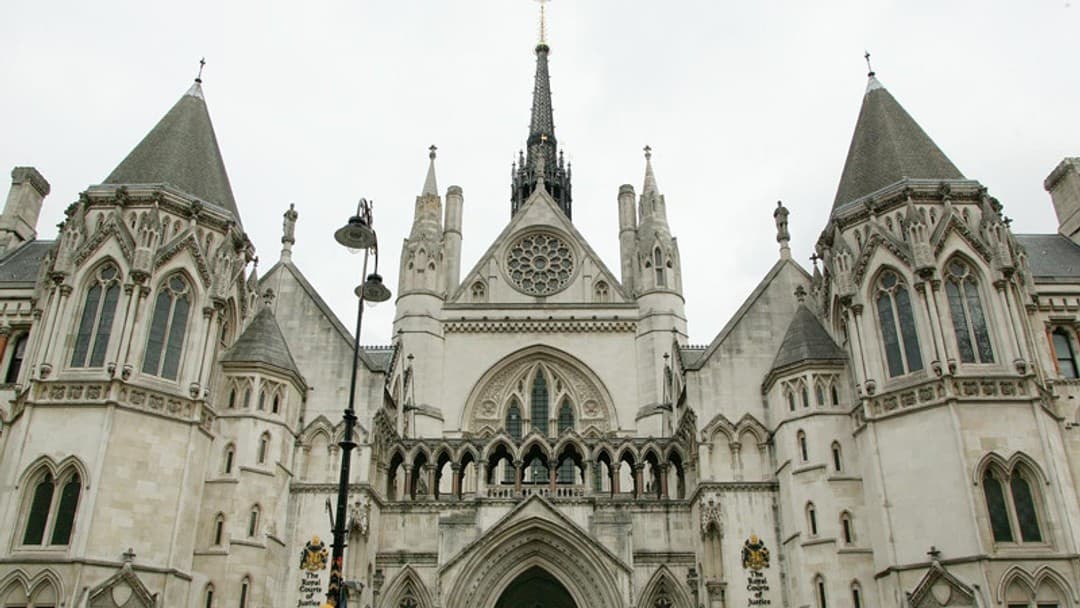
A birth mother's challenge to a refusal of leave to oppose her daughter's adoption has been dismissed, with the Court of Appeal issuing guidance on procedural safeguards that must govern such hearings.
The Court of Appeal has refused permission to appeal in R (A Child: Leave to Oppose Adoption) [2026] EWCA Civ 673, upholding a family court's refusal to grant a birth mother leave to oppose the making of an adoption order in respect of her daughter, A, now approaching her third birthday. Despite identifying several shortcomings in the way the hearing below was conducted, Lord Justice Peter Jackson, with whom Lord Justices Baker and Dove agreed, concluded that the outcome was "inevitable" and that no arguable error of substance had been made.
The judgement is notable not merely for its disposal of the permission application but for its restatement and reinforcement of procedural requirements that the court found had not been followed below, and for the guidance it now directs should be observed in all similar proceedings.
Background
A was placed with foster carers two days after her birth in June 2023 and has never lived with her birth parents. A care order and placement order were made in October 2024 by HHJ Lopez following nineteen days of fact-finding and welfare hearings across two sittings. The findings were serious, encompassing neglect, physical, emotional and sexual harm, domestic violence, and a failure by both parents to protect five children across prior relationships. The birth mother's three older children, and two of the birth father's, had already been removed from their respective care.
The birth parents had twice sought to challenge those 2024 decisions before this court, without success. Their application for leave to oppose the adoption order, made in September 2025, was heard in January 2026 and refused by HHJ Lopez, who immediately proceeded to make the final adoption order at the same hearing.
The appeal grounds
The birth mother advanced six grounds of appeal, including alleged misdirection as to the applicable legal test, failure to conduct a child-specific welfare analysis, and unfairness arising from the adoption order being made on the same occasion as the refusal of leave to oppose. She was represented before the Court of Appeal by Ms Sharmeen Quadri.
The legal test
Lord Justice Peter Jackson acknowledged that the judge below had described the test at the first stage as requiring "significant" change in circumstances on four separate occasions. That formulation has been disapproved since In re P [2007] EWCA Civ 616, the statute imposing no such intensifier. However, the court found that the misdescription had not produced any error in substance. The judge's ultimate conclusion had been expressed correctly, that there was "not sufficient change," and his finding that the courses undertaken had not had "any real effect" upon the mother's thinking was plainly open to him on the evidence, given her sustained non-acceptance of the court's most serious findings.
The court reiterated the two-stage framework confirmed in In re M [2023] EWCA Civ 404: first, whether a change of circumstances has occurred since the placement order; second, a broad evaluation of whether leave should be granted having regard to the child's welfare, including the parent's ultimate prospects of successfully resisting adoption and the impact on the child of granting leave.
Procedural guidance
Three matters of practice and procedure emerged from the judgement requiring attention.
First, courts must articulate the threshold test at the first stage correctly, without importing qualifications that the statute does not impose.
Second, where a court refuses leave at the first stage but also has a clear view that the application would fail at the second stage on welfare grounds, it should state that conclusion and give brief reasons as an alternative basis for its decision. Lord Justice Peter Jackson described this as a "belt and braces" approach. Failure to adopt it may, in some cases, require an adoption order to be set aside even where it would ultimately have been appropriate.
Third, and most emphatically, an adoption order must never be made on the same occasion as an order refusing leave to oppose. Paragraphs 11 to 14 of the Practice Guidance (Adoption: Final Hearings) [2018] 1 WLR 2232 must be followed. A minimum of 21 days must elapse between the refusal of leave and the listing of any final adoption hearing. The court noted that departure from this requirement had, in the present case, occupied four months of appeal proceedings, preventing the adopters from celebrating A's adoption unconditionally and the birth parents from beginning to grieve the outcome.
Though the procedural irregularity was real, the court held it had not caused substantive injustice in the circumstances, and declined to set aside the adoption order.
Sharmeen Quadri (direct access) for the Appellant Mother; Lorna Meyer KC and Kirsty Gallacher (instructed by Shropshire Council Children Services) for the Respondent Local Authority.
 Copyright & permissions











.jpg&w=3840&q=60)