Court of Appeal overturns special guardianship order in Re E amid threshold criteria failure
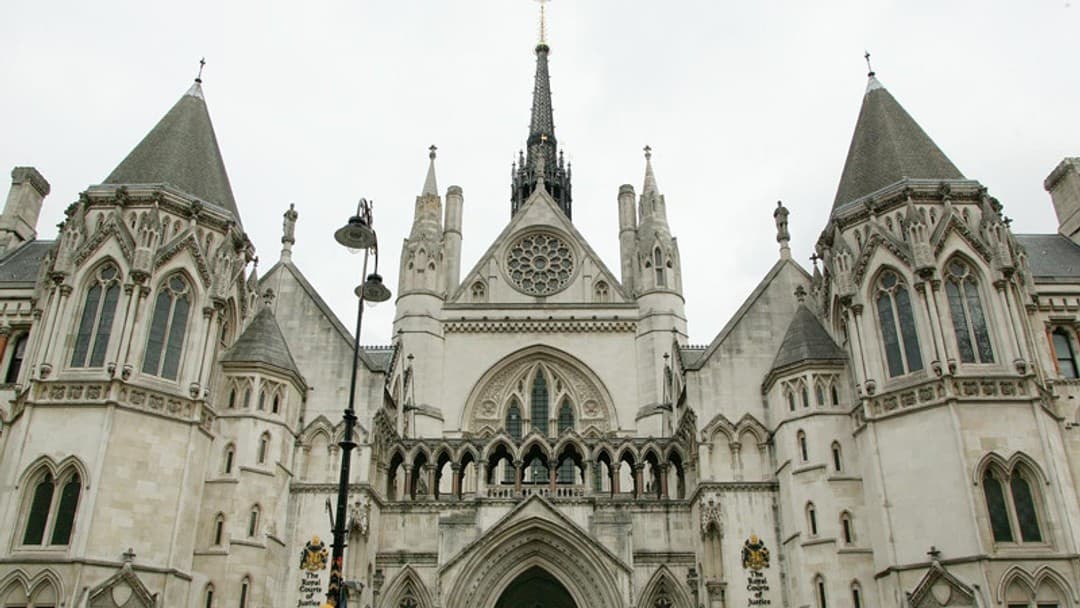
Court of Appeal rules judge wrongly bypassed threshold and proportionality tests in special guardianship case.
The Court of Appeal has quashed a special guardianship order (SGO) placing a six year old girl with her foster carer, ruling that the first instance judge should have determined the section 31 threshold criteria and applied proportionality principles before removing her permanently from her birth family.
In Re E (A Child) (Special Guardianship Order: Public Law Proceedings) [2026] EWCA Civ 1167, Lord Justice Moylan, with whom Lord Justice Singh and Lord Justice Phillips agreed, allowed appeals by the mother and maternal grandmother against an SGO made by Recorder Roche KC in the East London Family Court, remitting the matter for rehearing.
The child, referred to as E, had lived with her mother and maternal grandmother under an earlier SGO before being removed into foster care in March 2024 following allegations later largely abandoned by the local authority. After an initial foster placement ended abruptly, E was placed with her current carer, with whom she had lived for close to eighteen months by the time of the final hearing. The local authority, supported by the children's guardian, sought an SGO in the foster carer's favour, while the mother and grandmother each sought E's return, either alone or jointly, and indicated they would accept a supervision order as an alternative.
At first instance, the judge treated his task as a straightforward welfare balancing exercise, concluding that it was unnecessary to address the threshold criteria under section 31(2) of the Children Act 1989 or the question of proportionality because the local authority was not seeking a care or supervision order. He found that E would suffer emotional harm if moved and that the risk of relapse in the mother's mental health, combined with strained dynamics between the mother and grandmother, meant a return to the family was not in E's best interests.
On appeal, Lord Justice Moylan held that this approach was flawed. Drawing on the Supreme Court's reasoning in Re H-W and Re B (A Child) (Care Proceedings: Threshold Criteria), he found that an SGO placing a child with a non-family foster carer at the conclusion of care proceedings is sufficiently intrusive, given its effect of vesting parental responsibility exclusively in the special guardian, that the court should typically determine the threshold criteria and assess necessity and proportionality in the same manner as it would when considering a care order. Failing to do so, he found, risked the court effectively predetermining that a return to the family with a supervision order was unrealistic, without the structured analysis that threshold findings provide.
The judgement was also critical of the first instance court's reliance on parenting and psychiatric assessments of the mother that were, by the date of the final hearing, over eighteen months old, despite subsequent evidence of stability, continued medication compliance and engagement with mental health services. The absence of clear findings on disputed issues, including the true extent of conflict between the mother and grandmother, further undermined the judgement below.
The Court of Appeal acknowledged the pressures facing first instance judges managing lengthy and complex care proceedings, noting that the proceedings, already over two years old, would now be further prolonged as a result of the rehearing. Both further grounds of appeal were left undetermined given the outcome on the threshold and proportionality issues.
 Copyright & permissions