Court of Appeal overturns entry clearance ruling in Spence child sex offender case
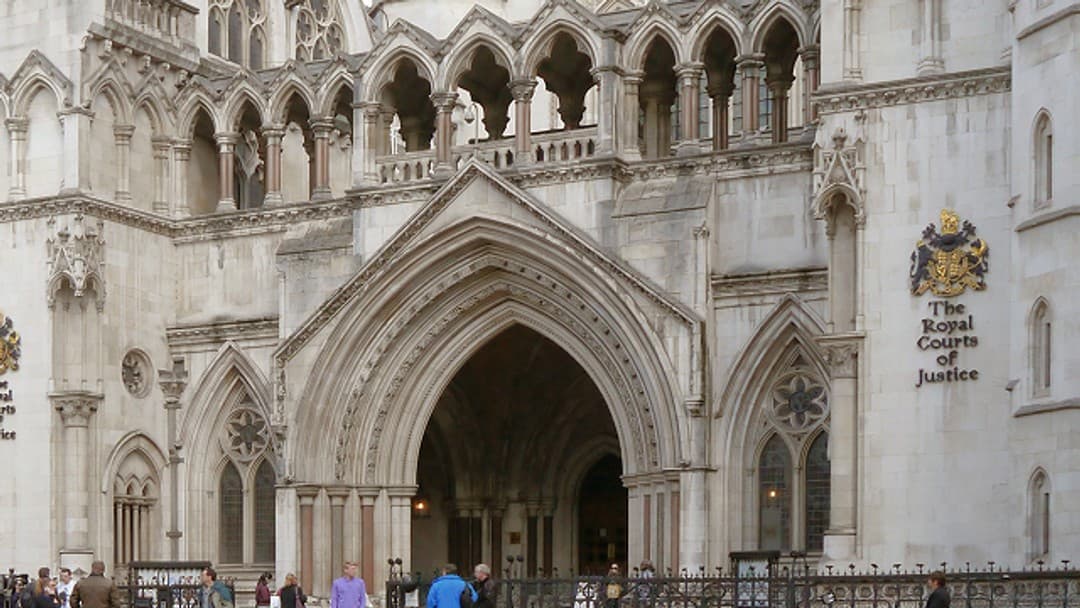
Court of Appeal (Civil Division) allows Secretary of State's appeal, remitting Article 8 balancing exercise to First-tier Tribunal
The Court of Appeal has allowed the Secretary of State's appeal in The Entry Clearance Officer v Oniel Spence [2026] EWCA Civ 722, finding that the First-tier Tribunal's decision to grant entry clearance to a convicted child sex offender was perverse and inadequately reasoned. The judgement, handed down on 9 June 2026 by Lords Justice Singh and Lewis and Lady Justice Elisabeth Laing, remits the matter to the First-tier Tribunal for a fresh determination.
Mr Spence, a Jamaican national born in 1982, applied for entry clearance to join his British wife and their 11-year-old daughter, who have always resided in the United Kingdom. He had never lived with them in this country. His application was refused by an entry clearance officer under paragraph S-EC.1.5 of Appendix FM to the Immigration Rules, on the basis that his character, conduct and associations made it undesirable to grant entry clearance. That assessment was informed by his 2008 conviction in the United States for a sexual offence against a child, for which he received a three-year sentence and was deported to Jamaica after serving 18 months.
The First-tier Tribunal allowed Mr Spence's human rights appeal, concluding that his exclusion was not conducive to the public good and that refusal was incompatible with Article 8 of the European Convention on Human Rights. The Upper Tribunal dismissed the Secretary of State's subsequent appeal, accepting that the First-tier Tribunal's reasoning, read as a whole, was adequate.
The Court of Appeal disagreed. Lord Justice Lewis, giving the lead judgement, identified a fundamental contradiction in the First-tier Tribunal's reasoning. The tribunal had found at paragraph 13 of its decision that Mr Spence had been sexually attracted to children and had pursued relationships with children in the past. At paragraph 14, it expressed doubt as to whether he had truly addressed that attraction, noting his consistent attempts to minimise the nature of his offending. At paragraph 15, it concluded that the risk of reoffending was negligible and that he was "now primarily sexually attracted to adults" given the absence of further convictions and the existence of a genuine adult relationship.
It was that phrase "primarily" which the Court of Appeal found decisive. If Mr Spence was primarily attracted to adults, the logical corollary, as Lord Justice Lewis put it, was that he retained "at least a residual or secondary sexual attraction to children." The tribunal's subsequent conclusion that there was no public interest in refusing entry clearance was therefore self-contradictory and perverse. No adequate reasons had been offered for how a finding of residual sexual attraction to children could be reconciled with a conclusion that exclusion was not conducive to the public good.
Lord Justice Lewis also addressed procedural questions concerning whether perversity had been sufficiently raised before the Upper Tribunal. Reading the original grounds of appeal fairly, he held that the argument had been advanced in substance, and that even if it had constituted a new ground, he would have granted permission given that it required no new evidence and raised no unfairness issues.
Lady Justice Laing, whilst agreeing with the outcome, appended observations that are likely to attract wider attention. She expressed a provisional view, without the benefit of argument, that the First-tier Tribunal's approach of substituting its own assessment of whether exclusion was conducive to the public good was constitutionally questionable. The primary assessment of conduciveness, she suggested, is a matter for the Secretary of State, with the tribunal's function on a human rights appeal being to determine proportionality rather than to step into the Secretary of State's shoes. Lord Justice Singh, whilst agreeing with Lord Justice Lewis, declined to express any view on that point, noting its potential significance and the absence of argument on either side.
The matter is remitted to the First-tier Tribunal to conduct the Article 8 proportionality exercise afresh, balancing the public interest in exclusion arising from Mr Spence's past and continuing sexual attraction to children against any circumstances capable of rendering refusal a disproportionate interference with his right to respect for family life. Lady Justice Laing's observations, though obiter, may well prompt fresh argument as to the correct constitutional framework for such appeals.
The Entry Clearance Officer v Oniel Spence [2026] EWCA Civ 722. Zane Malik KC (Government Legal Department) for the appellant; Zainul Jafferji and Huzefa Broachwalla (Abbott Solicitors) for the respondent.
 Copyright & permissions
.png&w=3840&q=60)







.jpg&w=3840&q=60)