Courrier v HKA Global: High Court halves inter partes costs over disclosure failure
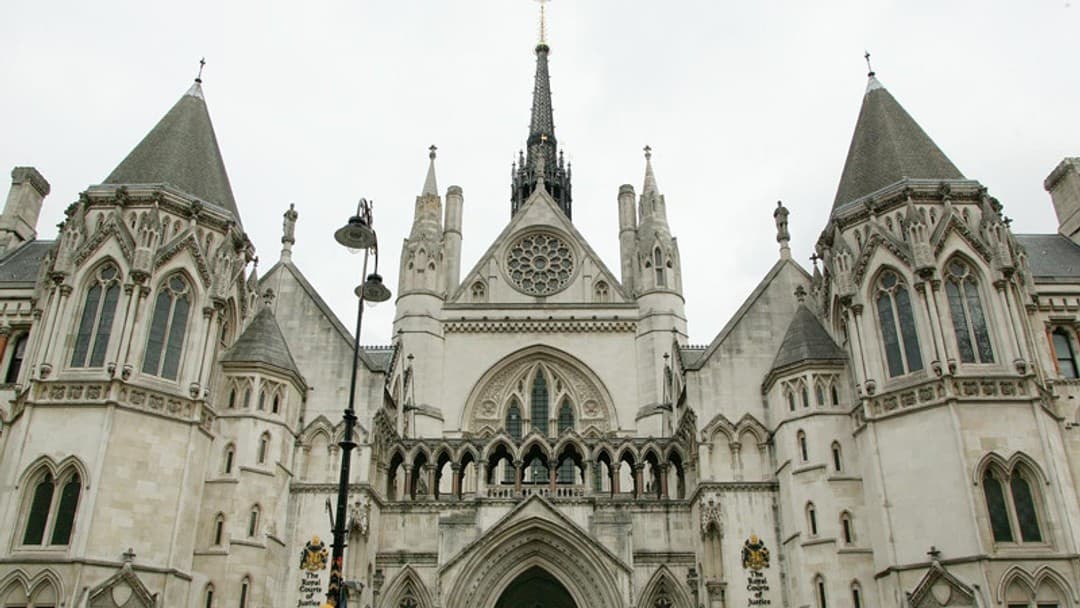
Mr Justice Dexter Dias reduces HKA's costs recovery after full and frank disclosure breach in service-out dispute.
A defendant that secured permission to serve out of the jurisdiction but breached its duty of full and frank disclosure has recovered only half of its costs of the ensuing set-aside application, in a judgement clarifying that indemnity costs do not follow automatically from non-disclosure.
In Courrier and another v HKA Global LLC and others [2026] EWHC 1716 (KB), Mr Justice Dexter Dias delivered consequential orders following his substantive decision ([2026] EWHC 1318 (KB)) dismissing an application to set aside Master Eastman's service-out and alternative-service orders.
The underlying dispute concerns allegations by HKA Group Holdings Limited that three former partners, together with Accuracy US LLC, conspired to lure away members of its staff in breach of a "nominee deed" containing an exclusive English jurisdiction clause and an English choice of law. Two of the partners, Tanner Courrier and Hansell Pasco, brought proceedings in England seeking negative declaratory relief. HKA responded by obtaining permission to serve its additional claim out of the jurisdiction in the United States. Christopher Beirise and Accuracy US applied to discharge both orders.
At the substantive stage, the court found that HKA had succeeded on three of the four issues before it, establishing a serious issue to be tried, a qualifying gateway and England as the appropriate forum. It nonetheless held that HKA had breached its disclosure duty by failing to alert the Master to an interim decision of the Delaware Court of Chancery, and by omitting an available argument from analogy.
The costs contest turned on the consequences of that breach. HKA did not contest the loss of its ex parte costs, and the court confirmed it would bear those in full. The applicants, however, sought 60 per cent of their inter partes costs assessed on the indemnity basis, arguing that HKA had failed to grasp the seriousness of the findings against it.
Dexter Dias J was unpersuaded that indemnity costs represented a "usual" consequence of non-disclosure. Drawing on Les Ambassadeurs Club v Albluewi and the Excelsior test of conduct "out of the norm", he held that the appropriate basis of assessment remained fact-specific and discretionary. The breaches here fell towards the lower end of the spectrum: they arose in a service-out application rather than a freezing order, involved no bad faith or intention to mislead, were limited in extent, and would in all likelihood have made no difference to the Master's decision. The application had not been made in secret, with papers provided to one proposed party before issue and the others shortly afterwards.
The judge distinguished U&M Mining Zambia v Konkola Copper Mining, where the breaches were "serious and numerous" and arose from a freezing order. He observed that the applicants sought nearly twice the percentage awarded there, describing the application as lacking a sense of proportion. Equally, HKA's proposal to confine any sanction to the ex parte costs fell short of the deterrent effect required, particularly given its persistent refusal, echoing the claimant bank in Yurov, to accept the materiality of the omission.
Balancing these factors, the court ordered the applicants to pay 50 per cent of HKA's inter partes costs on the standard basis. Permission to appeal was refused, and proceedings were stayed pending any renewed application to the Court of Appeal.
 Copyright & permissions