COR v Secretary of State for Defence: High Court refuses judicial review over Afghan relocation decision
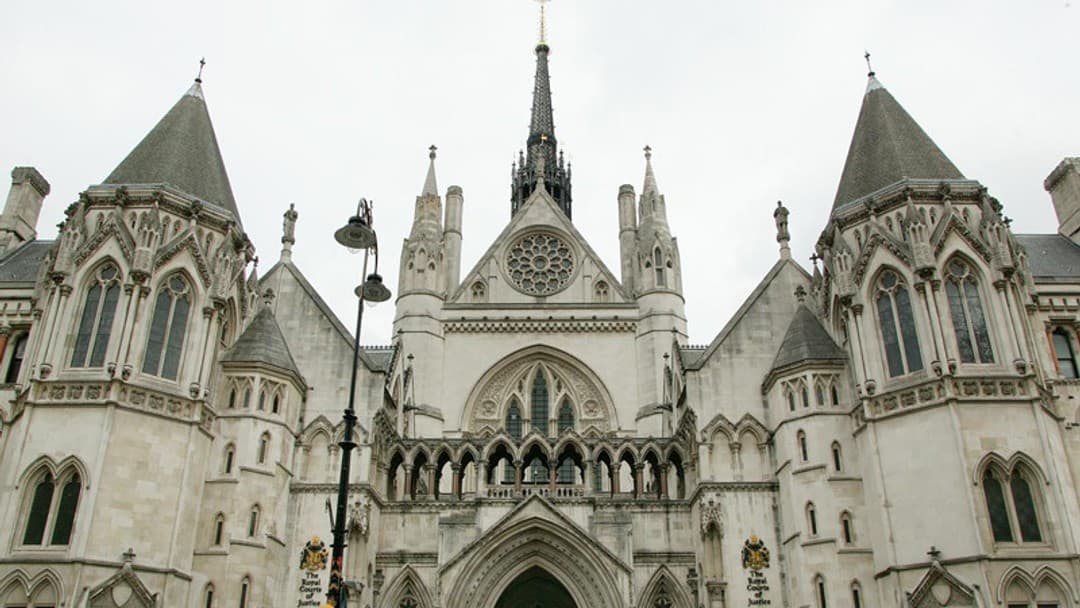
High Court refuses permission for judicial review, finding the Afghan relocation review process an adequate alternative remedy.
The High Court has refused permission for judicial review by an Afghan national who challenged the refusal of his application to relocate to the United Kingdom under the Afghan Relocations and Assistance Policy (ARAP), ruling that the policy’s review process offered a suitable alternative remedy.
In R (COR) v Secretary of State for Defence [2026] EWHC 2655 (Admin), Mr Justice Bourne considered whether the claimant should be permitted to challenge the lawfulness of the decision before the outstanding internal review had been completed.
The claimant had worked as a security guard at the British Embassy in Kabul between 2008 and June 2020 under contracts with G4S and GardaWorld. After making several attempts to apply for relocation from February 2022 onwards, he issued judicial review proceedings in December 2024. A subsequent refusal was withdrawn following a consent order in February 2025, requiring a fresh decision. The Secretary of State refused the renewed application on 15 May 2025.
The decision accepted that the claimant had provided relevant services but concluded that he had not made a “substantive and positive contribution” towards the UK Government’s national security objectives in Afghanistan. His application was therefore rejected under Category 4 of ARAP, which covers certain individuals who provided services under contract to a UK Government department or worked alongside one.
The claimant argued that the Secretary of State had unlawfully introduced a requirement that he must have worked “directly” on national security objectives, a test not found in the relevant Immigration Rules. He also alleged that the decision unfairly distinguished between direct employees and contractors.
His solicitors requested a review on 19 May 2025. That review remained outstanding, with the Secretary of State indicating that complex cases were taking 18 to 24 months to determine and estimating that a decision in this case might arrive in late autumn 2026. A request to expedite the review had been refused.
Review process held to be an adequate alternative
For the claimant, it was argued that the delay made the review ineffective, particularly because the challenge raised a legal question rather than merely disputing the evidence. Reliance was placed on R (CX1 No. 2) v Secretary of State for the Home Department [2024] EWHC 94 (Admin), in which an ARAP refusal had been quashed after the decision-maker applied an incorrect test to the applicant’s contribution to national security objectives.
The Secretary of State argued that the review process could address both legal and factual issues, consider further evidence and provide a substantive reassessment. The Government also highlighted the scale of the outstanding caseload, with more than 3,500 ARAP reviews awaiting determination. Allowing applicants to challenge initial refusals before review, it submitted, risked generating thousands of claims and diverting resources from other applicants.
Mr Justice Bourne concluded that the review process provided a suitable alternative remedy. Although the claimant’s arguments included a potentially technical legal issue, the court was not persuaded that the case could be resolved without examining the nature of his work and the contribution he had made. A judicial review ruling might therefore fail to determine the substance of the eligibility question.
The judge also rejected the contention that the claimant’s circumstances distinguished his case sufficiently from those of other applicants. Permitting the claim to proceed would risk allowing it to bypass others awaiting review and could divert limited resources. The review scheme included a mechanism for prioritising cases where expedition was justified.
Permission was refused, although the judge acknowledged the concerns arising from the claimant’s circumstances. No immediate costs order was made, with liberty to apply following further submissions.
The judgement also recorded that the claimant’s case had not been considered under the separate Afghanistan Response Route. The court noted that an explanation had since been provided but made no further determination on that issue.
 Copyright & permissions