Commercial Court rules on aircraft leasing indemnities in FW Aviation v VietJet third trial
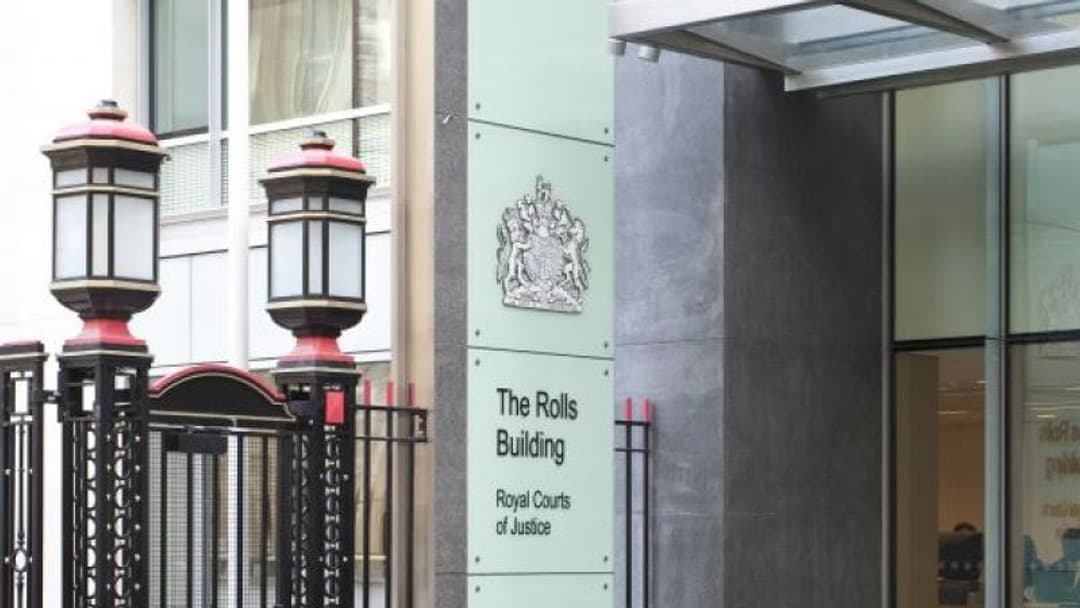
Commercial Court narrows VietJet's liability for aircraft repossession costs following Vietnamese airline's lease default.
The Commercial Court has handed down judgement in the third trial of long-running litigation between FW Aviation and VietJet Aviation over the termination of leases for four Airbus A321 aircraft, clarifying the scope of indemnity provisions in Japanese Operating Lease with Call Option structures while significantly reducing the sums FW Aviation could recover for its post-repossession costs.
Mr Justice Birt heard the third trial following earlier judgements from Mr Justice Picken establishing that VietJet's leases had been validly terminated in 2021 amid Covid-related rental arrears, and awarding FW Aviation over $180 million in termination sums and liquidated damages. This trial addressed FW Aviation's further claims for the costs of repairing, maintaining and eventually exporting the aircraft from Vietnam, alongside lost rental income and enforcement costs, following a lengthy and contested process in which three of the four aircraft were returned in poor condition and took between eighteen months and over two years to leave Vietnamese airspace.
A central issue was whether clauses 19 and 20 of the sub-leases, which set out remedies on termination including a strict "Return Condition" requiring aircraft to be handed back in near-pristine state, operated as an exclusive code excluding recovery under the broader indemnity in clause 23.1. The judge rejected that argument, finding the sub-leases contemplated overlapping and cumulative remedies, though he held that where a specific clause fixed liquidated damages for a particular loss, such as the enhanced rental payable between termination and redelivery, a claimant could not seek a different sum for the same loss under a general indemnity.
The judge also rejected VietJet's argument that clause 23.1 was confined to third party claims, finding its broad wording extended to first party costs incurred directly by the lessor, consistent with the purpose of insulating the financing structure from the costs of an aircraft's return. He similarly rejected an argument that the indemnity required proof of a proximate cause, holding the clause's language permitted a looser causal connection.
However, FW Aviation's position in relation to the two older CEO aircraft proved considerably weaker than for the two newer NEO aircraft. Because FW Aviation had not acquired certain contractual rights, known as Excluded Property, in respect of the CEO aircraft, the judge found it could only bring claims as successor to the original lender's security interest, a status that ceased once that security had been realised through an earlier sale of the aircraft. The result was that FW Aviation could not recover its maintenance, storage or lost rental costs for the CEO aircraft, since those losses were incurred in its capacity as owner rather than as a lender's successor.
On the claim to put the NEO aircraft into the contractual Return Condition, the judge held that the relevant indemnity permitted recovery only of costs actually incurred, not the hypothetical cost of work FW Aviation had chosen not to carry out after leasing the aircraft to Turkish Airlines in their improved but non-compliant state. This significantly reduced a claim originally pleaded at over $31 million, leaving FW Aviation to elect between actual costs incurred and a diminution in value claim, the latter calculated by reference to detailed and at times sharply contested expert evidence on aircraft valuation.
FW Aviation's substantial claim for enforcement costs, running to tens of millions of dollars for legal fees across multiple jurisdictions, largely failed for want of evidence, with the judge declining an eleventh-hour proposal to defer detailed assessment to a costs judge without any trial evidence establishing what the costs were for or that they fell within the relevant indemnities. VietJet's counterclaim over unreturned engine stands also failed, on the basis that any liability would simply increase the sums otherwise recoverable by FW Aviation.
The parties were directed to seek to agree the calculation of the various sums awarded, with any disputes to be resolved at a further hearing addressing consequential matters including interest and costs.
 Copyright & permissions