Commercial Court adjourns fraud set-aside point in Stor RB One v Kanthasamy pending appeal
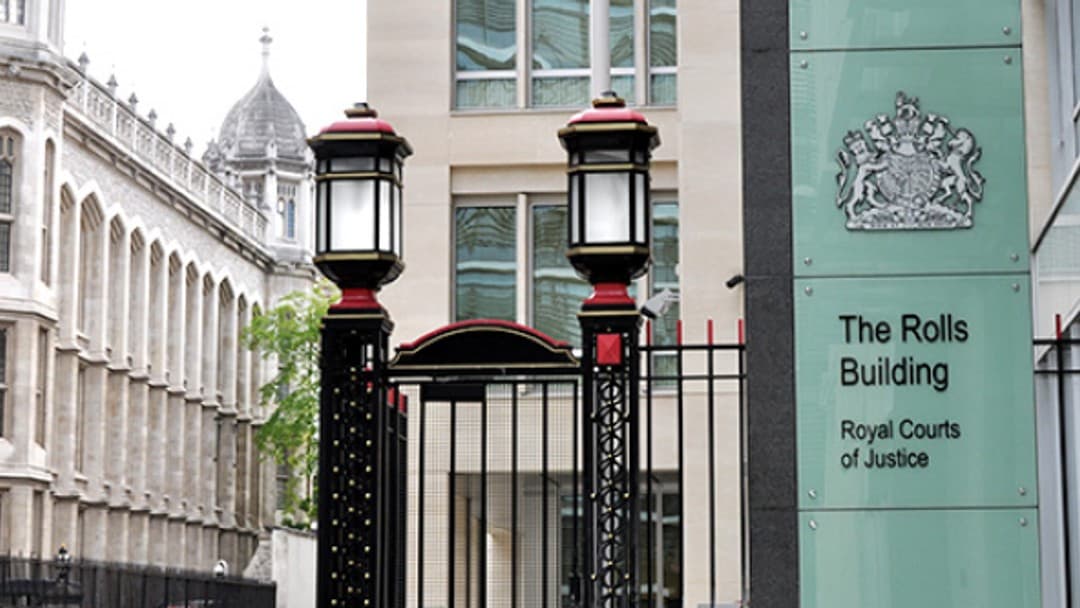
Commercial Court lets forged guarantee claim proceed to trial while novel set-aside point awaits appeal.
The London Circuit Commercial Court has declined to shut out a claim to set aside a judgment said to have been procured by a forged guarantee, holding that whether a judgment can be unwound where the fraud was committed by a co-defendant rather than the judgment creditor is a question best left until the Court of Appeal rules in a closely related matter. Adam Kramer KC, sitting as a High Court judge, gave judgement in Stor RB One Ltd v Kanthasamy on 7 July 2026.
The dispute stems from an order of His Honour Judge Pelling KC in October 2023, which granted summary judgment against Konnec Ltd under a receivables purchase agreement and against Mr Kanthasamy, a relative of Konnec's director Mr Kandiah, on a personal guarantee, fixing his liability at £541,951 plus interest. That order has since been enforced through charging orders, a settlement agreement, a statutory demand and a bankruptcy petition, with a possession trial listed for later this month.
Mr Kanthasamy now seeks to set the order aside, contending that the guarantee was forged by Mr Kandiah, that the attesting witness and the certificate of independent legal advice were fabricated, and that he signed the defence in the original action without appreciating the existence of the forged deed, relying on Takhar v Gracefield Developments. Stor, itself the innocent recipient of the judgment, applied to strike out the claim or for reverse summary judgment.
A novel question of principle
The judge accepted that the particulars were defective, since fraud must be pleaded with clarity and the claim nowhere identified who committed the fraud or how the court was misled. Rather than strike them out, he directed amendment within four weeks.
The substantive difficulty lay in the legal question. The reported authorities on setting aside for fraud almost invariably concern fraud by the judgment creditor. Here the alleged fraudster, Mr Kandiah through Konnec, did not rely on the judgment at all, so it was arguable that the established requirements were not met against any party. The judge examined Kerr J's recent decision in Lindsay's Estate v Outlook Finance, which held that the equitable jurisdiction could extend to setting aside a judgment against an innocent co-judgment creditor on the basis that fraud taints the integrity of the judgment itself. He noted a material distinction: in Lindsay's Estate the fraudster was a judgment creditor and the threshold was satisfied against that party, whereas here it was not.
Learning during the hearing that the Court of Appeal had heard the Lindsay's Estate appeal only days earlier, and that its first ground squarely addressed whether the jurisdiction reaches a non-fraudulent party, the judge concluded that the sensible course was to adjourn the strike-out and summary judgment application on the law. Deciding the point now, only for the parties to relitigate it once the appellate ruling emerged, would be slower and more costly than awaiting a decision expected before long.
Forgery a matter for trial
On the alternative case that Mr Kanthasamy had no real prospect of proving forgery, the judge refused summary judgment. Although several features told against him, including his admitted signature on the defence and his apparent familiarity with guarantees, there were genuine triable issues. The signature on the guarantee looked markedly different from his accepted signatures, the certificate of independent advice appeared to be a forgery on the evidence of the firm and solicitor named, and the timing of his objection was not incredible.
The application on the facts was accordingly dismissed, the point of law adjourned, and costs reserved.
 Copyright & permissions





.jpg&w=3840&q=60)