Code Students v Nottingham City Council: High Court refuses judicial review over rival scheme approval
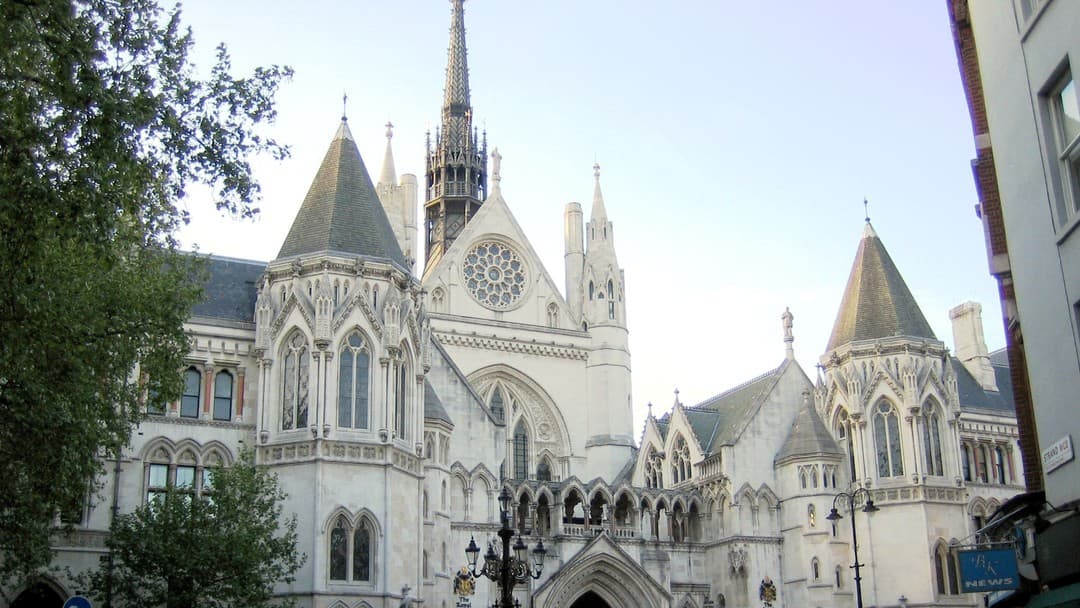
High Court refuses permission for judicial review of Nottingham student accommodation planning decision.
The High Court has refused permission for a rival developer to challenge Nottingham City Council's grant of planning permission for a competing student accommodation scheme, rejecting arguments that the council had acted inconsistently and unlawfully withheld background documents.
In Code Students (Nottingham) Limited, R (on the application of) v Nottingham City Council [2026] EWHC 2110 (Admin), Mrs Justice O'Farrell dismissed a renewed application for permission to seek judicial review, following an earlier refusal on the papers by Steyn J.
The claimant had itself applied to develop a purpose-built student accommodation scheme at Glasshouse Street and Cairns Street, comprising two towers of up to thirty storeys and 1,252 studio units. That application, known as the Code Scheme, was refused by the council in December 2025 following an officer recommendation against approval, and is now the subject of a separate appeal to the Secretary of State listed for 2027. Weeks earlier, the council had resolved to grant permission for a different scheme at the former Guildhall police and fire station site, involving the restoration of a Grade II listed building alongside a new eighteen storey tower providing 610 units, comprising a mix of studios and cluster accommodation.
The claimant argued that the council's approach to the two schemes was materially inconsistent without adequate explanation, and that it had been unlawfully denied background documents, including an assessment report and consultee comments, in breach of section 100D of the Local Government Act 1972. It also alleged failures properly to weigh heritage harm to the listed building, to consider material planning matters such as overshadowing and traffic impact, and to secure effective wind mitigation through a landscaping condition alone.
On the document disclosure ground, the council accepted the background papers should have been published before the decision but argued the claimant suffered no real prejudice, since it had never objected to the Guildhall Scheme and had only sought the documents to support its own appeal strategy. Mrs Justice O'Farrell agreed, finding it was not reasonably arguable that publication would have changed the outcome, given the relevant issues were already addressed in the officer's report, and applying the statutory test under section 31 of the Senior Courts Act 1981 that relief must be refused where the outcome would highly likely not have been substantially different.
On inconsistency, the judge applied the established principle from North Wiltshire District Council v Secretary of State for the Environment that like cases should be decided alike, but found the two schemes were not properly comparable. She identified substantial differences in scale, height, unit mix, site allocation and level of public objection, each explaining the divergent treatment on sunlight, wind, noise, highways and heritage grounds. The heritage challenge also failed, with the judge finding the officer's report had expressly applied the statutory presumption against harm to listed buildings and conducted a proper balancing exercise. The remaining grounds, concerning overshadowing, traffic sensitive streets and wind mitigation by condition, were each found to have been adequately addressed or to fall within the decision-maker's planning judgement.
An interested party, Torsion, had also argued the claimant lacked standing, given its apparent motive of strengthening its own appeal. Mrs Justice O'Farrell rejected that argument, accepting that a competing developer had a legitimate interest in ensuring consistent treatment of comparable applications, even where litigation also served a strategic purpose.
Permission for judicial review was refused on all five grounds.
 Copyright & permissions