Coal Pension Properties v Mace Living: email service fails where Covid footer and authority requirements go unmet
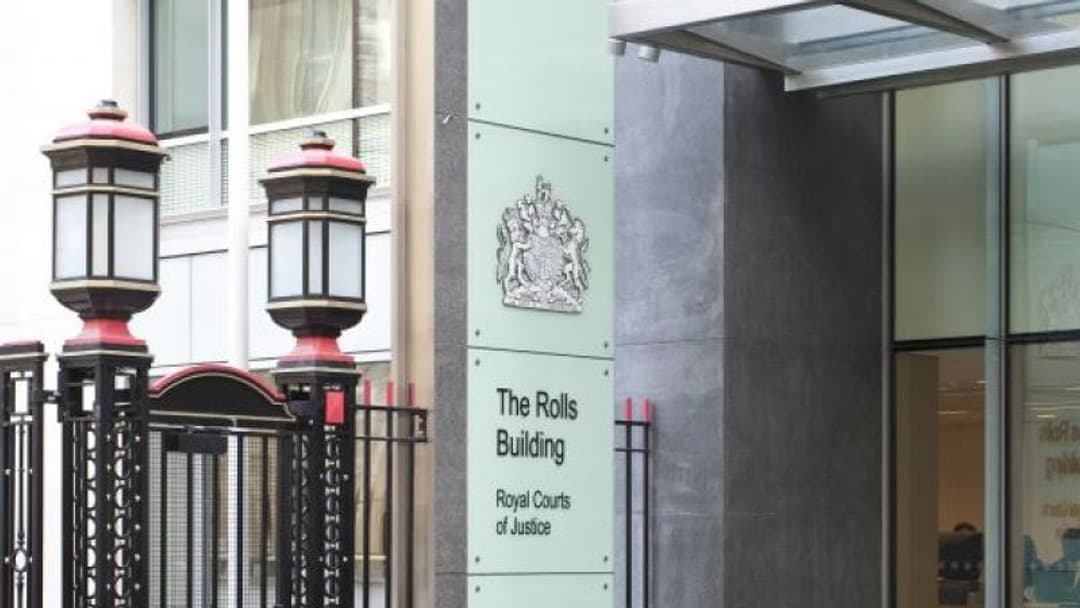
High Court dismisses claim form service application after finding multiple procedural failures under CPR Part 6
A High Court judgement handed down on 26 May 2026 has reinforced the strict requirements for valid service of a claim form on a defendant's solicitors, rejecting attempts by Coal Pension Properties Limited (CPPL) to validate purported email service on Mace Living Limited and two associated Mace entities in proceedings valued at over £82 million.
Mr Roger Ter Haar KC, sitting as a Deputy High Court Judge in the Technology and Construction Court, dismissed CPPL's application for a declaration that service had been validly effected on 2 February 2026, along with its fallback applications under CPR 6.15 and CPR 3.
The notification question
CPPL argued that a draft Form N244 sent by Clyde & Co to Forsters in July 2023 -- in which Clyde & Co included its own address and the email addresses of two of its lawyers under the heading for documents about the application -- constituted written notification that Clyde & Co was instructed to accept service of the claim form under CPR 6.7(1)(b).
The judge rejected this, applying the objective construction principles from Actavis Group HF v Eli Lilly & Co [2013] and drawing heavily on Fraser J's decision in LSREF 3 Tiger Falkirk v Paragon Building Consultancy [2021], in which an almost identical argument had failed against the same defendant's solicitors. The Form N244 related to extending deadlines, not to the mode or recipient of service. No express notification of authority to accept service had been given, and experienced solicitors ought to have appreciated the significance of that omission.
The Covid footer
CPPL further argued that a footer appearing on Clyde & Co's emails from at least April 2022 -- stating that "service of claim forms, application notices and all other court documents and contractual notices should be made only by email" -- satisfied the requirements of Practice Direction 6A.
The judge agreed with Fraser J's analysis in Paragon that the Covid footer satisfied paragraph 4.1 of PD 6A as an indication of willingness to accept email service, but that it did not amount to a notification under CPR 6.7. Crucially, CPPL had also failed to comply with paragraph 4.2 of PD 6A, which requires a party intending to serve electronically to first enquire whether there are any limitations to the recipient's agreement to accept such service.
The Covid footer had in any event been superseded by a replacement footer introduced around July 2022. That replacement footer conditioned email service on prior agreement with the case-handling lawyer and required documents to be sent to a specific service address which CPPL had not used. The judge held that a previously given notification of willingness to accept service can be retracted, and that the replacement footer provided sufficient notice of that retraction.
The CPR 6.15 application
Having found service invalid, the judge turned to CPPL's application for retrospective validation under CPR 6.15. Applying the framework from Barton v Wright Hassall [2018] and the Court of Appeal's decision in R (Good Law Project) v Secretary of State for Health [2022], he concluded that no good reason existed to exercise the discretion.
CPPL had not taken reasonable steps to effect compliant service, having never enquired whether Clyde & Co was authorised to accept service. The defendants would be prejudiced by the loss of an accrued limitation defence to the contract and tort claims -- a factor carrying considerable weight in the authorities. The availability of a potential claim under the Defective Premises Act 1972 did not assist CPPL; on the contrary, the judge observed, it reduced rather than increased any prejudice CPPL might suffer from being held to the limitation position.
The defendants' application for declarations that CPPL's application be dismissed and that the court lacked jurisdiction to try the claim accordingly succeeded. The case serves as a further illustration of the courts' consistent refusal to relieve claimants from the consequences of leaving service to the last moment without first establishing the basic procedural prerequisites.
Coal Pension Properties Limited v Mace Living Limited & Ors [2026] EWHC 1248 (TCC), 26 May 2026
 Copyright & permissions
.png&w=3840&q=60)








.jpg&w=3840&q=60)