Burger v Risk Solutions: Court of Appeal rules JD Wetherspoon not vicariously liable for door staff assault
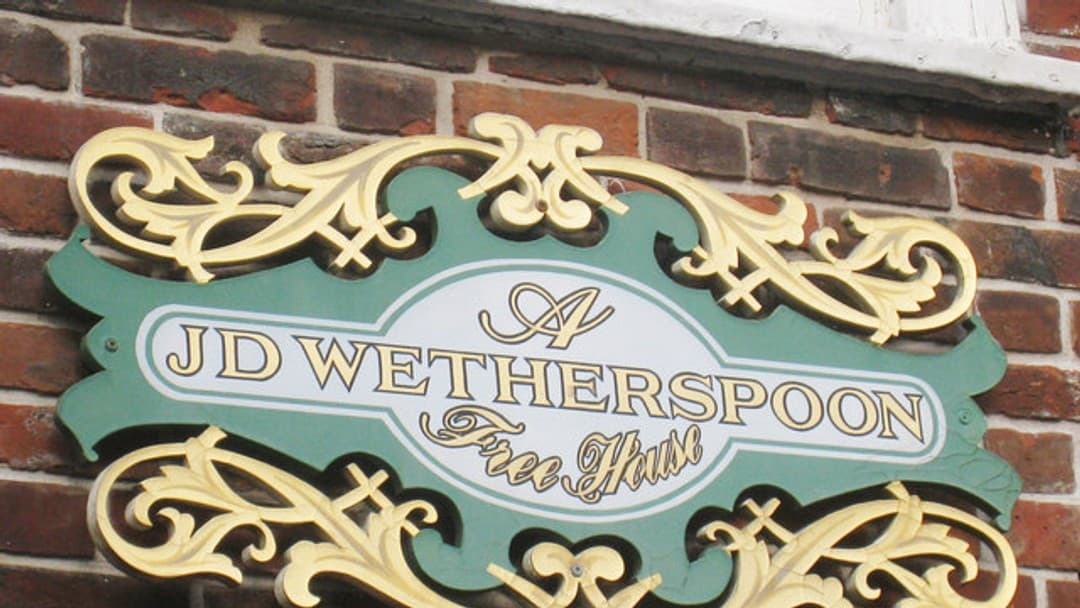
Court of Appeal rules JD Wetherspoon not vicariously liable for assault, leaving claimant uncompensated.
The Court of Appeal has dismissed an appeal by a man left with a dislocated hip after being restrained by door supervisors outside a JD Wetherspoon pub, ruling that the pub chain was not vicariously liable in circumstances where the supervisors were employed by an independent security contractor that had since been dissolved and uninsured, in a judgement handed down on 25 June 2026 ([2026] EWCA Civ 804).
On 5 August 2018, Stephanus Burger was restrained outside a pub in Guildford with such force that he suffered a dislocated hip requiring emergency surgery and a three-night hospital stay. The door supervisors were employees of Risk Solutions BG Limited, engaged by JD Wetherspoon plc (JDW) under a security services agreement. Mr Burger obtained a default judgment against Risk Solutions, but the company had already entered creditors' voluntary liquidation and was dissolved shortly afterwards. His claim against JDW accordingly became critical to any recovery.
A Recorder sitting in the County Court at Central London found in Mr Burger's favour following a three-day trial in September 2023, awarding damages of £69,775.50 on the basis that JDW was vicariously liable. Sweeting J allowed JDW's appeal in May 2025. Lord Justice Newey, with whom Lord Justices Bean and Jeremy Baker agreed, dismissed Mr Burger's further appeal.
Newey LJ held that the Recorder had misdirected himself by proceeding directly to the "akin to employment" factors identified by Lord Burrows in BXB v Trustees of the Barry Congregation of Jehovah's Witnesses [2023] UKSC 15, without first asking the threshold question of whether Risk Solutions was a true independent contractor. On the contractual terms and the evidence, it plainly was: Risk Solutions was responsible for the direction, management and control of its own staff, indemnified JDW against liability for their acts, carried its own insurance, and supplied its services on an hourly commercial rate consistent with a business operating at its own risk of profit and loss.
Newey LJ confirmed that the classic distinction between employees, those in relationships akin to employment, and true independent contractors survives the series of Supreme Court decisions from Christian Brothers through to BXB. Where a tort is committed by an employee of a true independent contractor, the party who engaged that contractor will not ordinarily be vicariously liable. The "akin to employment" factors listed in BXB are relevant to that distinct question but are not exhaustive and cannot substitute for the fundamental inquiry into whether the tortfeasor's employer was carrying on a recognisably independent business.
The case was also distinguished from Hawley v Luminar Leisure Ltd [2006] EWCA Civ 18, in which a nightclub operator had assumed such de facto control over supplied door staff as to become their temporary deemed employer. No comparable transfer of control to JDW was established on the Recorder's findings.
The outcome drew an unusually candid response from Bean LJ, who agreed with the result but expressed regret. The Recorder had found what happened to Mr Burger "appalling" and concluded that the door supervisors had not acted in genuine self-defence. With Risk Solutions dissolved, uninsured, and JDW not vicariously liable, Mr Burger receives no compensation. Bean LJ added that JDW's conduct in the litigation had not enhanced the company's reputation.
[2026] EWCA Civ 804 | Court of Appeal (Civil Division) | Lord Justice Bean, Lord Justice Newey, Lord Justice Jeremy Baker | Decided: 25 June 2026
 Copyright & permissions