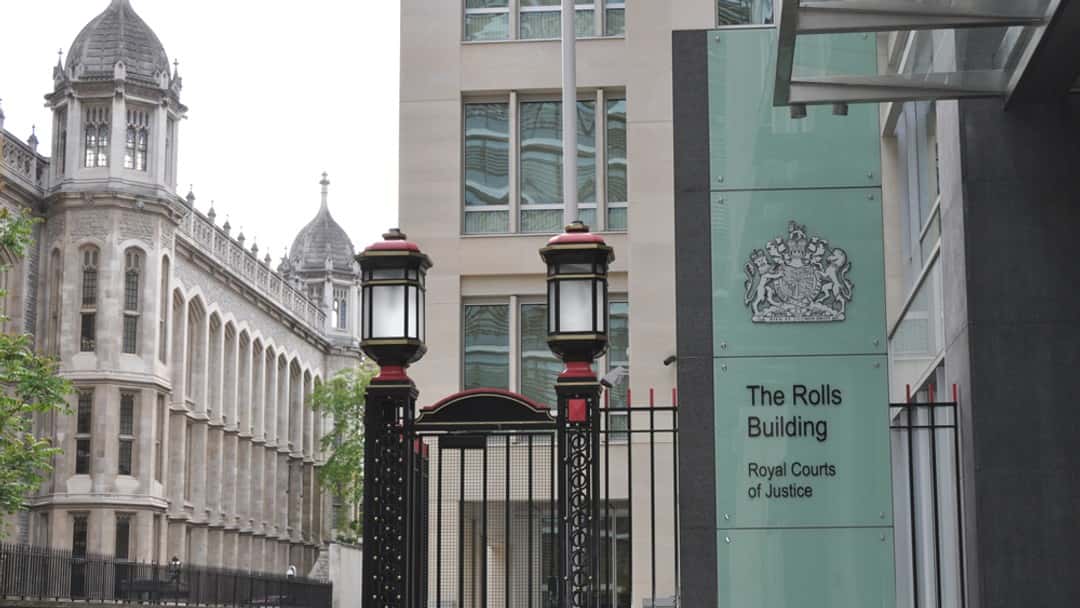
Bunting v HMRC: Court of Appeal rules section 253 loan relief requires a legal right to recover

Court of Appeal says released debt is not outstanding, defeating TCGA section 253 relief.
The Court of Appeal has held that a lender who releases debt in exchange for worthless shares cannot claim capital gains tax relief for loans to traders, because the released amount is no longer "outstanding" under section 253 of the Taxation of Chargeable Gains Act 1992.
Lord Justice Newey, with whom Lord Justice Phillips and Lord Justice Miles agreed, gave judgement in Bunting v The Commissioners for HMRC [2026] EWCA Civ 1331 on 16 October 2026. The decision dismisses an appeal from the Upper Tribunal and rejects the approach taken in Crosby v Broadhurst [2004] SpC 416.
Capitalised loans and a failed business
Timothy Bunting funded a company incorporated in 2004 to deal in sports history books and memorabilia. By the end of 2010 he had lent it £3,452,771 through unsecured, interest-free loans. By 2012 the business was unsustainable. On 31 January 2013 he released £2.2 million of the debt in exchange for 2.2 million fully paid shares, which had no market value. The company entered members' voluntary liquidation on 28 March 2013.
The capitalisation was meant to support an income tax loss claim under section 131 of the Income Tax Act 2007. Mr Bunting later accepted that shares worthless on issue had not become of negligible value, and pursued relief under section 253 instead. HMRC refused the claim, the First-tier Tribunal allowed his appeal, and the Upper Tribunal reversed that decision in March 2025.
The meaning of "outstanding"
Section 253(3)(a) requires that "any outstanding amount of the principal of the loan has become irrecoverable". Marika Lemos KC, for Mr Bunting, argued that "outstanding" simply means unpaid, so the capitalised sum, for which nothing of value was received, remained eligible. Richard Vallat KC, for HMRC, contended that it means remaining legally due.
Newey LJ preferred HMRC's reading. Payment is the usual way a debt ends, so an unpaid debt will normally also be unsettled and continuing, but the natural sense of the word covers release as well as discharge. It would be odd, he said, to describe a loan as released yet outstanding. The word "amount" could be explained by the need to confine relief to principal, to allow for part-payment or part-release, and to permit claims where a loan is only partly irrecoverable.
Context pointed the same way. Section 253 refers to the claimant's "right" to recover the amount, in the assignment condition in subsection (3)(b) and in the clawback provisions in subsections (5) and (9), and other parts of the 1992 Act use "outstanding" similarly. Subsection (3)(b) was not redundant, the court held, because it concerns the identity of the claimant rather than the loan.
Insolvency, guarantors and timing
Mr Bunting's counsel warned that the construction could defeat claims where a borrower has been dissolved or a voluntary arrangement approved. The court accepted that unwelcome results might arise in exceptional cases, noting that a lender could often claim earlier or seek restoration of a dissolved company, but said this did not displace the ordinary meaning of the words.
On guarantors, Newey LJ reasoned that a borrower whose debt has been discharged by a guarantor remains liable to the guarantor by subrogation, so subsection (4) is consistent with a legal-liability reading. An argument that the relevant moment is when the amount became irrecoverable, rather than when the claim is made, was also rejected, since the words "at that time" in subsection (3) point to the claim date.
An unresolved question
The court noted a debate over section 253(9). HMRC suggested that receiving money's worth in satisfaction of a sum is treated as recovering the full sum, whatever its market value. If correct, the capitalisation might have triggered a chargeable gain of £2.2 million. Because this departed from earlier common ground, Newey LJ found it unnecessary to decide the point.
The appeal was dismissed.
 Copyright & permissions

-cropped-a0w29ejw.jpg&w=3840&q=60)