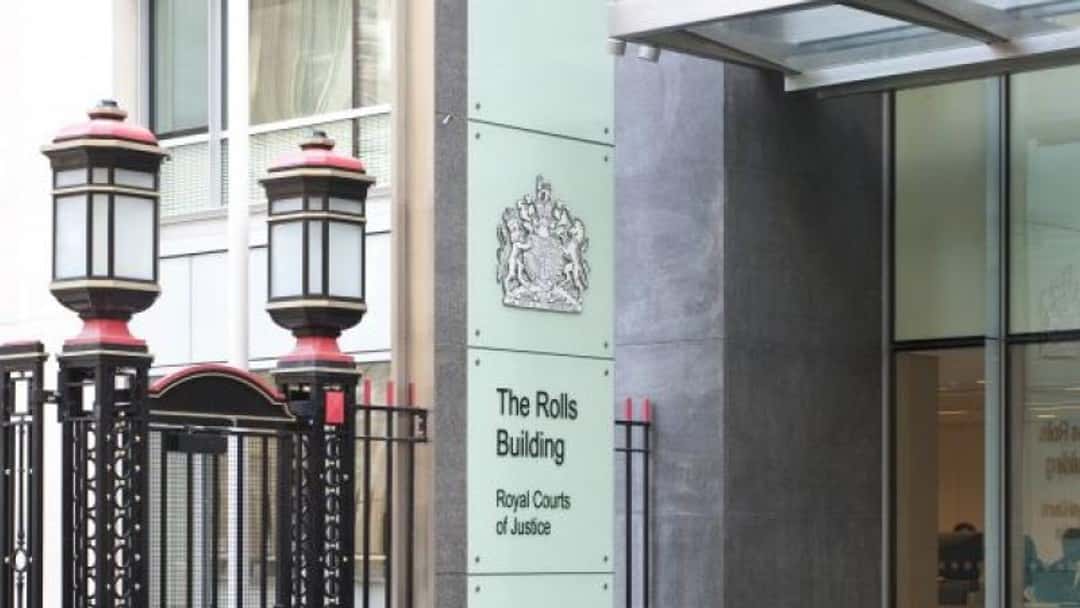
Brown v Semelo-Shaw: joint tenants can claim rent repayment orders individually

Upper Tribunal rules individual joint tenants need not join co-tenants to claim rent repayment.
Individual members of a joint tenancy may apply for a rent repayment order without the participation of their fellow joint tenants, the Upper Tribunal (Lands Chamber) has held, overturning a First-tier Tribunal decision that it lacked jurisdiction.
In Brown & Ors v Semelo-Shaw [2026] UKUT 448 (LC), Judge Elizabeth Cooke allowed the appeal of three former tenants of an unlicensed house in multiple occupation (HMO) in north London
The flat had been let for several years under a single joint tenancy to three occupants at a time, with one tenant collecting shares from the others and paying the whole rent to the landlord. It fell within an additional licensing designation but was never licensed. The three appellants, who lived there at different times, applied together for orders under s.40 of the Housing and Planning Act 2016, each claiming the rent she had personally paid. None of their co-tenants joined in.
The FTT's jurisdictional objection
Raising the point of its own motion, the FTT found the s.72(1) Housing Act 2004 offence proved but concluded that the claim was a joint one. Rent paid under a joint tenancy was a joint payment by all the tenants, so any order to "repay an amount of rent paid by a tenant" must be made to all of them jointly. Relying on the common law rule that joint creditors must sue together, Re Maud and CPR 19.3, it held that the absence of the other joint tenants was fatal. It saw this as protecting landlords from multiple claims and over-recovery.
Permission to appeal was granted on a point of general public importance never previously argued.
Context over common law orthodoxy
The landlord argued that "the tenant" means all joint tenants together absent express contrary provision, citing Jacobs v Chaudhuri, Solihull MBC v Hickin and the principle against doubtful penalisation.
Judge Cooke rejected any such default rule. Following Lloyd v Sadler [1978] QB 774, the common law meaning applies unless context and policy indicate otherwise, and express wording is not required. Solihull v Hickin cast no doubt on that approach; there the majority simply found that the context of statutory succession, where a surviving joint tenant still held the tenancy, required the orthodox meaning.
Rent repayment orders exist to punish and deter rogue landlords, as the Supreme Court explained in Jepsen v Rakusen. There was no reason that objective should be harder to achieve where a tenancy happens to be joint. HMO occupants are typically unconnected individuals; co-tenants may be untraceable, unwilling, or still in residence and unable safely to litigate against their landlord. To the unrepresented parties the FTT is designed for, "a tenant" naturally means any individual tenant.
The doubtful penalisation principle did not assist: the maximum liability (the rent) and the limitation period are both clear. Over two decades of orders had produced no evidence of over-recovery, and landlords can challenge what each tenant says she paid. CPR 19.3 does not apply in tribunals and, in any event, assumed the very construction in issue.
The judge added that the FTT's approach would produce unworkable results, including forcing unwilling co-tenants to be joined as respondents, joint orders held on trust, and requiring all tenants to join a claim founded on harassment of only one.
A rent repayment order may therefore be claimed by any tenant, sole or joint, for the rent that individual personally paid. The FTT's assessed awards, totalling £8,968.69, are payable within 28 days.
Justin Bates KC (Anthony Gold LLP) for the appellants; James Andrews-Tipler and Hamish Fraser (Advocate) for the respondent, all acting pro bono.
 Copyright & permissions