Broadfield Law v Barnes: Court of Appeal confirms certainty requirement for contentious business agreements
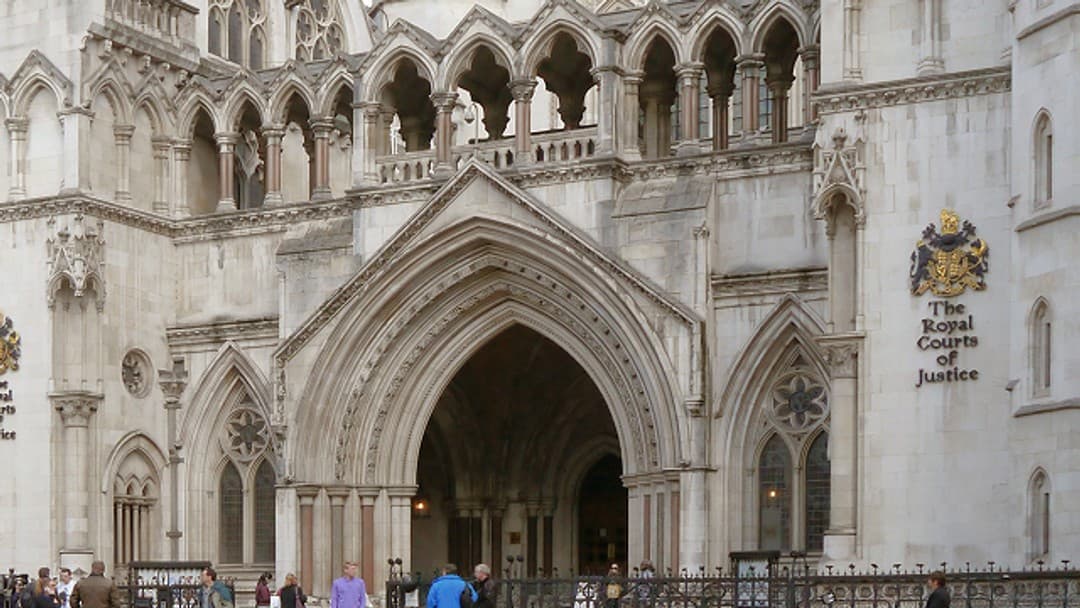
Hourly-rate retainers that leave clients unable to calculate their exposure do not qualify as contentious business agreements, the Court of Appeal has ruled.
The Court of Appeal has dismissed a challenge to the long-standing certainty requirement for contentious business agreements (CBAs), confirming that amendments introduced by the Courts and Legal Services Act 1990 did not lower the threshold a solicitor's retainer must meet to qualify under section 59 of the Solicitors Act 1974.
In Broadfield Law UK LLP v Emily Barnes [2026] EWCA Civ 698, handed down on 3 June 2026, Lady Justice Andrews, with whom Lord Justice Warby and Lord Justice Lewison agreed, held that the client care letter issued by the firm (then known as BDB Pitmans LLP) in 2018 was insufficiently certain to constitute a CBA. The consequences were significant: by the time the firm brought proceedings in January 2024 to recover the outstanding balance of approximately £100,000, the statutory time limits under section 70 of the 1974 Act for Ms Barnes to seek a conventional assessment had long expired.
The distinction between the two costs regimes
At the heart of the appeal lay the practical difference between the two regimes governing solicitor-client costs. Under the ordinary regime, a solicitor must deliver a bill complying with section 69(2) and wait a month before bringing proceedings. The client enjoys a right of assessment, subject to time limits running from delivery or payment of the bill.
A CBA displaces most of those protections. The client surrenders the right to a full assessment and, in return, receives the court's scrutiny of the agreement's fairness and reasonableness under section 61. For an hourly-rate CBA specifically, section 61(4B) permits a costs judge to examine only the number of hours worked and whether those hours were excessive, not the agreed rate itself.
The argument for dispensing with certainty
Counsel for Ms Barnes argued that the 1990 amendments, which expressly inserted "by reference to an hourly rate" into section 59, had eliminated the rationale for the certainty requirement identified in Chamberlain v Boodle & King [1982] 1 WLR 1443. Because an hourly-rate CBA still requires delivery of a statutory bill and preserves a limited right of assessment, the client's position was not as disadvantaged as Lord Denning had assumed when he held that an agreement must be "sufficiently specific to tell the client what he is letting himself in for."
Lady Justice Andrews rejected that submission. The phrase "agreement in writing with his client as to his remuneration" in section 59 had been authoritatively construed in Chamberlain and remained unamended. The 1990 changes addressed only the permissible method of fixing remuneration; they said nothing about the degree of certainty required. Mann J's analysis in Wilson v The Specter Partnership [2007] EWHC 133 (Ch), that "the essence of a CBA is certainty," was endorsed without qualification.
The agreement in this case
Applying that test, the court had little difficulty concluding that the BDB client care letter fell short. Hourly rates were stated for named fee earners, but those rates were subject to unspecified increases at unspecified times. The letter indicated that unnamed paralegals and senior associates, charging within a broad range, might be instructed where "cost-effective," without defining how cost-effectiveness would be assessed. There was no mechanism preventing a task from being allocated to an inappropriately senior (and therefore more expensive) fee earner, a matter that could only be addressed on a conventional assessment and not under the restricted section 61(4B) enquiry.
The judgement draws a clear line between what will and will not suffice. A single fixed hourly rate applicable throughout the retainer, or a capped number of hours at a fixed rate, may qualify. A band of rates dependent on unspecified factors will not.
Implications
The decision leaves open whether a multi-fee-earner firm can ever structure a retainer so as to constitute an hourly-rate CBA, with Lady Justice Andrews declining to express a concluded view. What is settled is that the certainty requirement has survived thirty-five years of statutory amendment intact, and that a retainer which provides nothing more than a range of indicative hourly rates remains, in Lord Denning's words, "simply an indication of the rate of charging on which the solicitors propose to make up their bill."
Broadfield Law UK LLP v Emily Barnes [2026] EWCA Civ 698. Heard 14 May 2026; judgement handed down 3 June 2026. Robin Dunne and Priya Gopal (instructed by JG Solicitors Ltd) for the appellant. Jake Coleman (instructed by Broadfield Law UK LLP) for the respondent.
 Copyright & permissions
.png&w=3840&q=60)








.jpg&w=3840&q=60)