Bloomfield v R: Court of Appeal sets interests of justice test for reviving counts left on file
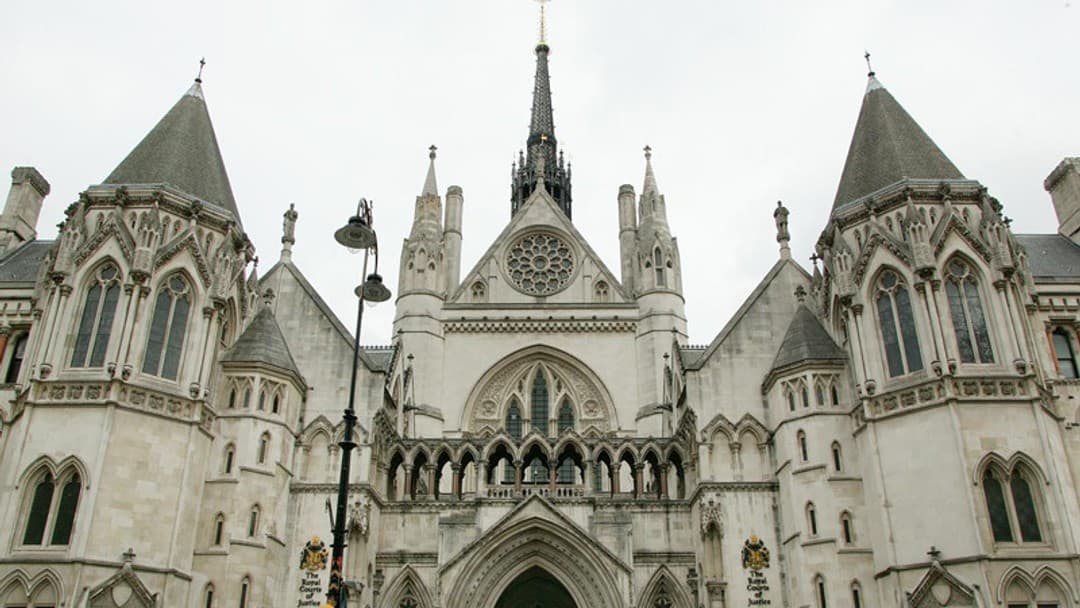
Lady Chief Justice confirms no change of circumstances precondition for reinstating counts left on file.
The Court of Appeal has held that a significant change of circumstances is not a prerequisite for reinstating a count ordered to lie on the file. The governing question is whether reinstatement is in the interests of justice.
The Lady Chief Justice, Baroness Carr of Walton-on-the-Hill, gave the judgement of the court in Kristopher Bloomfield v R [2026] EWCA Crim 1441, sitting with Mr Justice Wall and HHJ Shaun Smith KC. She described the issue as one of general importance, given how routinely such orders are made.
The appellant was stopped at Birmingham International Airport in August 2023 carrying two knives. A search the following day uncovered ammunition and three types of military explosive. At the Crown Court at Warwick in January 2024, he pleaded guilty to a bladed article count and five firearms counts, and no evidence was offered on a second knife count. When the judge asked about the explosives counts, prosecution counsel, saying he had no instructions, suggested they lie on the file. The defence agreed and the order was made.
Within a month the prosecution sought reinstatement. The reviewing Crown Prosecutor had understood that the explosives counts would be admitted or tried, while counsel at court believed they would be dropped once the other pleas were entered. HHJ Berlin granted the application in March 2024, before sentence. The appellant was convicted on those counts in January 2025.
The correct test
The judge and both parties had treated paragraph D12.84 of Blackstone's Criminal Practice as requiring a significant change of circumstances. Stephen Rose KC, for the appellant, argued that this was a strict precondition, that a rebuttable presumption of finality arose, and that an internal prosecution misunderstanding could not qualify.
The court disagreed. Read as a whole, the Blackstone's passage did not establish a precondition, and no authority supported one. The proper question is whether reinstatement is in the interests of justice on the facts. The burden lies on the prosecution, but there is no presumption of finality; its desirability is simply a factor to be weighed.
Other relevant considerations include the reason for the application, the significance of the original order and how it came to be made, the defendant's legitimate expectation, the seriousness of the alleged offending, the passage of time and any prejudice, including detrimental reliance.
The court stressed that this is not an unfettered discretion. Such applications should be rare, closely scrutinised and, where necessary, supported by evidence. Courts will not lightly disturb a clearly communicated prosecution view that a count should lie on file.
Application to the facts
The court accepted that "change of circumstances" more naturally describes an external development, such as quashed convictions or a reluctant witness coming forward, and that none existed here. The judge had reached the right result for the wrong reasons.
Several factors favoured reinstatement. The error was innocent and quickly corrected, with no bad faith alleged. Prejudice was conceded to be absent, and the firearms pleas had not been entered in reliance on any position on the explosives counts. The prosecution had never said unequivocally that those counts would not be tried. The appellant had not been sentenced, and there was a strong public interest in prosecuting explosives offences.
The court also rejected the argument that the judge should have heard evidence explaining the confusion. The explanation was unchallenged below, and both counsel and the Crown Prosecutor owed a duty not to mislead the court.
The appeal was dismissed. Tom Little KC appeared for the Crown.
 Copyright & permissions