BEA v Staffordshire County Council: High Court declines to rule on foster placement time limits as claim turns academic
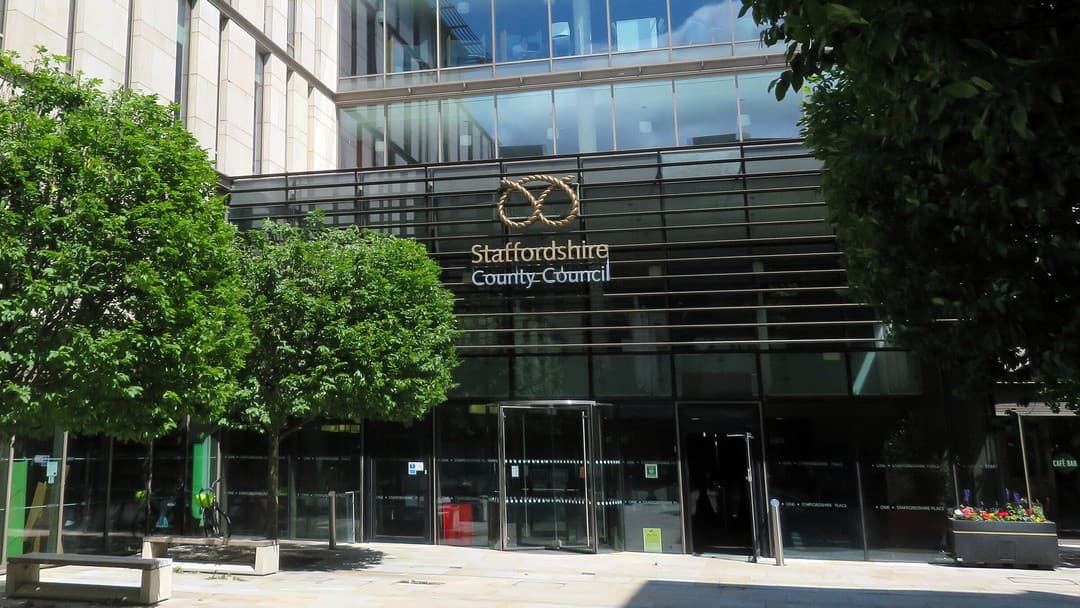
A judicial review challenging the legality of a child's placement with a relative beyond the statutory 16-week limit has been dismissed after the placement ended before the court could determine the substantive legal questions.
The Administrative Court in Birmingham handed down judgement on 18th May 2026 in BEA v Staffordshire County Council [2026] EWHC 1190 (Admin), a case that raised unresolved questions about the mandatory force of Regulation 25(6) of the Care Planning, Placement and Case Review (England) Regulations 2010.
The Claimant, who appeared in person, challenged Staffordshire County Council's placement of her son, Child X, with his paternal aunt between August 2025 and February 2026 while he was subject to an interim care order under the Children Act 1989. The placement ran beyond the 16-week temporary approval period permitted under Regulation 24(1) of the 2010 Regulations. HHJ Wall had granted permission on two grounds in February 2026, noting that the mandatory language of Regulation 25(6) appeared to require termination of any placement where the connected person had not been approved as a local authority foster parent and the extension period had expired.
However, the paternal aunt brought the placement to an end in difficult circumstances on 25th February 2026, shortly after armed officers attended her home following an incident that the Defendant believed was connected to the Claimant. Child X was subsequently placed with an unrelated foster carer, where he remains.
Mr Justice Kimblin declined to determine the statutory interpretation question, concluding that the claim had become academic. With no relief available that could affect the circumstances at issue, and no evidence of a backlog of cases awaiting resolution of the regulatory question, the public interest considerations that might otherwise justify deciding a hypothetical point were absent. The judge cited the well-established principle from R v Secretary of State for the Home Department ex parte Salem [1999] 1 AC 450 that the discretion to determine academic questions must be exercised with caution.
The Defendant had argued that section 3 of the Human Rights Act 1998 could be deployed to read a discretionary power to disapply the 2010 Regulations into what appears on its face to be a mandatory obligation, relying in part on the concerns expressed by Hedley J. in Re W and X (Wardship: Relatives Rejected as Foster Carers) [2003] EWHC 2206 (Fam) about the regulations' effect on the court's duty under section 1 of the Children Act 1989. That argument, though potentially significant, will have to await a more suitable case.
The judge expressed concern about the quality of the written submissions before him, noting that the word "academicity" had appeared in an identically formatted skeleton argument in a separate, unrelated case heard the same week, also involving a litigant in person. He remarked that the coincidence raised the possibility of AI-generated material, and that he was unwilling to decide a matter of statutory interpretation on submissions whose origins were unclear and which did not engage adequately with the relevant authorities.
Kimblin J. also noted the sustained involvement of a lay individual, referred to throughout as Mr R, whose application to act as a McKenzie Friend had previously been refused by Steyn J. The judge observed that he formed the strong impression Mr R was the driving force behind the litigation, a view consistent with earlier judicial observations in the proceedings.
Costs were awarded to the Defendant, with the judge reducing the attendance fee by £240 but otherwise approving a schedule he found reasonable given the volume of work generated. A limited civil restraint order was imposed, though the judge noted he had no mechanism to restrain Mr R directly.
The unresolved question of whether Regulation 25(6) is truly mandatory, or susceptible to a section 3 HRA read-down in cases where welfare considerations favour maintaining a placement, remains open.
 Copyright & permissions