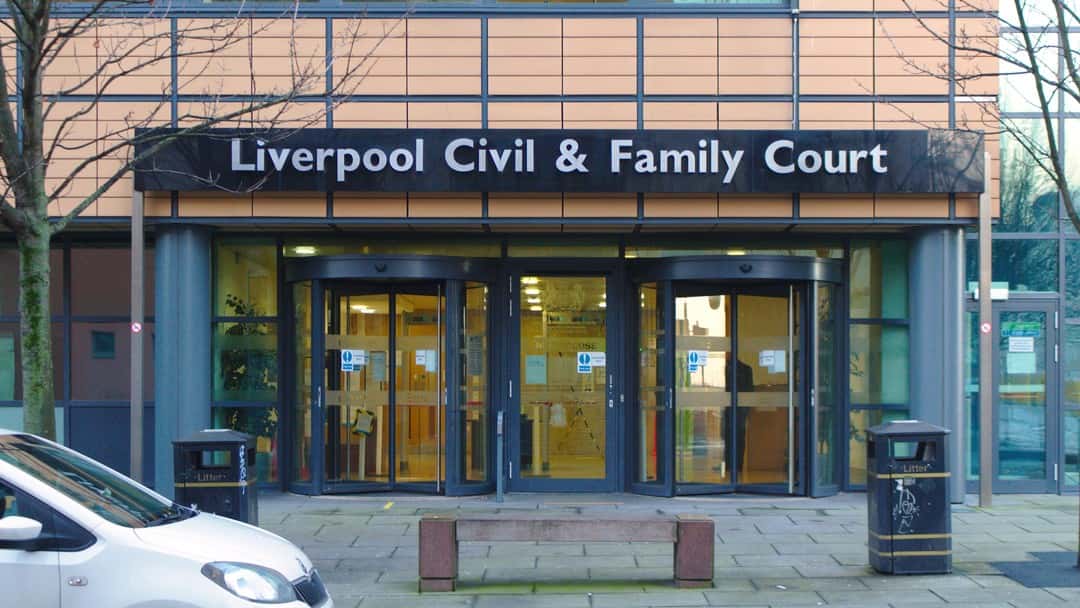
Barclays v Financial Ombudsman Service: High Court apportions costs after jurisdiction ruling

High Court apportions costs after banks' successful challenge to FOS jurisdiction interpretation.
The Administrative Court has ordered the Financial Ombudsman Service Limited (FOS) to pay the bulk of the costs incurred by four banks that successfully challenged its interpretation of jurisdiction over unfair relationship complaints, with only a modest reduction applied to one claimant.
Handing down judgement on 7 September 2026 in R (Barclays Bank UK Plc & Ors) v Financial Ombudsman Service Limited [2026] EWHC 2298 (Admin), Mr Justice Dexter Dias resolved a costs dispute arising from the court's earlier substantive ruling in favour of Barclays Bank UK, National Westminster Bank, Vanquis Bank and Santander UK, which quashed a series of ombudsman decisions ([2026] EWHC 1555 (Admin)).
The underlying claims concerned the proper interpretation of jurisdiction under DISP 2.8.2R of the FCA's Dispute Resolution handbook, in the context of complaints that credit relationships were unfair under section 140A of the Consumer Credit Act 1974. The Financial Conduct Authority intervened but bore its own costs as a condition of that intervention and took no part in the costs dispute.
Having succeeded on the central jurisdictional question, all four banks sought their costs on the standard basis together with a substantial payment on account. The FOS resisted a full recovery, arguing that costs should be reduced to reflect what it characterised as partial success, limited contribution from some claimants, unreasonable litigation conduct, and the risk of a chilling effect on a public body carrying out a regulatory function, relying on the Supreme Court's reasoning in Competition and Markets Authority v Flynn Pharma Ltd.
Mr Justice Dexter Dias accepted that Barclays' costs should be reduced, but only modestly. Although Barclays had advanced a second ground of challenge under Article 1, Protocol 1 of the European Convention on Human Rights which failed, and one sub-ground which the court did not need to determine, the judgement found that this had occupied little court time and had a limited overall effect on costs. A reduction of eight per cent was applied.
The court rejected the FOS's arguments in relation to Santander, NatWest and Vanquis in their entirety. It found that each claimant had complied with an earlier non-duplication order, filed focused and proportionate submissions, and made a genuine contribution to the court's reasoning by addressing the specific facts of their own impugned decisions. Correspondence inviting the FOS to reconsider its position was found to be unremarkable litigation conduct rather than evidence of unreasonableness.
On the question of a chilling effect, the judgement was unpersuaded that an adverse costs order would inhibit the FOS's day to day decision making. The court noted that the FOS is not a statutory regulator, that the dispute concerned a hard edged question of law rather than the exercise of discretion, and that no evidence had been filed to support the claimed risk. It further observed that costs orders against public bodies in judicial review proceedings are unremarkable and that the FOS had previously been subject to the ordinary costs regime in other claims.
On payment on account, the court set the figure at fifty per cent of each claimant's recoverable costs, rather than the sixty per cent sought by the banks or the forty per cent proposed by the FOS, describing this as a realistic sum unlikely to result in any overpayment.
The FOS was ordered to pay ninety two per cent of Barclays' costs and the full costs of Santander, NatWest and Vanquis, subject to detailed assessment if not agreed, with payments on account due within fourteen days.
 Copyright & permissions





.jpg&w=3840&q=60)