Baker v Reigate and Banstead Borough Council: Traveller family's planning challenge fails despite Green Belt policy shift
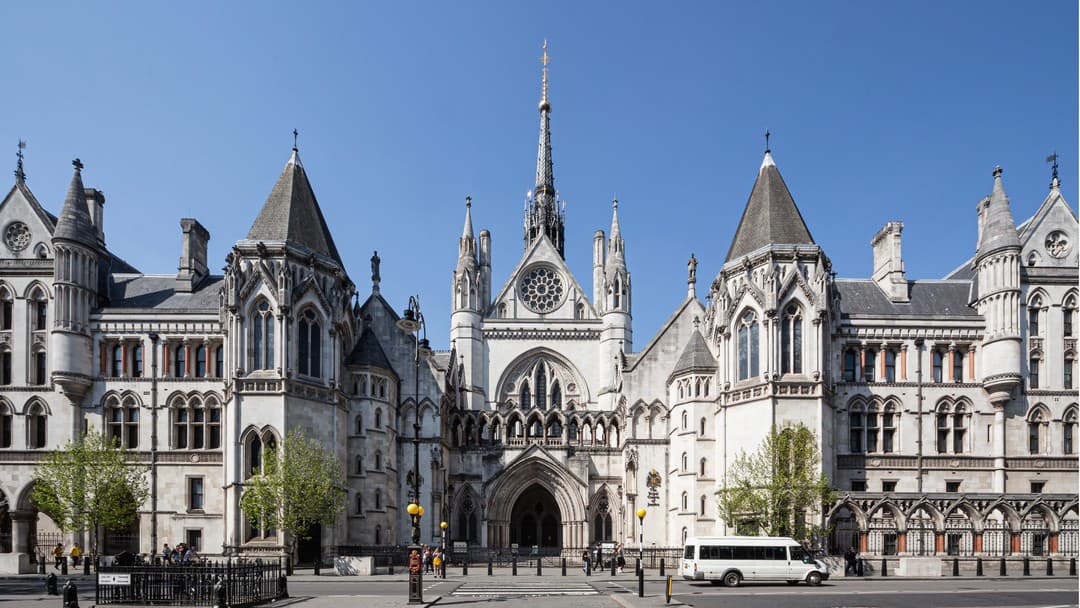
The High Court finds a council was entitled to decline determining a fresh Gypsy/Traveller site application even after national grey belt and traveller definition changes.
The High Court has dismissed a judicial review brought by Teresa Baker, an Irish Traveller, against Reigate and Banstead Borough Council's decision to decline to determine a retrospective planning application for continued use of land at Pickett's Yard, Salfords, as a Gypsy/Traveller caravan site.
In R (Baker) v Reigate and Banstead Borough Council [2026] EWHC 2124 (Admin), Timothy Corner KC, sitting as a Deputy High Court Judge in the Planning Court, considered a challenge to the council's exercise of its discretion under section 70C of the Town and Country Planning Act 1990, which allows authorities to decline to determine applications that would effectively re-run the merits of a breach already covered by an enforcement notice.
The claimant and her extended family had occupied the site without permission since 2022. A retrospective application was refused and enforcement notices upheld on appeal in May 2023, with the inspector finding substantial Green Belt harm despite accepting that dismissal would interfere with the family's Article 8 rights and that no alternative site was available. The families remained in occupation, and in April 2025 submitted a second application, arguing that revisions to the National Planning Policy Framework introducing the concept of grey belt land, together with a widened definition of Gypsies and Travellers in the December 2024 Planning Policy for Traveller Sites, amounted to a fundamental change in circumstances justifying fresh consideration. The council declined to determine the application, citing the unresolved enforcement notices, the absence of any demonstrable unmet need for traveller pitches, and the site's lack of grey belt designation.
The claimant argued that the council had failed to take into account an obviously material consideration, namely the change in national policy, rendering the decision irrational and, given the family's Article 8 rights, disproportionate. The judge relied heavily on two recent authorities decided after permission was granted in this case, the Court of Appeal's decision in Moran v Medway Council and Fordham J's judgement in Connors v London Borough of Bromley, both of which held that section 70C exists to prevent successive determinations of the same underlying planning merits and that a change in policy does not, without more, oblige an authority to reopen that assessment, particularly where an enforcement notice remains unresolved.
Attempts to distinguish those authorities on the basis that the inspector's earlier decision letter demonstrated the site was effectively grey belt land were rejected, the judge noting that the grey belt concept did not exist at the time of the inspector's decision and that her findings on the relevant Green Belt purposes could not safely be extrapolated. In any event, the judge found that the council had in fact engaged with the policy changes in its decision letter, addressing both the grey belt point and the question of unmet need, and that no further elaboration was legally required.
On proportionality, applying the four-stage test recently restated by the Supreme Court in Shvidler, the judge accepted that refusing to determine the application was the least intrusive means of achieving the legitimate aim behind section 70C and that a fair balance had been struck, notwithstanding the significant personal circumstances of the families, including a child with Down syndrome and complex medical needs. The families had known since 2023 that they might have to leave the site, and the compliance periods set by the inspector had expired a year before the council's decision.
All three grounds of challenge were rejected and the claim dismissed.
 Copyright & permissions


-cropped-a0w29ejw.jpg&w=3840&q=60)