

Axa France Iard v Santander Cards: Court of Appeal overturns £677 million PPI indemnity ruling
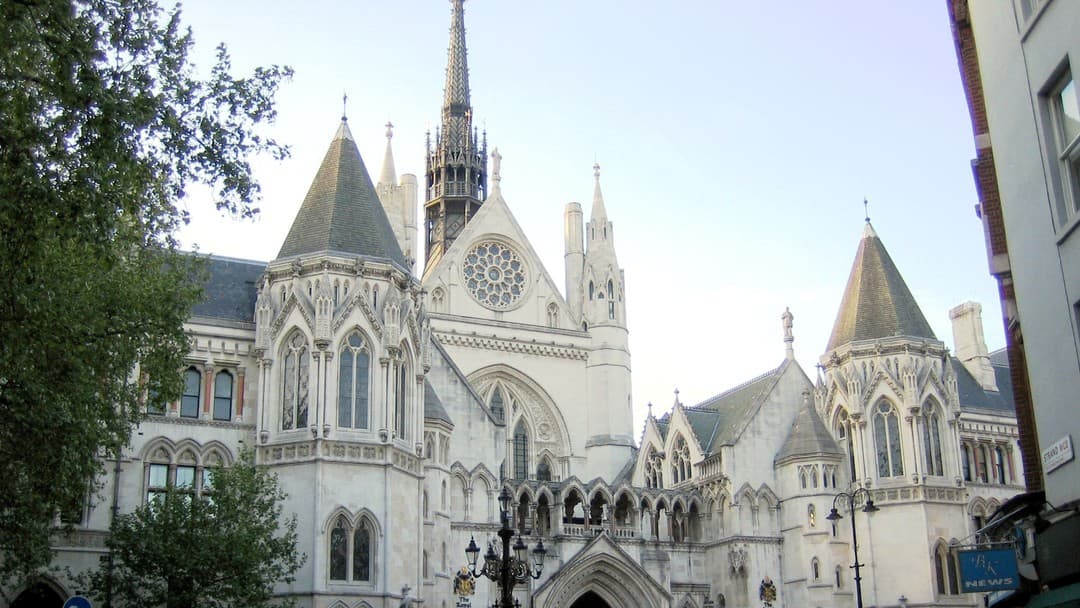
Court of Appeal rules PPI indemnity clause applies only to sales after December 2000.
The Court of Appeal has overturned a High Court ruling that had required Santander Cards UK Limited to indemnify AXA France Iard S.A. and AXA France Vie S.A. some £677 million in respect of historic payment protection insurance mis-selling, finding that the relevant indemnity clause applied only prospectively rather than to decades of pre-existing business.
The dispute traced back to store card PPI sold from the 1970s until January 2005, underwritten by predecessors of the AXA claimants and sold by predecessors of Santander, which acted as the insurer's agent. For much of that period both businesses sat within the same corporate group, but their ownership later diverged, leaving AXA to bear the bulk of subsequent regulatory redress despite retaining only around 5 per cent of net premium income, with Santander's predecessor retaining the remainder. AXA sought to recover its losses, including roughly £500 million in customer redress and over £70 million in Financial Ombudsman Service fees, primarily by relying on an indemnity contained in Clause 12.2 of an Agency Agreement executed on 1 December 2000.
At first instance, Dias J held that the indemnity, though newly introduced by the 2000 agreement, was intended to apply without distinction to all policies regardless of when they were sold, reasoning that the agreement was designed to produce continuity in the parties' longstanding relationship rather than draw a bright line at its execution date.
Giving the lead judgement on appeal, Lady Justice Cockerill, with whom Lord Justice Holgate and Lord Justice Lewison agreed, disagreed. Working through the agreement's wording, the court found that Clause 12.2 indemnified Santander's predecessor only against liability arising from acts or omissions committed "while performing their duties under this Agreement," language the court considered plainly prospective since no such contractual duties existed before the Effective Date. That reading was reinforced by the mutual indemnity in Clause 12.1, which was conditioned on compliance with duties that were themselves expressly time-limited to the term of the agreement, and by the entire agreement clause, which described the agreement as governing the marketing and sale of insurance "from and including the Effective Date." The court also placed weight on the judge's own finding that no indemnity, express or implied, had existed between the parties before December 2000, concluding that clear words would be needed before such a significant new obligation could be read as reaching back over earlier decades of trading, and that none appeared in the agreement. Arguments based on commercial common sense and the asymmetry of risk between the parties were held to carry insufficient weight to displace that conclusion, particularly given that the parties had operated within the same corporate group for much of the relevant period and had ample opportunity to allocate risk as they saw fit.
The court also dismissed AXA's cross-appeal, which sought a contribution from Santander under the Civil Liability (Contribution) Act 1978 in respect of the redress payments, should the indemnity claim fail. The court held that payments made to comply with regulatory obligations under the Financial Conduct Authority's dispute resolution rules did not amount to a "liability" capable of being established in an action by consumers within the meaning of section 1(6) of the 1978 Act, since no such civil action existed or could have existed at the time the payments were made. The court drew on the House of Lords' analysis in Royal Brompton Hospital NHS Trust v Hammond and the Supreme Court's more recent decision in BDW Trading Ltd v URS Corporation in reaching that conclusion.
The practical effect of the judgement is that Santander's indemnity liability under the Agency Agreement is confined to policies sold on or after 1 December 2000, a category the parties estimated accounts for only a small fraction of the sum originally awarded.
 Copyright & permissions







.jpg&w=3840&q=60)


