Association of Independent Meat Suppliers v Food Standards Agency: High Court quashes slaughterhouse inspection charges
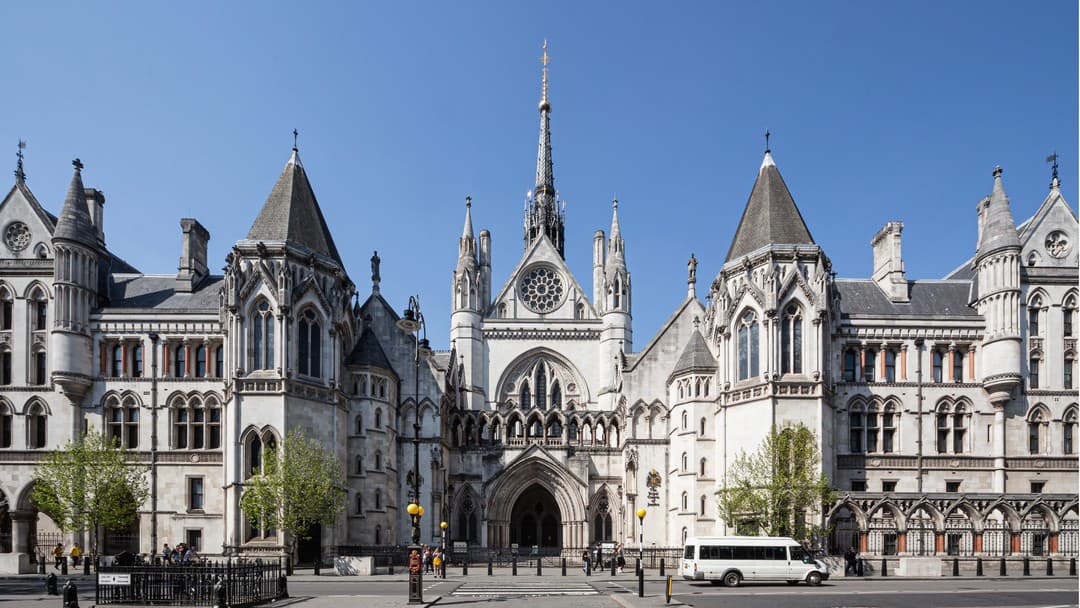
FSA charging methodology unlawful on multiple grounds, Mrs Justice Dias rules
The High Court has quashed the Food Standards Agency's hourly charging rates for official controls at slaughterhouses, finding that the FSA unlawfully included impermissible overheads in its cost base and charged for inspections carried out by unqualified veterinarians.
In [2026] EWHC 1327 (Admin), handed down on 3 June 2026, Mrs Justice Dias found in favour of the Association of Independent Meat Suppliers (AIMS) on all three grounds of its judicial review challenge, ruling that both the Main Rate and Enforcement Rate published in the FSA's 2025/26 Cost Data Slides must be quashed.
The charging dispute
The FSA levies charges on Food Business Operators (FBOs) for official controls at slaughterhouses, calculated by multiplying an hourly rate by the time attributable to each operator. AIMS challenged the lawfulness of those rates on the basis that the FSA had incorporated inadmissible overheads into its cost base and had included the costs of novice and temporarily registered official veterinarians who lacked the qualifications required by law.
The case turned principally on the proper interpretation of paragraph 11 of Schedule 2 to the Meat (Official Controls Charges) (England) Regulations 2009 (MOCCR), which limits chargeable costs to those "incurred by an inspector in exercising controls."
Overheads: the inextricable link test
Mrs Justice Dias rejected the FSA's argument that amendments made to Article 81 of the Official Controls Regulation in 2024 and 2025, introducing the language of costs "connected with official controls, including but not limited to" the categories listed, widened the recoverable cost base.
The correct starting point, she held, was MOCCR rather than Article 81. Article 81 does not itself confer any power to charge; that power derives exclusively from MOCCR. Since MOCCR was never amended to reflect the broader language of the amended Article 81, the FSA could not rely on that language to expand its cost recovery.
Drawing on the CJEU's judgements in Kødbranchens Fællesråd (2016) and Gosschalk (2019), the court confirmed that overheads are only recoverable where they are genuinely incurred in exercising official controls or are inextricably linked to their performance. Costs identified as falling outside that test included internal audit and quality control of inspections, performance management and supervision of inspectors, and the handling of parliamentary questions and complaints. The judgement noted that Article 6(1) of the OCR expressly characterises internal audit as a mechanism for ensuring the FSA's own compliance with the regulation, not that of FBOs, placing it squarely outside the scope of chargeable official controls.
Novice veterinarians
The court further held that the FSA was not entitled to charge for work performed by Novice Official Veterinarians (NOVs), who had not completed the mandatory 200-hour probationary period required by the Qualifications Regulation, or by Temporarily Registered NOVs (TRNOVs), who lacked full RCVS membership.
Mrs Justice Dias rejected the FSA's contention that NOVs were already official veterinarians who simply could not yet work independently. Construing Chapter I of Annex II to the Qualifications Regulation, she held that completion of the probationary period was a precondition to appointment as an official veterinarian, not a condition on the scope of practice thereafter. The Regulation's use of the term "probationer" and its reference to supervision by "existing" official veterinarians supported that reading. The FSA's own Manual for Official Controls, which required completion of the probationary period before appointment, was equally inconsistent with the position it advanced before the court.
Enforcement Rate and transparency
The Enforcement Rate was also found to be unlawfully calculated. The FSA had included a proportion of Main Rate indirect costs within the Enforcement Rate, which the court held was impermissible. Charges for written advice regarding non-compliance were found to fall outside Article 138 of the OCR save where the advice itself constituted written notification of a formal decision on enforcement action. The court also rejected the FSA's reliance on Article 79(2)(c) as authority for a generalised enforcement charge, confining that provision to unplanned official controls triggered by detected non-compliance.
On transparency, the court concluded that the Cost Data Slides applied incorrect legal tests and failed to present costs with sufficient granularity to allow readers to assess whether the charges were lawful.
Both the Main Rate and Enforcement Rate, together with the corresponding Cost Data Slides, were quashed. Counsel are to be heard on the form of order and costs.
Association of Independent Meat Suppliers, R (on the application of) v Food Standards Agency [2026] EWHC 1327 (Admin). Counsel: Gordon Nardell KC and James Burton (AIMS); Adam Heppinstall KC and Thomas Mallon (FSA).
 Copyright & permissions






.jpg&w=3840&q=60)


.jpg&w=3840&q=60)