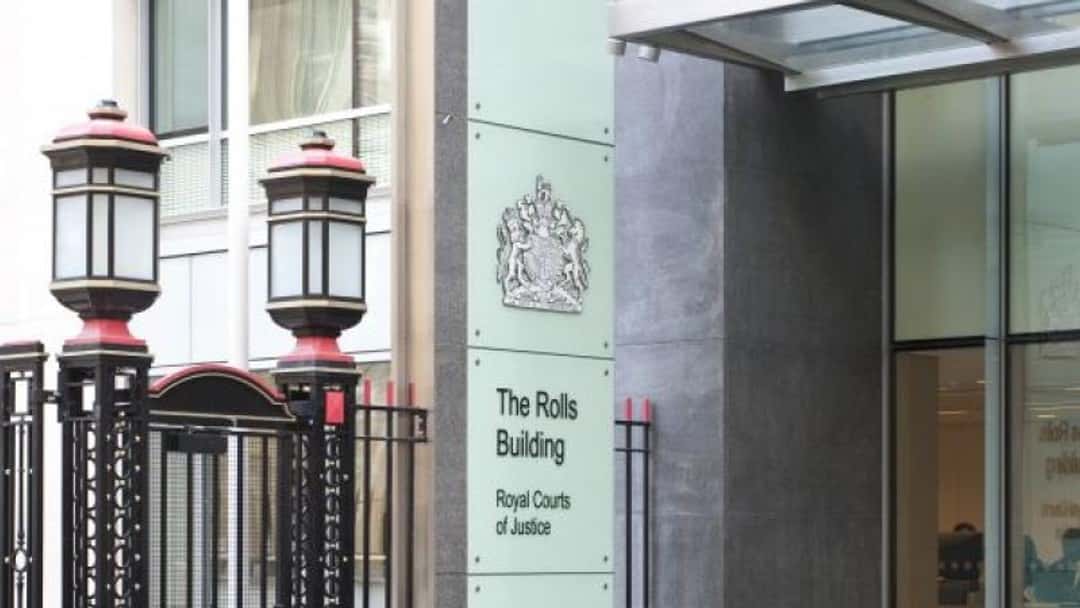
Argence-Lafon v Ark Syndicate: Court of Appeal restores unfair dismissal finding

Court of Appeal rules an internal appeal could not cure fundamental dismissal defects in a whistleblowing case.
The Court of Appeal has overturned an Employment Appeal Tribunal decision and restored an Employment Tribunal's finding that a senior underwriter was unfairly dismissed, holding that an internal appeal cannot remedy procedural defects that go to the heart of a dismissal decision.
In Olivier Argence-Lafon v Ark Syndicate Management Limited [2026] EWCA Civ 1039, Lady Justice Elisabeth Laing, with whom Lord Justice Warby agreed, allowed an appeal brought by Mr Argence-Lafon, who represented himself throughout the proceedings, against the EAT's decision to overturn the Tribunal's finding of ordinary unfair dismissal and remit the matter for reconsideration.
Mr Argence-Lafon's employment transferred to Ark Syndicate Management under TUPE, after which he continued as a senior underwriter. Following what he understood to be a fraudulent insurance claim, referred to throughout the judgement as the Ken Bau loss, he raised concerns which he maintained amounted to protected disclosures. He was subsequently set performance objectives, placed on a performance improvement plan, and later dismissed after a disciplinary process in which the company concluded there had been a fundamental breakdown of trust and confidence, partly on account of his allegations that two managers had been complicit in fraud.
The Employment Tribunal, sitting with two lay members, dismissed his whistleblowing detriment claims, finding that while some of his disclosures were protected, his later beliefs about the claim were not reasonably held and had been raised, at least in part, to derail an imminent performance review. However, the Tribunal upheld his complaint of ordinary unfair dismissal. It found that Ark had failed to investigate whether the disputed performance objectives were appropriate, and that Mr Argence-Lafon had been given no advance notice that the allegation of a breakdown in trust and confidence, arising from his fraud allegations against colleagues, would be treated as a further ground for dismissal at his disciplinary hearing.
The EAT allowed Ark's cross-appeal, holding that the Tribunal had assessed fairness only by reference to the initial dismissal decision and had failed to factor in the subsequent internal appeal, which it considered might have remedied the lack of advance notice. It remitted the unfair dismissal claim to the Tribunal for reconsideration.
Lady Justice Laing disagreed. She held that the Tribunal's reasons, read as a whole, showed it had properly considered the internal appeal, including detailed findings about it earlier in the judgement, and that there was no requirement to repeat that analysis in its conclusions where doing so would add nothing to the outcome. She noted that the dismissal rested on two distinct grounds: the breakdown of trust and confidence, and Mr Argence-Lafon's underlying performance. While the appeal might, in principle, have addressed the lack of notice on the first ground, it could not have cured the separate and more fundamental defect on the second, namely the absence of any investigation into whether the disputed objectives had been fair or achievable in the first place.
Drawing on the Court of Appeal's earlier guidance in Taylor v OCS Group Limited, she confirmed that a dismissal must be assessed by reference to the process as a whole, but rejected the suggestion that this principle required an appellate tribunal to second-guess a Tribunal's evaluative findings where those findings had been properly reasoned and grounded in the evidence.
Lord Justice Warby agreed, commending the manner in which Mr Argence-Lafon had presented his case without legal representation.
 Copyright & permissions