The assessment of development potential remains a central consideration in compulsory purchase compensation, with Certificates of Appropriate Alternative Development (CAADs) playing an important role in determining land values. Recent decisions of the Upper Tribunal (Lands Chamber), alongside significant legislative reforms, have brought renewed attention to the practical and legal complexities of the certification process.
In the first of a two-part analysis, this article examines the existing and revised statutory frameworks, the implications of the Levelling Up and Regeneration Act 2023, and the advantages and risks associated with obtaining a CAAD.
- Quintain City Parkgate Birmingham Ltd v SST [2025] UKUT 312 (LC) (“Quintain”)
- The Eastside Partnership Nominee Company Limited v SST [2026] UKUT 9 (LC) (“Eastside”)
- SST v Birmingham City University [2026] UKUT 10 (LC) (“BCU”)
- SST v Curzon Park Limited [2026] UKUT 73 (LC) (“Curzon Park”)
(“The Curzon Cases”)
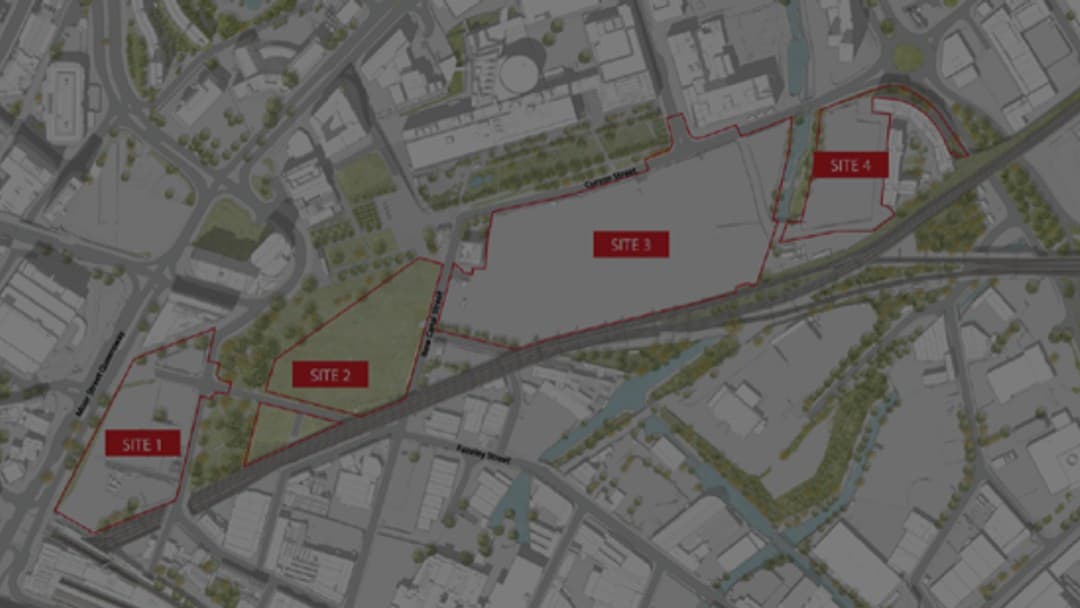
The four sites sat alongside one another along Curzon Street in central Birmingham where the new HS2 rail terminus is being built. Each of the landowners applied for a Certificate of Appropriate Alternative Development (“CAAD”).
Overview
Historically, there has been uncertainty among practitioners as to how to pitch and critique schemes of development proposed as ‘Appropriate Alternative Development’. There have been analogies with the “pre-application stage” (Pro Investments v Hounslow LBC [2019] UKUT 319, at 112), and references to ‘height and basic formation’ (Bashir v London Borough of Newham [2024] UKUT 00146 (LC) at 111-116). The Supreme Court has indicated that the role under s17(5) LCA 1961 is to perform what is essentially the same exercise as for the grant of planning permission in the real world, but painting with a broad brush (SST v Curzon Park Ltd [2023] UKSC 30 at 87, 89). The Curzon Cases develop the practical guidance available as to:
- The appropriate level of detail to be provided to enable the Tribunal to form a view on the reasonable expectation of planning permission;
- How to draft the certificate control and define the development or developments that have been assessed as appropriate alternative development (“AAD”).
These four cases caused the Tribunal to look carefully at how to resolve the disputes between the parties, driven by the valuation consequences of the points in issue. It is possible to derive guidance for other cases from the four cases considered together.
This article assumes a working knowledge of the CAAD system.
The Curzon Cases have also been decided at a time when the CAAD system is changing as a result of the Levelling Up and Regeneration Act 2023.
This article is therefore in two parts:
Part 1: The key elements of the CAAD system as considered in the Curzon Cases and the major changes introduced through LURA and consideration of the real role and advantages of CAADs under each system.
Part 2: The guidance that may be taken from the Curzon Cases as to the application of the substance of the fundamental test for Appropriate Alternative Development.
PART 1 – Legislation before and after LURA 2023
The Legislation
The Curzon Cases were assessed against the version of s14 of the Land Compensation Act 1961 – “Version 3” – introduced by the Localism Act 2011 and in force from 6 April 2012 until 30 January 2025, when it was amended by the Levelling Up and Regeneration Act 2023, s189 (“LURA”) – “Version 4”.
Version 3 continues to have very real significance because Version 4 only applies to compulsory acquisitions where the first relevant notification date occurs after 31 January 2025.
Version 3 and Development Potential
Section 14 is fundamentally about how development potential should be reflected in the valuation exercise.
Section 14 recognises three sources of development potential:
- Actual planning permissions in force at the Valuation Date;
- Hope value – this is a well-understood concept;
- Appropriate Alternative Development (“AAD”) – which was the issue in the Curzon Cases.
Under s14(4) development is AAD if it is development on the relevant land alone or the relevant land together with other land and applying the cancellation assumption and: “planning permission for the development could at that date reasonably have been expected to be granted on an application decided” on the Valuation Date or at a time after the Valuation Date. The cancellation assumption is defined in s14(5).
It is also worth emphasising that the hope value provision in section 14(2) is defined so that it excludes the other two sources – actual planning permissions and AAD. Each source is therefore mutually exclusive.
Under Version 3 a claimant can either assert through their compensation reference that the land benefited from development potential that was AAD, or they could apply for a certificate to that effect.
The procedure for applying and appealing is addressed in sections 17 and 18 LCA 1961. Of significance is that on such an application the local planning authority is charged with identifying in a positive certificate every description of development that is AAD (whether specified in the application or not) (s17(5)(a)).
It must also give a general indication of the planning conditions and obligations that could reasonably have been expected to apply to the development (s17(5)(b)).
The main purpose of the CAAD is to give certainty. The process enables that certainty to be obtained directly from a local planning authority, subject to appeal to the Tribunal. A positive certificate confirms that development of that description is AAD and so there is an assumed planning permission for it for valuation purposes. A negative certificate confirms there is no development that is AAD, so any development potential can only derive from hope value or an actual planning permission. If no certificate is obtained, a claimant can still assert AAD in compensation proceedings.
Version 4 – the Main Consequences of LURA
The changes through LURA (brought about through amendments to both sections 14 and 17) are significant.
Firstly, a claimant can only rely on AAD if it has a positive certificate to that effect (s14(2A)). Obtaining a CAAD is, therefore, more important than under the Version 3 regime. Under Version 3, a claimant who did not obtain a certificate could still seek to establish AAD in compensation proceedings. Under Version 4, however, the planning certainty associated with appropriate alternative development can only be achieved through a certificate. In the absence of a CAAD, development potential will generally fall to be reflected through hope value alone (unless hope value has itself been disapplied). The strategic importance of the CAAD process has therefore increased considerably. It also raises different considerations for acquiring authorities as to whether to seek their own certificates (as they retain the ability to make an application under section 17(1)).
Secondly, the local planning authority only has to consider whether the particular description of development applied for is AAD (s17(1)). It may certify in respect of a less extensive description of development within the same description (s17(5)).
Thirdly, the three sources of development potential described above become two – actual planning permissions and a prospect of planning permission – but with a CAAD conferring a certainty that permission for that development would be granted on that date (s14(2)). The notion of AAD at a later date has been removed.
Fourthly, the reasonable expectation test has been recast (and moved to s17(1B)) as whether it was more likely than not that permission would have been granted on the Valuation Date on the relevant assumptions including the cancellation assumption, and also assuming that the local planning authority would act lawfully (s17(1B)).
Fifthly, a nil certificate can no longer be issued.
Sixthly, the ability to establish AAD based on a future date has been removed. The assessment must now be undertaken by reference to the relevant valuation date (or, where matters have not yet reached that stage, the date upon which the CAAD is determined). Development potential which depends on circumstances arising after that date will instead need to be reflected through hope value rather than through certification.
Seventhly, the statutory costs position is starkly different under s17(10):
Version 3:
“In assessing any compensation payable to any person in respect of any compulsory acquisition, there must be taken into account any expenses reasonably incurred by the person in connection with the issue of a certificate under this section (including expenses incurred in connection with an appeal under section 18 where any of the issues are determined in the person's favour).”
Version 4:
“In assessing any compensation payable to any person in respect of any compulsory acquisition, no account is to be taken of any expenses incurred by the person in connection with the issue of a certificate under this section (including expenses incurred in connection with an appeal under section 18 F7...).”
(Emphasis added).
The Advantages of a CAAD
Under both Version 3 and Version 4, a CAAD can convert a planning prospect that is more likely than not to succeed into an assumed planning permission for valuation purposes.
This is unquestionably the chief advantage. It removes all planning risk and the assumption is that permission is granted on the Valuation Date – which removes arguments about planning delay.
This represents a departure in the Claimant’s favour from the principle of equivalence (paragraphs 48 and 95 of the Supreme Court judgment in Curzon Park). For example, if land had a 60% chance of obtaining planning permission and it was valued on the basis that it actually had that planning permission, the compensation assessment would be for more than the land was worth at that time.
Under Version 3 the requirement for the local planning authority to identify every description of development that is AAD provides flexibility at the valuation stage to select the development that confers the greatest value on the land.
Under Version 4 it remains open for the local planning authority or Tribunal to certify a lesser form of development of the same description. For example, if a claimant proposed an ambitious 30-storey scheme, the CAAD may be for 20 storeys. A claimant can therefore be ambitious and as a fall-back identify a safer option.
In either scenario there is a degree of flexibility provided to the claimant through the certification of a “description of development” rather than a particular scheme of development.
Risks
Under Version 3 the effect of s17(10) LCA 1961 is to give the claimant considerable protection on the expenses involved in the application and appeal, and this would generally fall to be paid by the acquiring authority. It is also open to the acquiring authority to seek a certificate for a form of development it considers AAD.
Version 4 changes this so that the applicant will have to pay their own costs of the application, and be at risk of costs on appeal.
There remains a risk that an application for a CAAD will be unsuccessful, but, if that is the case, there remains an argument based on hope value.
Conclusion
In conclusion, where a party has real grounds to believe that the land acquired had development potential which manifested in a description of development with a greater than 50% chance of success, there is a significant advantage in a claimant securing a CAAD to that effect.
Under Version 3 this extends to an argument that although that prospect did not exist at the valuation date, it did exist at an identifiable later date, and there is a high prospect, other things being equal, of recovering the expenses of applying for the CAAD.
Under Version 4, the uplift to 100% certainty is only realisable through a CAAD. The costs of obtaining this uplift will, other things being equal, likely fall on the applicant.





 Copyright & permissions