Overview
Historically, there has been uncertainty among practitioners as to how to pitch and critique schemes of development proposed as ‘Appropriate Alternative Development’. There have been analogies with the “pre-application stage” (Pro Investments v Hounslow LBC [2019] UKUT 319, at 112), and references to ‘height and basic formation’ (Bashir v London Borough of Newham [2024] UKUT 00146 (LC) at 111-116). The Supreme Court has indicated that the role under s17(5) LCA 1961 is to perform what is essentially the same exercise as for the grant of planning permission in the real world, but painting with a broad brush (SST v Curzon Park Ltd [2023] UKSC 30 at 87, 89). The Curzon Cases develop the practical guidance available as to:
- The appropriate level of detail to be provided to enable the Tribunal to form a view on the reasonable expectation of planning permission;
- How to draft the certificate control and define the development or developments that have been assessed as appropriate alternative development (“AAD”).
These four cases caused the Tribunal to look carefully at how to resolve the disputes between the parties, driven by the valuation consequences of the points in issue. It is possible to derive guidance for other cases from the four cases considered together.
This article assumes a working knowledge of the CAAD system.
The Curzon Cases have also been decided at a time when the CAAD system is changing as a result of the Levelling Up and Regeneration Act 2023.
This article is therefore in two parts:
Part 1: The key elements of the CAAD system as considered in the Curzon Cases and the major changes introduced through LURA and consideration of the real role and advantages of CAADs under each system.
Part 2: The guidance that may be taken from the Curzon Cases as to the application of the substance of the fundamental test for Appropriate Alternative Development.
Part 1 of this article can be accessed here.
PART 2: Practical Guidance from the Curzon Cases
The essential test is whether a development had a reasonable expectation of obtaining planning permission at the relevant date on the cancellation assumption.
Guidance on the cancellation assumption is given by the Supreme Court in Secretary of State for Transport v Curzon Park Limited [2023] UKSC 30 – on a preliminary issue in the Curzon cases – and that is outside the scope of this article.
The focus is on circumstances known to the market, subject to the cancellation assumption.
The substance of the test is the same before and after LURA: reasonable expectation can be taken to mean more likely than not (see Leech Homes Limited v Northumberland CC [2020] UKUT 0150 (LC) at 117).
Guidance from the cases
Each of the Curzon Cases represents the Tribunal’s consideration of the specific schemes and evidence before it, and so is case-specific. This article endeavours to identify from the combined consideration some points of approach that may be taken from the cases and be of wider application.
Understanding the market circumstances
The planning assessment must be undertaken at the valuation date focusing on the circumstances known to the market. The AAD scheme should be drawn up having regard to those circumstances, as it is in those circumstances that it will be assessed.
This may involve collecting and presenting evidence as to what were the relevant circumstances known to the market on the appropriate assumptions.
In the Curzon Cases this evidence had a role in evaluating when other sites would be coming forward for development and of what kind or general form which in turn had a bearing on the planning assessment (Quintain paragraph 67, 188).
This evidence may also usefully inform the parties as to which types of development are likely to carry the most value significance. Although the legislation (pre-LURA) refers to “every description” of development, the dispute between the parties is likely to focus on those descriptions of development that confer the most value on the land.
The Role of the Tribunal
The Tribunal differentiates its role from that of a local planning authority in considering a proposed CAAD.
The Tribunal’s role is judicial. It is to resolve disputes, the terms of which are set by the parties (Quintain paragraph 18).
As it said:
“We must base our determination on evidence, so the extent to which we can modify the parties’ proposals is limited. Unlike a planning application, or even an application for a certificate under s17, an appeal under s18 is not an iterative process. If we conclude that the development proposed by an appellant is inconsistent with policy in some respect, we cannot invite the appellant to think again”.
This seems to be an application of the principle of finality.
This played out in the Quintain decision where the Tribunal rejected the claimant’s preferred scheme on design grounds and in the absence of an intermediate proposal certified the development proposed as AAD by the SST.
Whilst the Tribunal may make relatively modest adjustments to a scheme or certify a less extensive form of development, for example, small adjustments to building heights where additional visual evidence is not required, the Tribunal is not equipped to redesign a proposal that it considers to be fundamentally flawed in the absence of evidence.
Other Sites
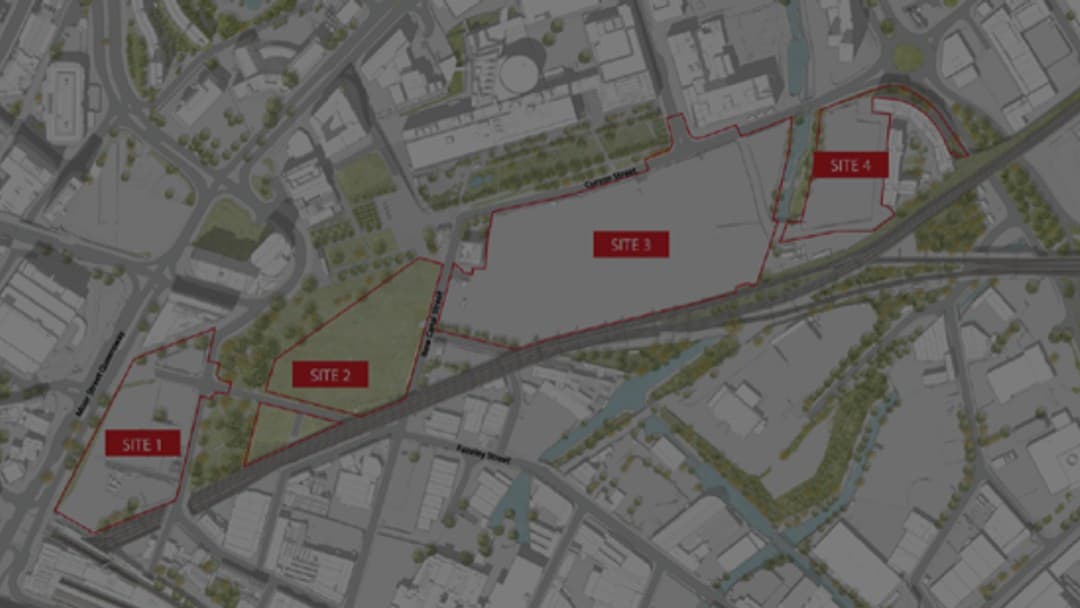
Following on from the Supreme Court decision, the Tribunal took into account the development coming forward on the other sites in the cancellation assumption (e.g. Quintain at 67, 188, BCU at 57, Curzon Park Limited at 32).
It may therefore be necessary to consider if development was likely to be coming forward on the valuation date on other sites in a way that may affect the planning assessment. The Tribunal found value in considering the CAAD application material on the other sites in reaching that view (Quintain 67).
But the exercise should not be taken too far as it is guided by what would have been known to the market. For example, the market would have expected each of the sites to be the subject of applications for development on the scale and for the sort of uses illustrated by the respective CAAD applications. But the market would not have known or anticipated the detailed design and form of the development proposed in the applications, and could not have assessed the cumulative effects in terms of height, massing, scale or connectivity (Quintain 67).
Defining the Proposals for Assessment
In three of the cases, the claimant advanced a very broad range of uses and great flexibility as to the balance of uses across the development. The Tribunal likened this to a self-service buffet (Quintain 163).
It found that such a high degree of flexibility meant that the scheme was insufficiently defined to enable a conclusion that it complied, or failed to comply, with the development plan (BCU paragraphs 28–30; Quintain 188).
It follows that claimants promoting AAD should be careful to ensure that their proposals are sufficiently defined to enable assessment against the development plan and national policies. Local development plan policies will vary.
Conversely, where proposals are too flexible or ill-defined the acquiring authority should consider which controls could be imposed on the CAAD to enable a proper assessment against those policies, and ensure that the appropriate controls are proposed for inclusion.
This is not simply a question of the description of development. Applicants may well wish to describe the development in relatively broad terms to maintain flexibility at the valuation stage, given that the full valuation consequences of minor variations within the same description of development may not be known at the date of formulating the CAAD. However, the illustrative material should provide sufficient information to allow the Tribunal to test a scheme against the key issues in dispute, and in echoes of the approach taken through the Rochdale envelope in certain planning determinations, the conditions should be used to set the parameters of the scheme through controlling the mix of uses, the minimum and maximum amounts of the overall development and the component parts, and use parameter plans to control in appropriate detail (see below, Level of Detail) the form and disposition of development (see in particular BCU 26–31, 55, 65 and 70–72; Quintain 173, 178, 201).
The Curzon decisions also serve as a reminder that the entire CAAD exercise is ultimately directed towards the production of a certificate. It is, therefore, important that parties focus not only on the design of the proposed scheme but also on the form of certificate that they seek the Tribunal to issue and the conditions that ought to accompany it. There is a risk in CAAD appeals of becoming immersed in debates over individual design features whilst losing sight of the wording of the certificate itself, which is the document that will ultimately underpin the valuation exercise.
A recurring feature of the Curzon appeals was the willingness of claimants to adapt their proposals in response to criticisms raised during the proceedings by the SST. In both BCU and Curzon Park, the Tribunal ultimately endorsed amended versions of schemes which had evolved to address concerns raised by the SST. The decisions therefore highlight the importance of remaining open to refinement as issues emerge through the evidence.
Level of Detail
There is a potential tension between the requirement to assess a specific proposal as to whether it had a reasonable expectation of obtaining planning permission against the prevailing policy framework – which involves consideration of a wide range of issues – and the approach set out by the Supreme Court, which involves undertaking the planning assessment “painting with a broad brush”.
The Tribunal addressed the issue in paragraph 40 of BCU. It noted that the form of any major development project is likely to evolve and change at the detailed design stage, and the schemes it considers are only examples of design choices which might eventually be made. The Tribunal stated:
“The purpose of a CAAD is to assist in the valuation of the appeal site, not in its development, so design choices which do not significantly affect the quantum of development are of limited relevance.
It is necessary to distinguish between the ability of a scheme to comply with relevant policies or to accommodate major constraints such as those imposed by heritage assets, on the one hand, and whether the appearance of a building could be improved by greater articulation or by varying its roof line or whether a tower is sufficiently distinct from its neighbouring structure on the other. Objections in the former category are material to a CAAD determination, because those policies and constraints could justify a refusal of consent…
The question for us it not whether one scheme is better than another; it is whether each of the schemes proposed would be likely to have obtained planning consent. We are entitled to approach that question wielding a relatively broad brush, as the Supreme Court has explained”.
The Tribunal is indicating that it will take a pragmatic approach to the issues put in dispute by the parties guided by the Supreme Court’s mantra of a broad brush. This continues the themes on level of detail referred to in the cases referred to in the overview above. Practical considerations will include:
The scale and context of the development. The essential exercise is to establish the appropriate scale of development rather than the detailed design of it, and this suggests a high level of detail, subject to the context. The primary focus will be on the building envelopes rather than their design.
The level of detail required to assess the proposals against the reasonable expectation test will increase where there are particular constraints, for example, listed buildings or conservation areas, or issues such as national landscape, or a complex local existing townscape. Such issues may also bring with them the need to assess more carefully the degree of harm a scheme may cause, to allow proper consideration in the planning balance.
Where there are particular design policies or standards that would have to be complied with to make development acceptable, and that point is in issue, again a higher level of detail may be required. For example, ordinarily matters of internal layout are unlikely to be significant given the ability to address these through detailed design. However, where the development plan imposes design standards such as minimum space standards, a more detailed consideration may be appropriate (e.g., Pro Investments at 117). In each case the level of detail must be informed by an assessment of the important development plan and national policies that will be applied. Under the new NPPF considerations of density may well be relevant.
LPA endorsement
The Tribunal's observations in paragraph 98 of the Curzon Park decision also underline the importance of local planning authority support. The Tribunal observed that "a scheme which has been certified as appropriate by the Council starts with a distinct advantage over larger schemes which the Council and its professional officers have never been asked to consider". Whilst the Tribunal must ultimately reach its own planning judgment and is not bound by the views of the local planning authority, the passage demonstrates that significant weight may be attached to proposals that have already been scrutinised through the planning process. Applicants advancing materially larger, taller or otherwise different schemes than those previously considered by the authority should therefore expect to justify those departures with appropriate evidence.
Archaeology and Buried Remains / Post-Valuation-Date Information
The Curzon Park decision also threw up the unusual circumstance that during the course of preparatory works for the HS2 scheme itself the buried remains of a very significant heritage asset were discovered underground – a Roundhouse designed by Robert Stephenson which allowed steam engines to be turned around on a central enclosed turntable. It was the earliest such roundhouse in the world. Its significance and existence had not, however, been identified through previous planning applications prior to the valuation date. Questions arose as to how the decision-maker should treat this asset in determining the hypothetical planning application necessary for the CAAD.
The issue had direct relevance because the claimant’s primary development scheme would build over the Roundhouse remains.
The Tribunal’s key points of approach were:
The cancellation assumption precludes reliance on actions taken by HS2 for the purposes of the Scheme.
The reality principle dictates the existence of the Roundhouse at the valuation date but says nothing as to the assumed state of knowledge of it or its significance.
Section 14(5) LCA 1961 requires an assumption that an application has been made for planning permission and is decided on the valuation date.
An application for planning permission must meet the information requirements of the local planning authority, and so the critical question was whether a scheme of archaeological investigation such as was undertaken by HS2 after the valuation date would have been required by the local planning authority prior to any application for planning permission.
Applying national and local policy relating to heritage assets at that time, the reasonable planning authority would have required such further investigation, including trial trenching, which would have revealed the remains which are now known to exist.
As a result, any application would have been determined in the knowledge that the site contained remains of schedulable quality, and their loss would not have been sanctioned, and so any scheme proposing their loss would have been refused.
Although the process undertaken by the Tribunal was to work through the specific heritage policy which requires applicants to investigate and provide proportionate information on the significance of affected heritage assets, the approach is plainly of wider application. There are many areas of planning policy where an onus is placed on the applicant to provide information as to the effects of development on sensitive assets – for example, national landscapes, town centres, noise-sensitive receptors, not to mention the EIA regime.
The critical question becomes: what information would the reasonable planning authority require, and, using available evidence, what would it be likely to show as to the effects of the development and their acceptability? Post-valuation-date information may be relevant where it assists in determining what would likely have become known to a reasonable planning authority applying the policies in force at the valuation date.
Conclusion
The Curzon Cases provide a source of guidance to applicants for CAADs and acquiring authorities responding to them, as well as to local planning authorities charged with determining applications made to them for certificates.
The collective guidance shows the importance to all such participants of identifying the scheme that is being assessed as AAD with sufficient precision that it can be assessed against the key policies of the development plan and the NPPF that will determine whether it was more likely than not to obtain planning permission at the relevant date. This will involve identifying parameters for the scheme and proposing conditions to control them.
It is also important to recognise that, whilst the Tribunal is not bound by the views of the local planning authority, it may attach significant weight to proposals that have already been scrutinised and supported through the planning process. Parties promoting materially different or more ambitious schemes should be prepared to justify those departures with appropriate evidence.
Schemes should be refined as issues emerge through evidence. Whilst the Tribunal cannot redesign a fundamentally different scheme without evidential support, carefully considered alternative proposals may provide a route to certification where an original proposal encounters planning difficulties.
Participants should also inform themselves of the key market circumstances that will inform where the real value in the scheme proposed will lie and what disputes have value significance, as well as identifying whether other nearby schemes may be relevant to that assessment.
Sufficient information should be provided, or requested, to enable assessment against particular constraints, such as conservation areas, listed buildings, landscape and environmental designations/sensitivities, and to assess compliance with specific constraints within the development plan/NPPF.
Where uncertainties exist, the question should be asked as to what information the reasonable planning authority would require to assess at that appropriate level of detail, and, using available evidence, what would it be likely to show as to the effects of the development and their acceptability.





 Copyright & permissions