

Apollo XI v Nexedge Markets: inquiry ordered into losses caused by discharged freezing injunction
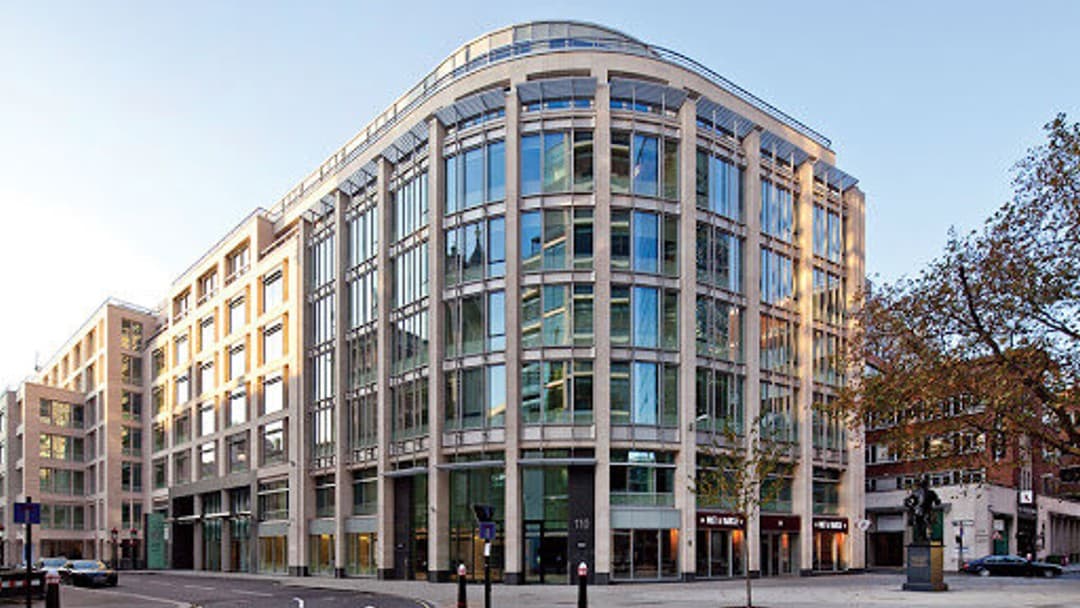
Commercial Court grants Nexedge permission to enforce cross-undertaking after Apollo's freezing injunction was discharged.
An introducing broker whose application to vary its FCA permissions stalled after a freezing injunction was obtained against it has secured permission to enforce the cross-undertaking in damages, with the inquiry to be heard alongside the trial of the substantive claim.
In Apollo XI Ltd v Nexedge Markets Ltd [2026] EWHC 2240 (Comm), handed down on 28 August 2026, Mr Nigel Cooper KC, sitting as a Deputy High Court Judge, granted the defendant's application and directed that the inquiry be case managed with the claim and counterclaims at the case management conference listed for 9 September 2026. William Day and Maud Mullan, instructed by Bryan Cave Leighton Paisner, appeared for Nexedge; Jason Robinson KC and Joshua S.K. Fung, instructed by Quinn Emanuel Urquhart & Sullivan, for Apollo. Neither counsel nor solicitors then acting for Apollo had been instructed at the time of the without notice application, a point the judgement records expressly.
The dispute arises from a US$10 million unsecured ten-year loan advanced in August 2024, made in contemplation of a variation of permission application that would have allowed Nexedge to hold client money and offer direct trading and liquidity to professional clients. The business plan projected after tax profits rising from £74,800 in 2024/2025 to £2.63 million by 2027/2028. The commercial relationship collapsed in April 2025. A freezing injunction was granted without notice by Cheema-Grubb J on 16 April 2025 and discharged by Saini J on 17 June 2025 ([2025] EWHC 1488 (KB)) on the basis that it had been wrongly obtained.
That earlier judgement made robust findings. Saini J identified a concerning breach of the duty of full and frank disclosure, held that the claim as then pleaded failed to meet even the modest good arguable case threshold, found no solid evidence of dissipation risk, and said the court's conscience was shocked by admitted conduct surrounding a covert recording made in the broker's office. He also observed that continuation would have crippled the company at a critical point in its growth.
No mini trial at the permission stage
Applying the two-stage approach in Balkanbank v Taher [1995] 2 All ER 904, the deputy judge confined himself to permission. The presumption in Lunn Poly Ltd v Liverpool & Lancashire Properties Ltd [2006] EWCA Civ 30 is a strong one, displaced only by special circumstances, and Apollo relied solely on the contention that no recoverable loss had been suffered. Its abuse of process argument was not pursued.
The judgement accepts the analogy with the summary judgement threshold in Easyair, and echoes Mex Group Worldwide Ltd v Ford [2026] EWHC 629 (KB) in describing the knockout initial blow as a difficult task. Apollo's forensic analysis of the correspondence between the broker and the regulator amounted, in substance, to an invitation to conduct a mini trial without cross-examination of the two witnesses who had signed statements of truth. A respondent is not entitled to assume that an applicant has deployed its best evidence at this stage, since pleadings, disclosure and further evidence would ordinarily follow.
On causation, the deputy judge held it realistically arguable that the "own wrong" principle applies as analysed by Henshaw J in Alta Trading UK Ltd v Bosworth [2025] EWHC 2724 (Comm), so that the abandoned original claim may fall to be discounted. It was in any event realistically arguable that the injunction and that claim operated as concurrent proximate causes and could not sensibly be separated. The replacement claim, resting on facts arising after discharge, was at least arguably a fresh cause of action.
Contemporaneous material weighed heavily, including a November 2025 letter recording the regulator's indication that authorisation had been imminent, and a regulatory notification attributing capital erosion to the injunction and the follow-on claim. Credible evidence supported each head of loss, said to exceed £5 million, and there was no basis for allowing some heads to proceed while refusing others.
 Copyright & permissions










.jpg&w=3840&q=60)