Almacantar v de Valk: Court of Appeal confirms cladding protection not limited to relevant defects
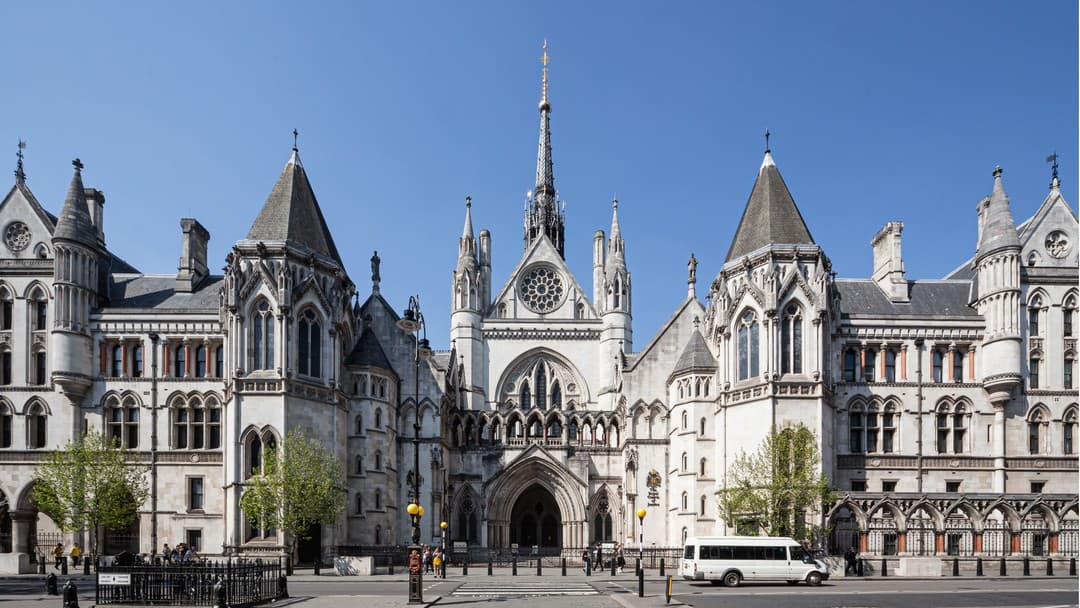
Centre Point House leaseholders shielded from £12m façade costs under Building Safety Act.
The Court of Appeal has held that the cladding remediation protection in paragraph 8 of Schedule 8 to the Building Safety Act 2022 (BSA) applies regardless of whether the defect is a "relevant defect" arising in the 30 years before the Act came into force. The freeholders of Centre Point House in London therefore cannot recover the cost of replacing its 1960s façade from qualifying leaseholders.
In Almacantar Centre Point Nominee No.1 Ltd & Anor v de Valk & Ors [2026] EWCA Civ 1466, Newey, Miles and Fancourt LJJ dismissed the freeholders' appeal on all five grounds, upholding the First-tier Tribunal and Upper Tribunal.
The building and the works
Centre Point House, linked to the better-known tower, contains 36 duplex flats in a six-storey podium. Its experimental timber-framed glazed façade has allowed water ingress for decades, causing widespread rot. One casement panel has already fallen. The experts agreed that the only realistic solution was a new steel curtain wall system fixed to the concrete frame, at an expected cost exceeding £12 million.
The FTT found that the works fell within the landlord's repairing covenants but that only leaseholders without qualifying leases would be liable, because paragraph 8 provides that "no service charge is payable under a qualifying lease in respect of cladding remediation".
No relevant defect requirement
The appellants argued that paragraph 8 must be read as confined to relevant defects, defined in s.120 by reference to works completed in the 30 years before 28 June 2022. They relied on ss.116 and 122, the structure of Schedule 8, explanatory notes and Lehner v Lant Street Management Co Ltd [2024] UKUT 135 (LC), and pointed to anomalies such as the unavailability of remediation orders for pre-1992 defects.
Newey and Fancourt LJJ rejected that construction. Unlike paragraphs 2 to 7 and 9, paragraph 8 does not mention relevant defects, and the requirement in paragraph 8(2)(b) that the cladding be "unsafe" would be redundant if a relevant defect were needed. Sections 116 and 122 are introductory and do not cut down the clear words of the schedule, following IRC v Gittus. Neither the explanatory notes nor the later regulations assisted, and the Act's bright-line rules produce anomalies elsewhere too. The government's January 2022 commitment that no leaseholder living in their own flat would pay to fix dangerous cladding also suggested cladding was intended to receive distinct treatment. A late Inco Europe rectification argument failed.
Meaning of "unsafe"
The court also rejected the argument that "unsafe" means only combustible or contributing to fire spread. It is an ordinary word meaning "involving danger". Parliament did not confine it to fire, and cladding can cause harm in other ways.
Cladding as a question of fact
On the remaining grounds, the court held that "cladding", "cladding system" and "outer wall of an external wall system" bear their ordinary meanings. Applying A Taxpayer v HMRC and Cozens v Brutus, whether the façade fell within them was a question of fact for the specialist FTT. Its finding that the timber frame, glazing, spandrel panels and fixings formed a cladding system, distinct from the dwarf walls and concrete structure, could not be disturbed. Most of that system was being removed and replaced.
The court expressly left open whether a cladding system that constitutes the entire external wall, such as modern curtain walling, can fall within paragraph 8(2).
Martin Hutchings KC, Harriet Holmes and Naomi Kilcoyne (Bryan Cave Leighton Paisner LLP) for the appellants; Justin Bates KC and Mattie Green (Russell-Cooke LLP), Samir Amin (direct access) and Simon Allison KC (Forsters LLP) for the respondents.
 Copyright & permissions