Akbars Restaurant v Secretary of State for the Home Department: Supreme Court quashes illegal working penalty notice

Supreme Court rules Home Office must specify exact ground for imposing illegal working penalties.
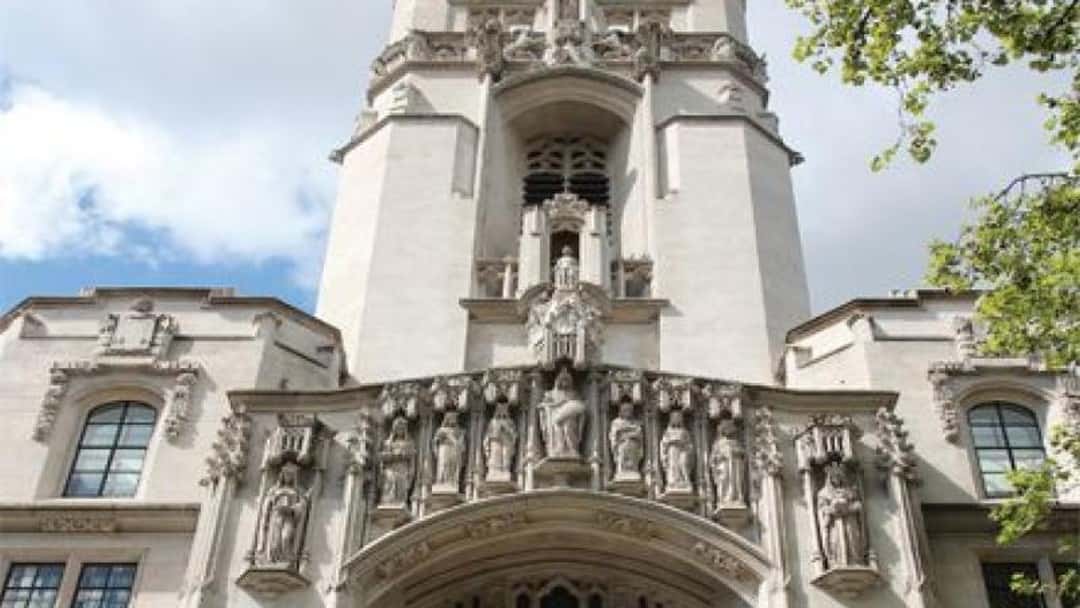
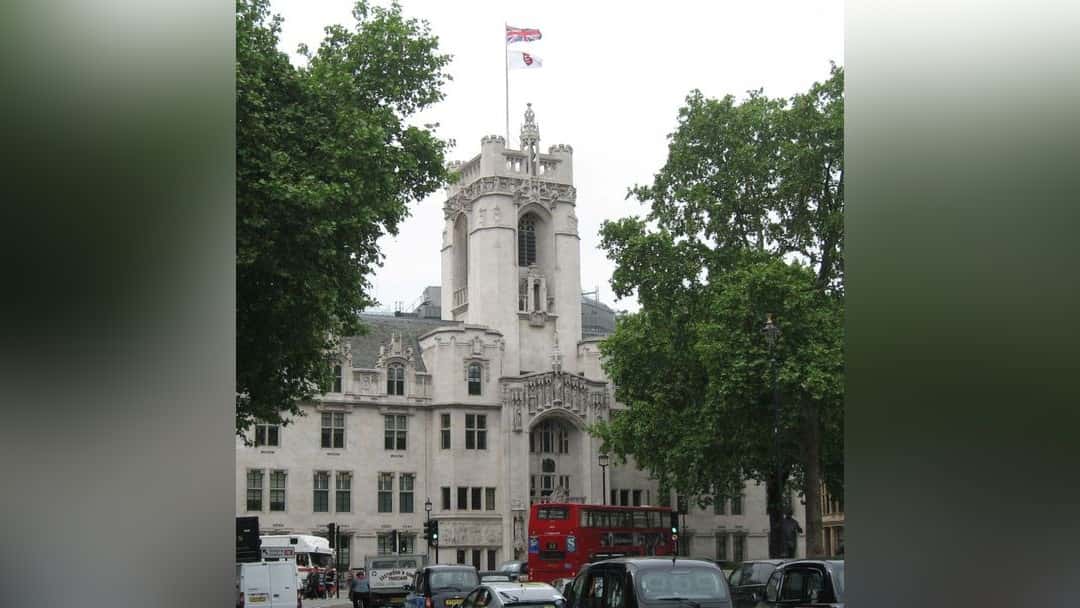
The Supreme Court has ruled that the Home Office cannot lawfully impose a civil penalty for employing an illegal worker without specifying which of three mutually exclusive statutory grounds actually applies, unanimously allowing an appeal by a Middlesbrough restaurant against a £15,000 fine.
In Akbars Restaurant (Middlesborough) Limited v Secretary of State for the Home Department [2026] UKSC 26, Lord Sales, giving the judgement of the court with which Lord Richards, Lord Leggatt, Lady Rose and Lady Simler agreed, overturned decisions of the county court and the Court of Appeal that had upheld a civil penalty notice issued under section 15 of the Immigration, Asylum and Nationality Act 2006, despite the notice listing all three possible bases for liability rather than identifying which one applied to the worker in question.
The penalty followed an inspection of the appellant's restaurant in January 2023, during which immigration officers found a worker whose leave to remain had expired. The notice issued to the restaurant stated only that the worker fell within one of three scenarios set out in section 15(1): having no leave to enter or remain, having leave that was invalid or had ceased to have effect, or being subject to a condition preventing him from accepting the employment. It did not say which. When the restaurant objected and later appealed, the Home Office's position on which ground it relied upon shifted between correspondence, eventually settling on a combination of two of the three limbs shortly before the county court hearing.
Section 15(6)(a) requires a penalty notice to "state why the Secretary of State thinks the employer is liable to the penalty." The Court of Appeal had held this was satisfied by identifying the general statutory basis, without pinpointing the specific limb, reasoning that the requirement should be read in the context of a scheme designed to discourage illegal working and to place the burden of proof on employers to establish a statutory excuse.
Lord Sales rejected that approach. He held that the constitutional character of the regime, a penal power exercised by the state against a private citizen, meant that fairness and legal certainty required the Home Office to explain precisely why a penalty was being imposed, in the same way a court or prosecutor would be expected to specify which of several mutually exclusive charges was being pursued. Reading section 15(6)(a) in the context of the wider statutory scheme, including the objection procedure under section 16 and the appeal mechanism under section 17, reinforced this conclusion: an employer could not meaningfully object or appeal without knowing which limb of section 15(1) it needed to rebut, and the appeal itself is framed as a rehearing of the decision the Secretary of State actually made, not an opportunity to substitute a different basis for liability after the fact.
The judgement was notably critical of the Home Office's reliance on the general purpose of the legislation to support a looser reading of the notice requirement, citing established authority that purpose must be derived from the statutory language itself rather than used to override it. The court also declined to apply the flexible approach to procedural defects established in R v Soneji, distinguishing an earlier Court of Appeal authority on deportation notices and finding that Parliament plainly intended strict compliance with the requirement to specify the operative ground, not least because the Home Office holds all the relevant immigration records and could straightforwardly issue a fresh, compliant notice if an initial one proved defective.
The appeal was allowed and the £15,000 penalty notice quashed.
 Copyright & permissions






_04.jpg&w=3840&q=60)