Aina Khan Law Limited v Legal Ombudsman: Court of Appeal restores £15,692 award over vulnerable client failings
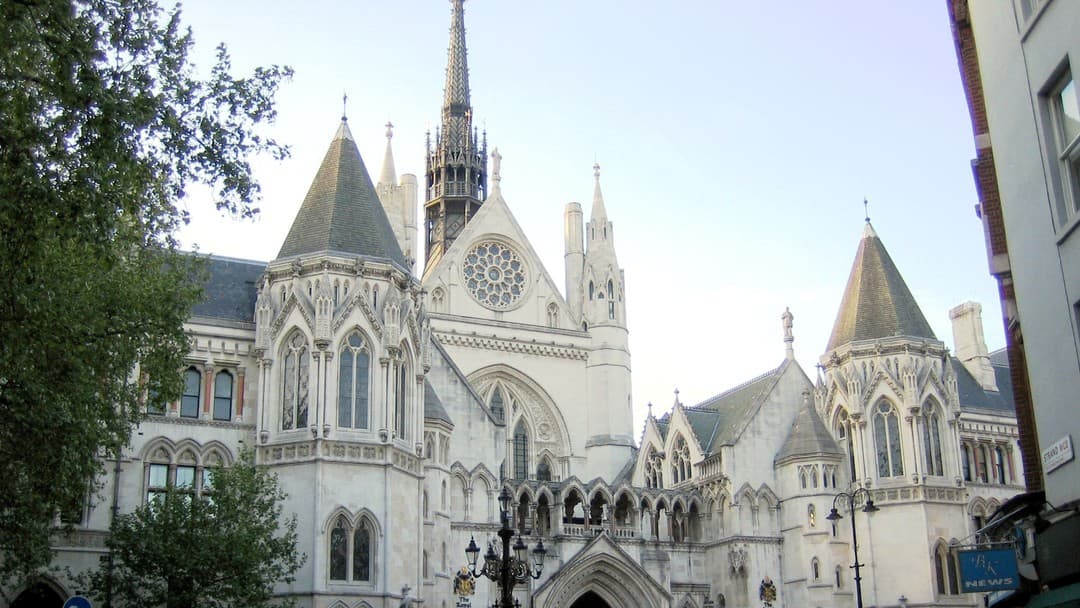
Court of Appeal finds High Court applied excessive legalism to reviewing the Legal Ombudsman's decision.
The Court of Appeal has reinstated a Legal Ombudsman award of £15,692.60 against a family law firm, finding that the High Court had approached the ombudsman's decision with excessive legalism and departed from established principles of judicial review.
Lord Justice Holgate, with whom Lord Justice Baker and Lord Justice Coulson agreed, delivered the leading judgement in R (on the application of Aina Khan Law Limited) v Legal Ombudsman [2026] EWCA Civ 773 on 23 June 2026, allowing the ombudsman's appeal against a quashing order made by David Pievsky KC sitting as a Deputy High Court Judge.
Background
Aina Khan Law Limited (AKLL), led by Aina Khan OBE, was instructed in September 2020 to advise a client referred to only as CXV following the breakdown of her marriage. From the outset there were indicators of mental health difficulties. A jointly instructed consultant psychiatrist subsequently certified in December 2020 that CXV had suffered from paranoid psychosis since August 2020, meaning she had lacked litigation capacity throughout the retainer.
CXV brought two complaints to the Legal Ombudsman: that AKLL had failed to adequately assess her litigation capacity and that the firm had charged excessive fees. The ombudsman upheld both, directing AKLL to refund £35,500 in relation to costs and awarding a further £15,692.60 on the capacity complaint, bringing the total award to £51,192.60.
AKLL applied for judicial review. The High Court rejected most grounds but upheld an irrationality challenge to the capacity element, quashing the £15,692.60 direction. The costs award was not disturbed. The ombudsman appealed the quashing order.
The Court of Appeal's reasoning
Lord Justice Holgate identified a fundamental flaw in the judge's approach: he had read the ombudsman's decision selectively and forensically, rather than fairly and as a whole. The judge had also misunderstood the nature of the ombudsman's reasoning. The ombudsman had not applied only the formal legal concept of mental capacity under the Mental Capacity Act 2005. She had also assessed, as she was entitled to do under the Law Society's Guidance on vulnerable clients, whether CXV required additional support short of lacking formal litigation capacity, for example through the earlier involvement of family members.
The Court of Appeal reaffirmed that ombudsman decisions are to be read with a degree of benevolence and should not be construed as statutes or subjected to pedantic exegesis. The scheme under the Legal Services Act 2007 is inquisitorial, not adversarial, and is designed for the swift resolution of complaints with minimum formality. Importing the reasoning standards expected of courts and tribunals into that process is incompatible with the scheme's statutory purposes.
A further strand of the judge's reasoning was also rejected. He had identified four background considerations he regarded as obviously material and criticised the ombudsman for failing to address them explicitly. Lord Justice Holgate held that a decision-maker is not taken to have disregarded a consideration merely for omitting it from the reasons given, and those points did not reach the threshold of being so obviously material as to demand direct reasoning.
The award of £15,692.60 was accordingly reinstated. The costs order made below was set aside and replaced in the ombudsman's favour.
Stephen Kosmin (instructed by Louise Arnold, Solicitor for the Legal Ombudsman) for the Appellant. Gemma Lindfield and Minahil Tariq (instructed by Aina Khan Law Limited) for the Respondent.
 Copyright & permissions