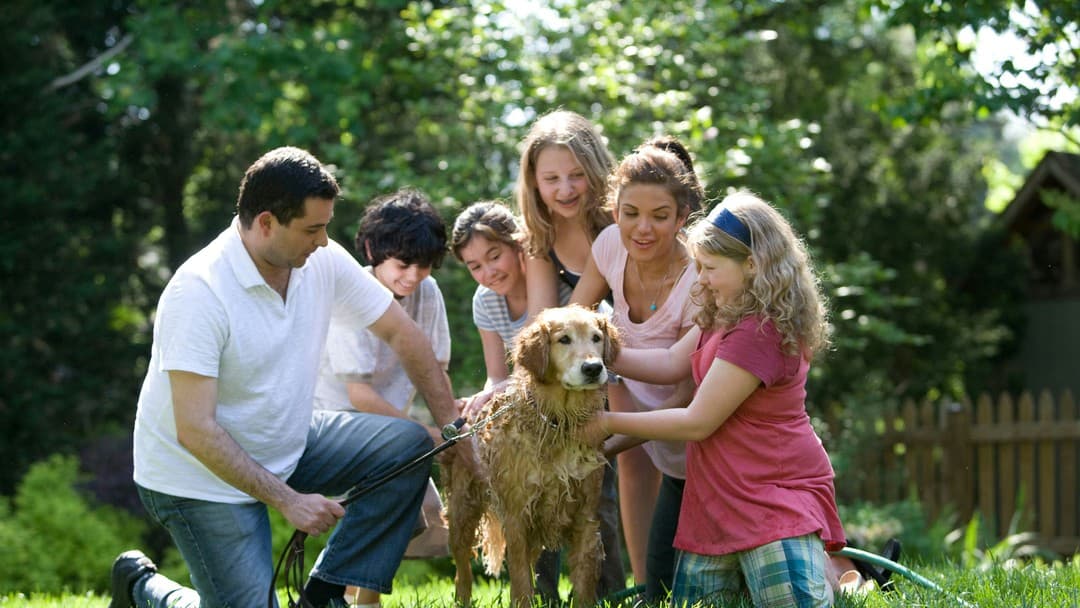
Are pets part of the family unit and, if so, to what extent should family law recognise this? As of 2024, UK Pet Food estimates that 17.2 million UK households include a (non-aquatic) pet, constituting some 60% of the population. This includes 13.5 million dogs and 12.5 million cats. It is not unusual for children to include pets when describing the makeup of their family; nor is it uncommon for adults to identify domestic animals as part of their wider kinship network (see e.g. Charles N. and Davies A.D., ‘My Family and other animals: Pets as Kin’, Sociological Research Online (2008) 13(5), pp. 13-26). Within the context of LGBTQ+ relationships, the sociologist Professor Jacqui Gabb has identified how same-sex and queer couples tend to identify animals as part of their family, the human-animal relationship allowing child-free couples to imagine being a family.
What constitutes a family unit – at least in the social if not always the legal sense – is not a static concept. Insofar as this relates to pets, the cat (as it were) is already out of the bag; while there are arguments to be made against the anthropomorphising of animals, for many families their four-legged companions are already as much members of the family as their human counterparts. As Gabb has argued, the otherness of the animal ‘enriches the connection rather than cleaves it apart through species difference’. The “multispecies family unit” already exists.
Sentience and protection
While pet ownership continues to increase in the UK, there is another important context to this discussion. The passing of the Animal Welfare (Sentience) Act 2022 expressly acknowledged for the first time in British law animals (mostly vertebrates) ‘as sentient beings’. Meanwhile, criminal law has seen significant reforms in the arena of animal welfare, from increased sentencing powers for cruelty under the Animal Welfare (Sentencing) Act 2021, to the creation of abduction offences under the Pet Abduction Act 2024.
It is against that backdrop that the current state of family law in England and Wales might properly be called into question. Whilst the law now recognises their sentience, and the unique need to protect them from ‘abduction’ (a word more often associated with children), the legal status of pets on the breakdown of family relationships remains that of a “chattel”. That is, a form of property recoverable itself or else in value, distinguishable from ‘real’ property because recovery of the thing itself cannot be guaranteed and (therefore) the property remains personal. Real property can always be recovered in specie; a chattel might be recovered in financial compensation alone. It is difficult to reconcile such categorisation with a sentient being; how that categorisation then plays out in practice upon family breakdown depends on marital status.
Cohabitation and ownership
Let us first consider the situation of a cohabiting, unmarried couple, X and Y, and their beloved dog, Z. In the event of a dispute over Z on separation, the law is concerned solely with principles of ownership, not need or wider circumstances. Ownership itself is determined on trust principles, broadly similar to those applicable to real property: ownership might be established on a resulting trust basis from contribution to purchase price, or else on a constructive basis in light of the parties’ intentions (express or implied). Unlike land, an express trust does not need to be in writing.
Theoretically, it is perfectly possible for two or more individuals to hold a beneficial interest in a chattel, see e.g. Rowe v Prance [1999] 2 FLR 787 and The ‘Up Yaws’ [2007] 2 FLR 444. Those authorities concern the joint ownership of boats; how would such an approach work in practice when applied to Z the dog? What would a % interest in Z mean? A boat can ultimately be sold at auction and the monetary value shared between the beneficial owners as appropriate. But then, a boat is plainly not sentient nor does it have special protections afforded to it. Z the dog does: those responsible for her must take all reasonable steps to ensure that her needs are met in line with those factors set out at in the Animal Welfare Act 2006, s.9. Those factors include the need to be protected from ‘suffering’. Does the application of hard-nosed, trust-based principles to a dispute over a pet sit comfortably with the requirements of the 2006 Act?
Marriage, discretion, reform
If X and Y are married or civilly partnered, the court will have its usual toolbox under the Matrimonial Causes Act 1973 or the Civil Partnership Act 2004, including property adjustment orders and orders for sale. Save that the court must have regard to ‘all the circumstances’, however, there is no real Statutory or common law guidance on how the court should approach the discretionary exercise when asked to determine with which party, X or Y, the dog Z should remain.
It is, therefore, entirely plausible that a judge’s approach to a chattel might fall solely to principles of ownership, as it did in Loh v Loh-Gronager [2024] EWFC 241 (Fam), albeit in the context of a nuptial agreement. Equally – as has been the topic of some recent commentary – the court may approach the exercise based on who has provided care for the dog historically (see RK v RK (Financial Resources: Trust Assets) [2013] 1 FLR 329) and the conduct of a party in abducting the dog from its home (see FI v DO [2024] EWFC 384 (B)). Given the broad discretion available to judges at first instance and the lack of guidance on how to reallocate pets as “chattels”, it appears open to a court to adopt either an ownership-based or a quasi-welfare-based approach to Z, notwithstanding the two paths might lead to very different destinations.
Family lawyers often find themselves at the coalface of societal shift and the law’s ability (or inability) to address the same. In the arena of pets, when held against the direction of travel in the criminal justice and wider animal welfare system, family law would appear to be lagging behind, a point only made starker when considered against the reality on the ground: that pets are, for many families, part of the unit. That is not the same as to suggest that family law should import the language and approach of child law to animals, of “custody” battles or “live with” orders. Rather, it is a call for attention to be paid to the unique and presently unsatisfactory position of domestic pets within the sphere of family breakdown and family law.
Meanwhile, other jurisdictions are leading by example.
Notably, in 2023 the province of British Colombia, Canada amended s.97 of its Family Law Act 2011 to provide a number of factors the court must consider when considering a ‘companion animal’ on divorce. Those factors eschew child-custody concepts but focus helpfully on practical issues, including who cared for the pet, who is willing to care now and the relationship between the pet and a child.
Might not such an approach be worth considering here?


-cropped-pxwuxooc.jpg&w=256&q=75)

 Copyright & permissions