VTB Bank v Kuanyshev: freezing order thresholds, fortification and third-party property disputes
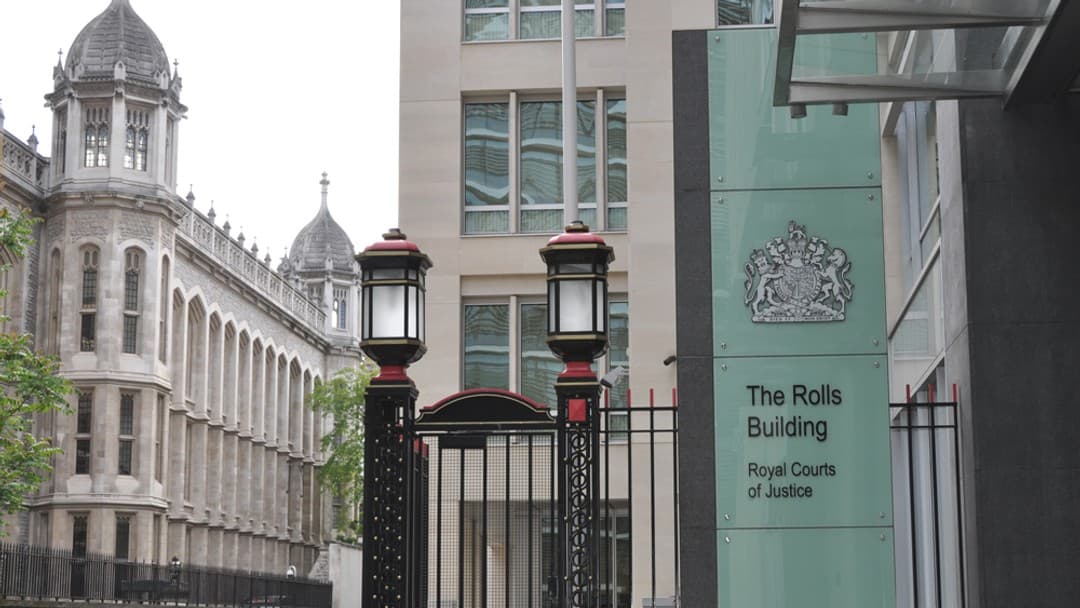
High Court dismisses respondents' bid to raise asset disclosure threshold but orders £500,000 payment into court as fortified cross-undertaking.
In [2026] EWHC 591 (Comm), Peter MacDonald Eggers KC, sitting as a Deputy Judge of the High Court, delivered judgement on three contested issues arising from a worldwide freezing order ("WFO") obtained by VTB Bank PJSC against Timur Kuanyshev and Alfiya Askar — a married couple resident in England and Wales. The WFO, granted by Bright J on 9 February 2026 without notice, supports Russian proceedings in which VTB claims approximately US$90 million under guarantee agreements entered into in connection with a facility advanced to Russian oil company Pechoraneftegaz JSC.
Disclosure threshold
The respondents sought to raise the asset disclosure threshold from £5,000 to £25,000, arguing the existing requirement was oppressive for high-net-worth individuals holding numerous personal chattels of modest value. The court dismissed the application. Applying the principles in PJSC Tatneft v Bogolyubov [2018] 1 WLR 5705, MacDonald Eggers KC confirmed that the purpose of an ancillary disclosure order is not merely to identify assets sufficient to satisfy a potential judgement, but to enable the claimant and court to monitor the freezing order effectively. Permitting a respondent to limit disclosure to assets above a self-serving threshold would, in the court's view, place the order "effectively in the control of the defendant." The respondents had also written shortly before the hearing confirming they would continue to identify assets in the £5,000–£25,000 range pending the return date, undermining their own case on burden.
Fortification of the cross-undertaking
VTB is subject to UK and US financial sanctions, meaning any payment under its cross-undertaking in damages would require a licence from OFSI or OFAC — a process estimated to take between six weeks and 18 months. The respondents applied to increase the fortified sum from £100,000 to £500,000 and to require payment into court.
Applying Energy Venture Partners Ltd v Malabu Oil and Gas Limited [2015] 1 WLR 2309, the court accepted that the respondents' costs budget — totalling over £516,000 — constituted a good arguable case for loss sufficient to justify increased fortification. The application to pay into court was also granted. MacDonald Eggers KC reasoned that requiring VTB to apply for the necessary licence immediately, rather than awaiting a future enforcement order, would erode delay in the respondents' favour and allow the court to maintain direct control over ring-fenced funds. VTB's argument that a second licence would be required for payment out of court was noted but did not displace the order.
The St Theodore property dispute
A third-party application by Christopher Clayton — who, through companies within his control, holds legal title to the £16.5 million residential property at St Theodore, Virginia Water — sought removal of all references to himself, his Alpha Wealth Group entities, and the property from the WFO. The respondents had resided at St Theodore since 2017 and claimed to do so as tenants under agreements with companies owned by Mr Kuanyshev's brother, Talgat.
The court declined to discharge the WFO on a summary basis. Applying SCF Finance Co v Masri [1985] 1 WLR 876 and Lemos v Lemos [2017] 1 P & CR 12, MacDonald Eggers KC held that VTB had a good arguable case that St Theodore fell within the WFO's broad definition of the respondents' assets. Several unanswered questions weighed in VTB's favour: the identity of the beneficial owners of the property had not been disclosed; the purported tenant, Bossanova Enterprises Ltd, had been dissolved in November 2025 yet had purportedly signed a new tenancy in January 2026; and the corporate structure holding the property had been restructured within days of Mr Kuanyshev signing his guarantee with VTB in July 2024.
Equally, the court acknowledged that Clayton and the respondents also had a good arguable case that the property was not a respondent asset. A trial of a preliminary issue was directed to resolve the question definitively, subject to further submissions on directions.
 Copyright & permissions

.jpg&w=3840&q=60)
-cropped-6au25meu.jpg&w=3840&q=60)



.JPEG&w=3840&q=60)