

Uriah Woods v The State: Privy Council redraws the boundaries of provocation in Trinidad and Tobago
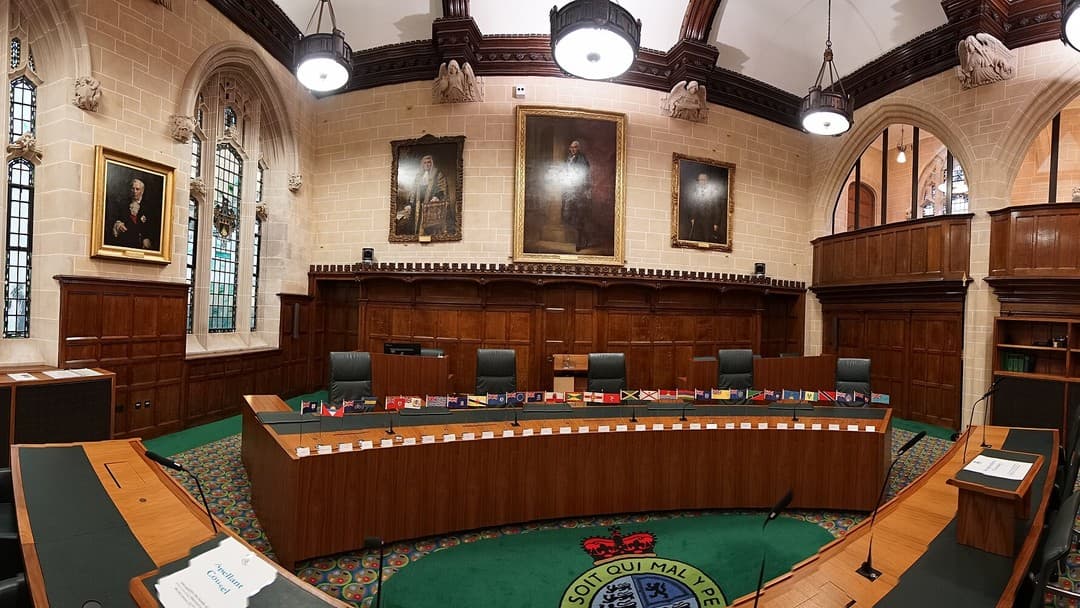
Privy Council clarifies the objective test for provocation, rejecting the Hong Kong approach.
The Judicial Committee of the Privy Council has handed down a significant judgement in Uriah Woods v The State (No 2) [2026] UKPC 22, resolving a longstanding ambiguity in the law of provocation as it applies across Trinidad and Tobago and other jurisdictions sharing identical statutory provisions. The appeal arose from a 2015 conviction for murder and a death sentence imposed following the killing of the appellant's former partner, Sandra Miller, in July 2005.
The central legal question concerned the proper construction of section 4B of the Offences Against the Person Act (Trinidad and Tobago), which is in identical terms to the now-repealed section 3 of the Homicide Act 1957. Specifically, the Board was asked to determine what the phrase "do as he did" requires of a jury when applying the objective limb of the provocation defence.
The competing approaches
The Court of Appeal of Hong Kong in HKSAR v Liang Yaoqiang (No 2) [2017] had concluded that the correct construction was the "killing simpliciter" meaning: juries should ask only whether the provocation was sufficiently grave to cause a person with ordinary powers of self-control to form an intention to kill or cause grievous bodily harm and act upon it. On this approach, the mode or ferocity of the killing becomes irrelevant to the objective enquiry.
The Court of Appeal of Trinidad and Tobago had adopted that reasoning in Marcelline v The State (2023), explicitly departing from its earlier decision in the present proceedings.
The Board has now declined to follow either Liang or Marcelline on this point. Delivering the judgement, Lord Lloyd-Jones and Sir Anthony Smellie held that the words "do as he did" are not properly limited to the abstract formation of murderous intent. The proportionality of the defendant's response to the provocation, including the mode of killing and ferocity of the attack, remains a relevant consideration which the jury may weigh when applying the objective test. This does not revive any rule of law requiring proportionality; rather, it is one factor in a broader evaluative exercise that the jury retains sole province to determine.
The Board drew support from the line of authority running through Phillips v The Queen [1969], DPP v Camplin [1978], and Rampharry v The State (1999), concluding that none of those decisions had displaced proportionality as a relevant factual consideration, only as a rule of law capable of withdrawing the defence from the jury.
The misdirection and proviso
The trial judge's direction was nonetheless found to be defective. The jury had been repeatedly told to consider whether an ordinary person would have done "exactly as Uriah Woods did", including a graphic recitation of the nature of the attack. The Board held this set an impermissibly high threshold, and that the correct standard asks whether a reasonable person might have reacted "in the same or in a similar way." The language of section 54 of the Coroners and Justice Act 2009, though not applicable in Trinidad, was noted as articulating the better formulation of the pre-existing principle.
The misdirection did not, however, lead to the conviction being quashed on provocation grounds. The Board applied the proviso, finding overwhelming evidence of premeditation: the appellant had confronted the deceased's fiancé on the morning of the killing, had obtained the cutlass himself, and had made a subsequent threat to "finish the job."
Diminished responsibility
The appeal achieved partial success on the separate ground of diminished responsibility. Fresh psychiatric and neuropsychological evidence, obtained years after trial, indicated the appellant likely suffered from a delusional disorder and a moderate intellectual disability, both probably operative at the time of the offence. The Board found the evidence credible and capable of belief under the sequential Lundy test, and sufficient to establish that a defence of diminished responsibility might well have succeeded had it been advanced at trial.
The case has been remitted to the Court of Appeal of Trinidad and Tobago. The Board also invited that court to issue guidelines for the routine psychiatric assessment of defendants in capital cases where the circumstances indicate a need for such evaluation.
 Copyright & permissions









.png&w=3840&q=60)

.jpg&w=3840&q=60)