UKHO v Samyung ENC: High Court issues unless order over persistent disclosure breaches
Persistent non-compliance with disclosure orders leads to £90 million strike-out sanction
The High Court has issued an unless order requiring Samyung ENC Co Limited to comply with disclosure obligations by 13 February 2026, with strike-out of its defence and entry of judgement for over £90 million as the consequence of failure.
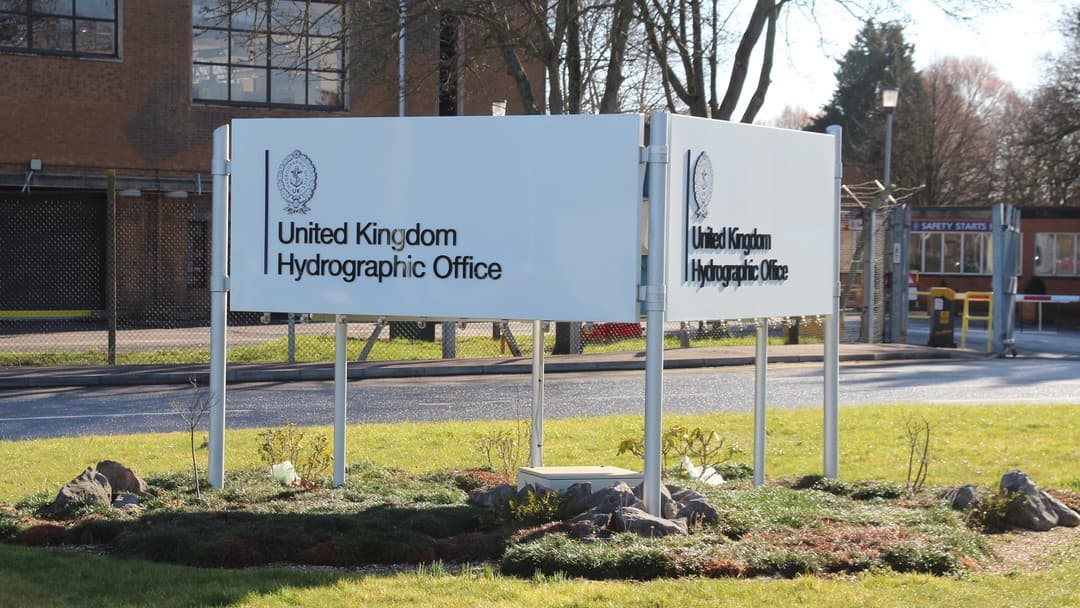
The UK Hydrographic Office (UKHO), an executive agency of the Ministry of Defence, brought proceedings against the Korean company following breaches of licence agreements relating to Electronic Navigational Charts (ENCs). UKHO creates and licenses the Admiralty Vector Chart Service (AVCS), encrypted ENCs with global coverage. Samyung had entered into three licences in 2014, 2016 and 2019, each permitting use on a single vessel. In breach of the End User Licence Agreement terms, Samyung copied the AVCS data, decrypted it, converted it to its proprietary 'S+Map' format, and uploaded the files onto devices sold worldwide.
In November 2022, Sir Paul Morgan struck out paragraphs of Samyung's defence for containing bare denials contrary to CPR 16.5(2) and granted summary judgement as to liability for breach of the three licence agreements. The court directed an Inquiry as to quantum and ordered Samyung to provide Island v Tring disclosure, including headline sales information for devices and the quantity of ENCs provided with each device.
Samyung's compliance with disclosure orders proved persistently problematic. Despite multiple orders from Master Pester and Deputy Master Arkush throughout 2025, Samyung failed to provide the required information about repositories, keyword searches, and relevant individuals. In February 2025, it claimed suspension from trading on KOSDAQ and instructed Hill Dickinson to cease work. A first unless order in April 2025 went unheeded.
Following commencement of Korean rehabilitation proceedings in May 2025, ICC Judge Prentis granted a stay until October 2025 to provide "breathing space". When the Administrator sought to extend the stay on the basis that UKHO's claim should be resolved in Korean rehabilitation proceedings, ICC Judge Barber rejected this application in November 2025, concluding that the Inquiry involved complicated questions of English law better suited to resolution in an English court.
Despite Hill Dickinson indicating in late 2025 that disclosure work had commenced, they stated on 23 December 2025 that they were "without instruction" following cancellation of the rehabilitation proceedings and a new application for rehabilitation. Samyung contended that Korean court orders prohibited it from providing instructions, though evidence of Korean law suggested otherwise.
At the hearing on 21 January 2026, Andrew Twigger KC, sitting as a Deputy High Court Judge, refused to postpone proceedings despite a last-minute request from Hill Dickinson. Samyung did not attend or appear, though Hill Dickinson solicitors were present as observers.
In his reserved judgement, the Deputy Judge found that Samyung's breaches were significant and serious for three reasons: multiple breaches of orders including an unless order; breaches remaining unremedied for an extended period without explanation; and critically, the breaches undermining the possibility of a fair trial by depriving UKHO of documentary material to reveal the full scope of its loss.
The judge drew the inference that Samyung's non-compliance was not the result of oversight but a deliberate choice. Key factors included the lack of urgency following lifting of the stay and the timing of the new rehabilitation application shortly before the hearing.
Applying principles from Workman v Forrester [2017] EWCA Civ 73, the judge concluded that entry of judgement for the sum claimed—approximately £90 million comprising principal of £61,716,516.09 and interest of £28,858,502.96—was appropriate. The judge rejected any suggestion that the sanction was disproportionate merely because the sums were large in absolute terms, finding the calculations sophisticated and reasonable with assumptions favourable to Samyung.
The order contains safeguards: the sanction only takes effect if extended disclosure is not provided by 13 February 2026, and Samyung has liberty to apply to vary or set it aside within 21 days with an expedited hearing available. The case illustrates the court's willingness to impose severe sanctions where persistent and deliberate failure to comply with disclosure obligations undermines the prospect of a fair trial.
 Copyright & permissions





.jpg&w=3840&q=60)

-cropped-6au25meu.jpg&w=3840&q=60)