



Tighter ground rules for media privacy claims
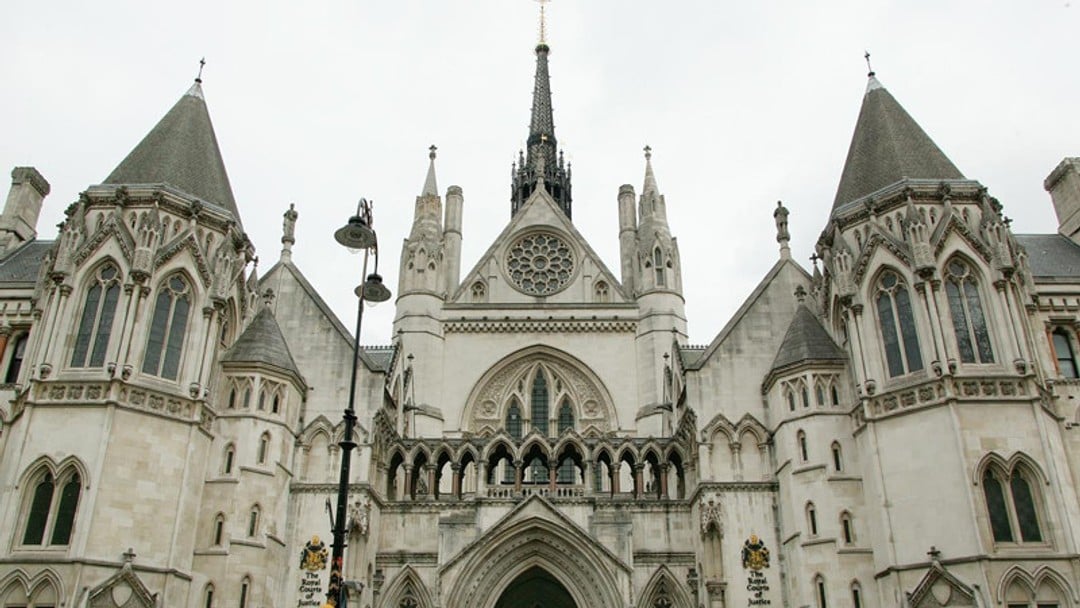
Lawrence & Ors shows how courts are containing group misuse of private information claims through disciplined case management
Baroness Lawrence account of feeling ‘a victim all over again’ captures what unlawful newsgathering can do: beyond invading privacy, it can erode trust and reawaken old trauma. Read as litigation rather than headline, Lawrence & Ors v Associated Newspapers Limited illustrates how group misuse of private information (MPI) claims against publishers are now being run as coordinated, judge-contained proceedings, built around claimant-specific evidence and strict control of scope, disclosure and costs.
Limitation is the first pressure point. The relevant claims, issued in October 2022, target alleged unlawful information gathering said to have occurred years earlier. Defendants will naturally invite the court to treat delay as fatal and point to the six-year primary limitation period under section 2 of the Limitation Act 1980. Claimants’ route around that is section 32 of the Act, arguing deliberate concealment so time runs from discovery (or reasonable discoverability). The practical point is not who wins, but what must be proved. Limitation will not turn on assertion and indignation. The court will press for particulars and evidential footing (when suspicion arose, who provided what information etc).
Once limitation is fenced off, the battle shifts to pleadings. In Lawrence & Ors, the High Court has insisted that this is civil litigation, not a public inquiry into newsroom culture. Case management framing treats the claimants’ case in three rings: at the centre sit claimant-specific allegations tied to identified articles or incidents; around that sits a ‘similar fact’ case relying on other episodes to suggest a modus operandi; and around that again ‘generic’ allegations said to evidence wider corporate practice. However, the key is containment: ‘similar fact’ reliance is confined to material that is properly probative of the pleaded issues, typically by reference to the individuals and methods said to connect to each claimant’s case. This is significant because it shuts down a ‘scale of wrongdoing’ narrative as a substitute for proof. The claimants do not get to drop in generic allegations about how awful the newspaper has been over the years and hope the judge fills in the gaps for them in relation to their own pleaded cases.
Once the perimeter is drawn in pleadings, disclosure becomes an exercise in staying inside it. The High Court’s case management and disclosure rulings of July and October 2025 show the approach in practice. Relevance is the gateway and proportionality the controlling filter, to stop claims drifting into sprawling trawls that derail timetables and inflate costs. This litigation shows courts are unwilling to order ‘digging the newsroom’ in the hope that something useful turns up. Parties must pin requests to the pleaded incidents, the individuals said to be involved, the alleged methods of acquisition, and explain why the material bears on those issues. Defendants, equally, should not assume that the absence of a ‘smoking gun’ ends the discussion. After all, covert wrongdoing is rarely documented neatly or explicitly. The court may permit targeted disclosure to test whether pleaded inferences of unlawful conduct are properly open but will require precision and police disproportionate burden. Narrow, justified requests are in; scatter-gun demands are out.
Costs management is where that discipline becomes operational. In Lawrence & Ors, the High Court was not prepared to let a large privacy claim become financially ungovernable. The parties’ early budgets were treated as 'manifestly excessive and [...] disproportionate', and costs had to be rebuilt on ‘very clear assumptions’ about how the case would actually run - not padded with speculative contingencies. The point sharpens in multi-claimant media litigation. Although this is not a formal Group Litigation Order (GLO), the claimants are proceeding as a coordinated unit, advancing shared ‘generic’ and ‘similar fact’ platforms to cross-support individual claims. On that footing, the court treats costs allocation as case control and procedural fairness, driving a split between genuinely common costs and claimant-specific individual costs to prevent duplication, improve budgeting transparency and make parties confront the real price of running a shared case without a GLO (albeit under GLO-like judicial discipline). That clarity is decisive as it determines who will be on the hook for the other side’s legal costs if the claim fails and feeds into ATE decision-making, settlement strategy, and inter-claimant coordination. The court’s stated concern here is that claimants must have ‘the clearest possible understanding’ of the risk they are carrying.
Even with budgets contained, one more pressure point can destabilise a group claim: publicity, and open justice. In the Berlin application, the claimants in Lawrence & Ors sought to anonymise a proposed trial witness and impose reporting restrictions. Nicklin J restated the baseline: civil justice is administered in public and there is no carve-out because privacy is in issue. An anonymity order is a derogation from open justice and must be strictly necessary. The burden lies on the applicant and must be discharged by ‘clear and cogent evidence’. The application failed because the asserted risk was ‘general and speculative’ and fell short of objectively substantiating a sufficient countervailing justification. The court also tested utility here: where identity would likely be inferred from the substance and context of the evidence, anonymity becomes cosmetic, and the court will not compromise open justice, reminding us that privacy litigation does not buy a private forum.
Taken together, Lawrence & Ors reads less like a doctrinal turning point than firmer ground rules for how these unlawful newsgathering cases will be run. Pleading discipline, disclosure controls and tighter budgeting are being used to prevent collective MPI claims turning into retrospective trawls through newsroom history. Also, Berlin underlines that open justice remains the default and anonymity will be exceptional, evidence-led and utility-tested.
 Copyright & permissions