

THG plc v Zedra Trust Company (Jersey) Ltd: Supreme Court rules no limitation period applies to unfair prejudice petitions
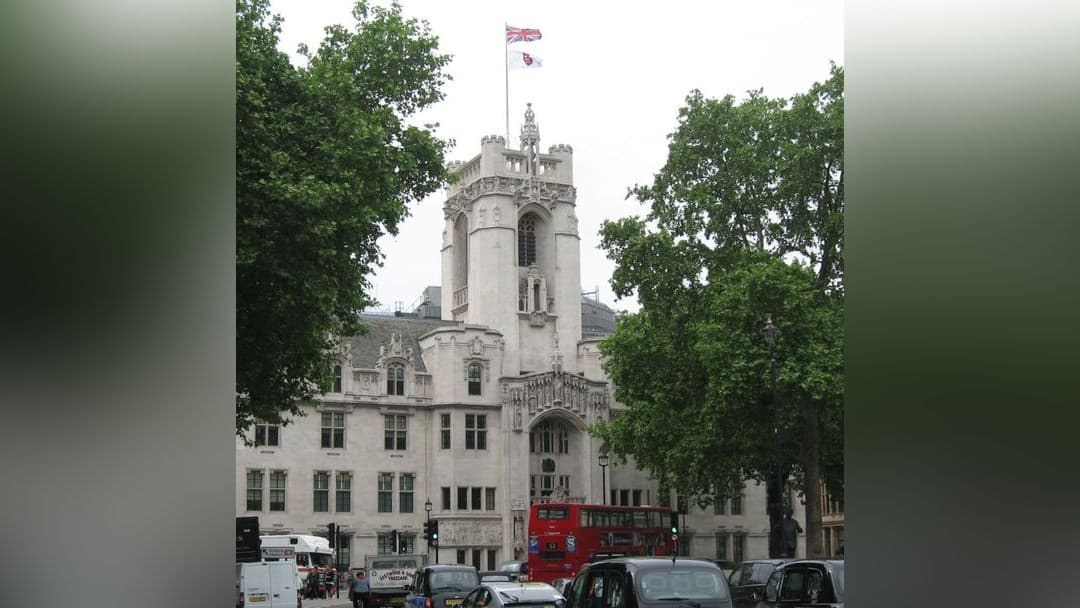
The Supreme Court restores 40 years of received wisdom on section 994 petitions.
The Supreme Court has unanimously allowed Zedra Trust Company (Jersey) Ltd's appeal in THG Plc v Zedra Trust Company (Jersey) Ltd [2026] UKSC 6, holding that neither section 8 nor section 9 of the Limitation Act 1980 imposes a limitation period on petitions brought under section 994 of the Companies Act 2006. The judgement, delivered on 25 February 2026 by Lord Hodge and Lord Richards (with whom Lord Lloyd-Jones and Lord Briggs agreed), overturns the Court of Appeal's decision and restores the longstanding position that delay in unfair prejudice proceedings is a matter for the court's discretion rather than statutory bar.
Zedra, a minority shareholder in THG plc, sought to amend its section 994 petition to include a complaint arising from a bonus share allotment in July 2016 from which it had been excluded. The proposed amendment sought equitable compensation from the relevant directors for loss Zedra alleged it would have avoided had it received its pro rata entitlement prior to THG's IPO in September 2020. The respondents resisted the amendment on limitation grounds, arguing that more than six years had elapsed since the alleged unfair prejudice.
Fancourt J permitted the amendment, relying on Bailey v Cherry Hill Skip Hire Ltd [2022] EWCA Civ 531 and the widely accepted view that no statutory limitation period applies to section 994 petitions. The Court of Appeal reversed that decision, with Lewison LJ concluding — departing from over 40 years of received wisdom — that section 9 of the 1980 Act imposed a six-year period where only monetary relief was sought.
The Supreme Court's analysis
The majority rejected both the Court of Appeal's application of section 8 and its application of section 9. On section 8, the court held that an "action upon a specialty" historically encompassed actions to enforce obligations created by deed or statute — not all proceedings for which a statute makes provision. Sections 994–996 of the Companies Act 2006 create no substantive obligation. They confer a discretionary power on the court to grant relief in respect of a state of affairs amounting to unfair prejudice, and that is a materially different thing. The court disapproved the broader reading of Collin v Duke of Westminster [1985] QB 581 that had been adopted in Rahman v Sterling Credit Ltd [2001] 1 WLR 496 and elsewhere, though declined to express a concluded view on whether section 8 applies to non-monetary statutory obligations more generally, given that the point was not necessary for the outcome.
On section 9, the court declined to adopt the "look and see" approach endorsed in Re Priory Garage (Walthamstow) Ltd [2001] BPIR 144 and applied by the Court of Appeal. The essential difficulty is that sections 994–996 confer the widest possible discretion as to remedy, to be exercised by reference to circumstances at the date of judgement. A petitioner has no entitlement to any particular form of relief, monetary or otherwise. Applying section 9 only where a monetary order was sought in the petition would produce arbitrary outcomes and would, as the court put it, border on the absurd — a petition might proceed in respect of non-monetary remedies while being time-barred as to the monetary relief the court ultimately considered most appropriate.
The role of delay
The court confirmed that delay remains highly relevant. The court's broad discretion under section 996 permits it to refuse relief — or to tailor any order — where unjustified delay has caused prejudice to a respondent or third party. That equitable dimension provides a principled and flexible mechanism for managing stale complaints, without the rigidity of a fixed limitation period.
Lord Burrows dissented, taking the view that section 994 petitions do fall within section 8 as actions upon a specialty, and that where monetary compensation is sought, section 9's six-year period applies. In his view, the "look and see" approach had operated satisfactorily for over 65 years and should not be displaced.
The majority's judgement is clear: whether a limitation period should apply to section 994 petitions is a question for Parliament, not the courts. Until Parliament acts, the equitable doctrine of laches and the court's statutory discretion remain the appropriate tools for addressing delay.
 Copyright & permissions





.jpg&w=3840&q=60)








.jpg&w=3840&q=60)