LoginSubscribe Now
Follow Us
Sign up to our free newsletter
Solicitors Journal LogoInforming the legal profession since 1856

Find the knowledge you need from the SJ library of over 20,000 legal articles

Search now
Solicitors Journal Logo
  • Legal News
  • Opinion
  • Features
  • Practice Notes
  • Business
  • International
  • Court Reports
  • AI Search
  • Digital Edition
  • Subscription Options
  • Advertise with Us
    • About Us
    • Contact Us
    • FAQ
    • Guide to Authors
Solicitors Journal

Informing the legal profession since 1856.

Follow us

Topics

  • Legal News
  • Opinion
  • Features
  • Practice Notes
  • Business
  • International
  • Court Reports

About

  • About Us
  • Contact Us
  • Advertise with Us
  • FAQ
  • Guide to Authors

Subscribe

  • Subscription Options
  • Digital Edition
  • Free Newsletter

Editorial

editorial@solicitorsjournal.com+44 (0)1223 750 755

Subscriptions

subscriptions@solicitorsjournal.com+44 (0)1223 750 755

Advertising

Advertise with usadvertising@solicitorsjournal.com+44 (0)1223 750 755

© 2026 Solicitors Journal in partnership with the International In-house Counsel Journal

ISSN 0038-1047  ·  Images: Freepix, Unsplash and by permission of the authors

Terms and ConditionsCookie PolicyPrivacy PolicyPLS Clear logoCopyright & permissions

That proposed new basement: Does it require planning permission?
21 Feb 2017Feature
Share:
That proposed new basement: Does it require planning permission?

Alec Samuels considers whether the construction of a basement is a development or an engineering operation, and what form of planning law applies

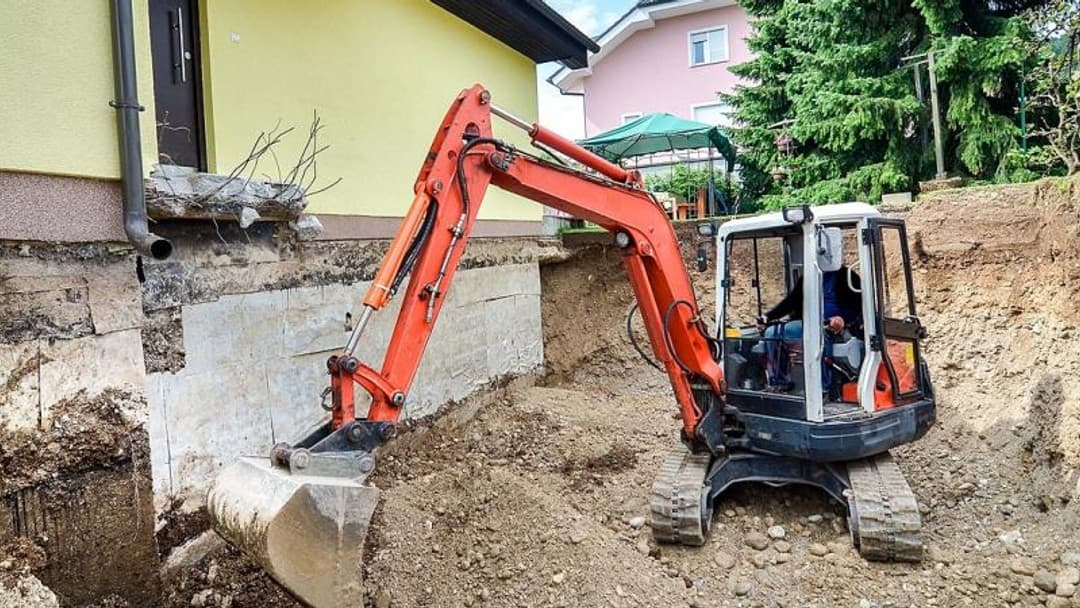
The owner of a terrace dwelling house in an urban setting wants to build or construct or excavate or create (whatever is the correct word) a basement. These days it is often cheaper and more convenient to extend the house rather than sell and move elsewhere, and anyway the owner likes their current location. Do they need planning permission or is the proposal covered by permitted development? What is the relevant planning law they have to observe?

The objections from neighbours and others come as no surprise:

  • The stability of the structure of the neighbouring houses will be undermined;

  • There will be an effect on the flood risk and drainage;

  • The construction will be lengthy and noisy, with lorries removing spoil, traffic, and parking problems;

  • The long-term impact, including more people, vehicles, and parking problems, will change the character and amenity of the area; and

  • An undesirable precedent will be set.

The enlargement, improvement, or other alteration of a dwelling house requires planning permission, unless it be a minor matter in terms of size and volume and position, in which case it enjoys permitted development rights and in effect deemed permission (section 57 of the Town and Country Planning Act 1990 and the Town and Country Planning (General Permitted Development) (England) Order 2015). Section 55(1) of the Act distinguishes between building operations, which may be covered by permitted development, and engineering operations, which are not covered by permitted development.

So the issue arises: is the construction of a basement development (i.e. an enlargement of a dwelling house) or engineering (i.e. a separate substantial activity)? Is the work involved the sort of work normally done by a builder, including perhaps a highly skilled builder, or the sort of work normally done by an engineering company, requiring the expertise of a civil structural engineer, substantial excavation, heavy machinery, iron bars, structural support, and all such paraphernalia?

Faced with this problem in R (Eatherley) v Camden LBC [2016] EWHC 3108 (Admin), the judge held that the issue is one of fact and degree, an objective issue, to be determined on the evidence and in a rational and reasonable manner by the decision maker. Then the ultimate decision becomes a planning judgment soundly based. The creation of basements in urban areas is proving to be rather controversial and public authorities and private interests are concerned about the impact on neighbours and the neighbourhood. There are ways of depriving the owner of permitted rights:

  • The building is listed;
  • The building is in a conservation area; or
  • An article 4 direction covers the area.


Alec Samuels is a barrister and former reader at Southampton University


Related Topics

  • Property
  • Residential

Latest Articles

The owner of a terrace dwelling house in an urban setting wants to build or construct or excavate or create (whatever is the correct word) a basement. These days it is often cheaper and more convenient to extend the house rather than sell and move elsewhere, and anyway the owner likes their current location. Do they need planning permission or is the proposal covered by permitted development? What is the relevant planning law they have to observe?

The objections from neighbours and others come as no surprise:

  • The stability of the structure of the neighbouring houses will be undermined;

  • There will be an effect on the flood risk and drainage;

  • The construction will be lengthy and noisy, with lorries removing spoil, traffic, and parking problems;

  • The long-term impact, including more people, vehicles, and parking problems, will change the character and amenity of the area; and

  • An undesirable precedent will be set.

The enlargement, improvement, or other alteration of a dwelling house requires planning permission, unless it be a minor matter in terms of size and volume and position, in which case it enjoys permitted development rights and in effect deemed permission (section 57 of the Town and Country Planning Act 1990 and the Town and Country Planning (General Permitted Development) (England) Order 2015). Section 55(1) of the Act distinguishes between building operations, which may be covered by permitted development, and engineering operations, which are not covered by permitted development.

So the issue arises: is the construction of a basement development (i.e. an enlargement of a dwelling house) or engineering (i.e. a separate substantial activity)? Is the work involved the sort of work normally done by a builder, including perhaps a highly skilled builder, or the sort of work normally done by an engineering company, requiring the expertise of a civil structural engineer, substantial excavation, heavy machinery, iron bars, structural support, and all such paraphernalia?

Faced with this problem in R (Eatherley) v Camden LBC [2016] EWHC 3108 (Admin), the judge held that the issue is one of fact and degree, an objective issue, to be determined on the evidence and in a rational and reasonable manner by the decision maker. Then the ultimate decision becomes a planning judgment soundly based. The creation of basements in urban areas is proving to be rather controversial and public authorities and private interests are concerned about the impact on neighbours and the neighbourhood. There are ways of depriving the owner of permitted rights:

  • The building is listed;
  • The building is in a conservation area; or
  • An article 4 direction covers the area.


Alec Samuels is a barrister and former reader at Southampton University


Legal News desk contact: editorial@solicitorsjournal.com|PLS LogoCopyright & permissions
Sir Keir Starmer resigns as Prime Minister
Solicitors Journal

Sir Keir Starmer resigns as Prime Minister

Sir Keir Starmer has stepped down as Labour leader and Prime Minister, triggering leadership nominations soon
News22 Jun 2026
Youth sentencing, custody thresholds, and judicial discretion examined
Solicitors Journal

Youth sentencing, custody thresholds, and judicial discretion examined

How legal frameworks governing child defendants shape outcomes in serious sexual offence cases before the Court of Appeal
Feature22 Jun 2026
Andy Burnham's potential impact on employment law
Solicitors Journal

Andy Burnham's potential impact on employment law

Experts warn that an Andy Burnham administration could reshape employment law, impacting flexibility and workers' rights
News22 Jun 2026
Janssen-Cilag v United States: UKIPO address for service constitutes consent to be sued
Solicitors Journal

Janssen-Cilag v United States: UKIPO address for service constitutes consent to be sued

High Court rules US government validly served via UKIPO register despite state immunity challenge.
Court Report22 Jun 2026
Homebuying reforms aim to simplify process
Solicitors Journal

Homebuying reforms aim to simplify process

Major reforms to the homebuying and selling process in the UK promise to reduce delays and costs for families and first-time buyers while increasing certainty...
News22 Jun 2026
Online shoppers face product safety risks
Solicitors Journal

Online shoppers face product safety risks

Lawyers demand urgent reforms for online product safety to protect consumers and ensure justice access
News22 Jun 2026
Brexit anniversary and its impact on banks
Solicitors Journal

Brexit anniversary and its impact on banks

The tenth anniversary of Brexit highlights the UK's dynamic financial services sector and the implications for firms
News22 Jun 2026
Good Law Project v Reform UK: the data rights case that tests who can sue on behalf of others
Solicitors Journal

Good Law Project v Reform UK: the data rights case that tests who can sue on behalf of others

High Court refuses to strike out data subject access claim against Reform UK, finding the Good Law Project has arguable standing as a representative body.
Court Report19 Jun 2026
Hattons of London v Knightsbridge Collection: the coin dealer data theft that a CRM system and a cloud provider helped unravel
Solicitors Journal

Hattons of London v Knightsbridge Collection: the coin dealer data theft that a CRM system and a cloud provider helped unravel

Seven former employees found liable for conspiracy and breach of confidence after secretly building a rival business on stolen customer data.
Court Report19 Jun 2026
Pfizer v Competition and Markets Authority: the phenytoin saga enters its third decade with the CMA's original decision restored
Solicitors Journal

Pfizer v Competition and Markets Authority: the phenytoin saga enters its third decade with the CMA's original decision restored

Court of Appeal reinstates the CMA's finding that Pfizer and Flynn abused their dominant position, but wipes out the CAT's retaken decision on procedural fairness...
Court Report19 Jun 2026
Dexia v Comune di Torino: how hindsight and low interest rates became the basis for a €133m derivatives claim
Solicitors Journal

Dexia v Comune di Torino: how hindsight and low interest rates became the basis for a €133m derivatives claim

English court rejects Turin's bid to unwind two decades of interest rate swaps after the global financial crisis cut rates.
Court Report19 Jun 2026
Iconic Sports Eagle Investment v Textor: football, a $100m put option and a clarification of specific performance law
Solicitors Journal

Iconic Sports Eagle Investment v Textor: football, a $100m put option and a clarification of specific performance law

Commercial Court confirms a claimant need not be ready to perform at the contractual date if the other party has repudiated.
Court Report19 Jun 2026
Al-Uzaybi v Home Office: government's raid on special advocate's chambers exposes fault lines in closed proceedings
Solicitors Journal

Al-Uzaybi v Home Office: government's raid on special advocate's chambers exposes fault lines in closed proceedings

High Court condemns intelligence agencies' seizure of a special advocate's notes as a serious threat to judicial independence.
Court Report19 Jun 2026
SJ Interview: Chris Spelman
Solicitors Journal

SJ Interview: Chris Spelman

Chris Spelman is a partner in DWF's London dispute resolution team, specialising in financial services litigation and investigations, whistleblowing matters, and class action, securities and...
Interview13 Jun 2026
When the rules can't keep up
Solicitors Journal

When the rules can't keep up

From Westminster to the courts, the rules are being written faster than they can settle
Foreword1 Jun 2026