

Teixeira v Moaven: High Court finds declarations of trust were 'sham' designed to conceal estate assets
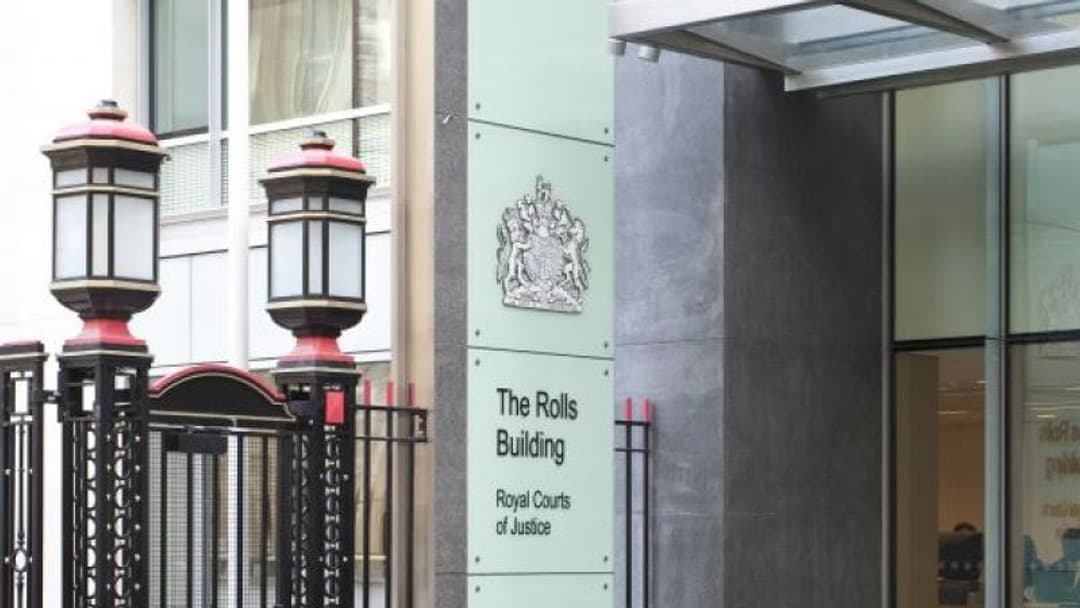
Declarations of trust held void; full beneficial ownership of four London properties restored to deceased's estate
The High Court has found that four declarations of trust executed by a dying man in April 2012, purportedly confirming long-standing family arrangements over London properties worth several million pounds, were shams with no legal or equitable effect. Master Bowles, sitting in retirement in the Business and Property Courts, handed down judgement in Gabriela Mozerle Teixeira v Amir Ahmad Moaven & Ors [2026] EWHC 1215 (Ch) on 22 May 2026, following a five-day trial in March.
Amir Abbas Moaven died in May 2012, leaving a will dividing his estate equally between his Brazilian wife, Gabriela, and their two young children. Days before his death, he had executed declarations of trust over four London properties, registered solely in his name, purporting to confirm that each had always been held one-third each for himself, his brother Amir Ahmad Moaven, and their mother, Shokouh Nazemi Tehran. Had they stood, the declarations would have removed two-thirds of the properties' value from the estate, potentially rendering it insolvent.
The first defendant, Amir Ahmad Moaven, maintained that the recitals accurately reflected a long-standing tripartite arrangement dating to the late 1980s, under which the brothers and their mother had pooled resources across business ventures and property acquisitions. He relied, among other evidence, on tax returns showing a one-third division of rental income across the relevant years.
Master Bowles rejected that case comprehensively. He found the tax returns had been prepared retrospectively after Abbas's death, by their accountant Behzad Faiz, specifically to mirror the declarations of trust, a fact Amir was found to have deliberately concealed in his witness evidence. The court described Amir's evidence as a "fiction" constructed to support false recitals, and found he had been untruthful in at least three fundamental respects.
The judgement identifies attendance notes prepared by conveyancing solicitor Marios Robert Pittalis as particularly significant. Those notes disclosed, belatedly, that on 17 and 18 April 2012 a range of alternative declarations of trust had been drafted, executed by Abbas, and then debated by Amir, Faiz and Pittalis in terms of which version would be most "sustainable" in limiting Gabriela's entitlement. Neither Faiz nor Pittalis had been aware, prior to that process, of any tripartite arrangement. An earlier note from November 2002, prepared on the eve of Abbas's marriage to Gabriela, confirmed he had previously sought to place assets nominally in his mother's name specifically to defeat future spousal claims.
Master Bowles held that the declarations were not intended to create or confirm genuine equitable rights but to give a false impression of the estate's composition. They fell squarely within the definition of a sham established in Snook v London and West Riding Investment Ltd [1967] 2 QB 786. The full beneficial ownership of all four properties was declared to have remained with Abbas throughout, and to have passed into his estate on his death.
Having reached that conclusion, the court did not need to determine the outstanding claims under section 423 of the Insolvency Act 1986 or section 10 of the Inheritance (Provision for Family and Dependants) Act 1975. Master Bowles nonetheless addressed both in obiter remarks. On limitation under section 423, he departed from his own earlier decision in Riley v Aidiniantz [2025] EWHC 3222 (Ch) in light of the Supreme Court's ruling in Zedra Trust Co (Jersey) Ltd v THG plc [2026] 2 WLR 479, concluding that a section 423 claim is not an action upon a specialty and carries no statutory limitation period.
The substantive 1975 Act claims by Gabriela, Elis and Aryan Moaven remain to be determined. Abbas's estate, fourteen years after his death, has yet to obtain a full grant of probate. Orders as to the possession and sale of the Holland Park property and the form of accounting obligations will follow the handing down of this judgement.
 Copyright & permissions










.png&w=3840&q=60)

.jpg&w=3840&q=60)