


SLB v PAK: why the refund guarantee obligation in a shipbuilding contract is an innominate term, not a condition
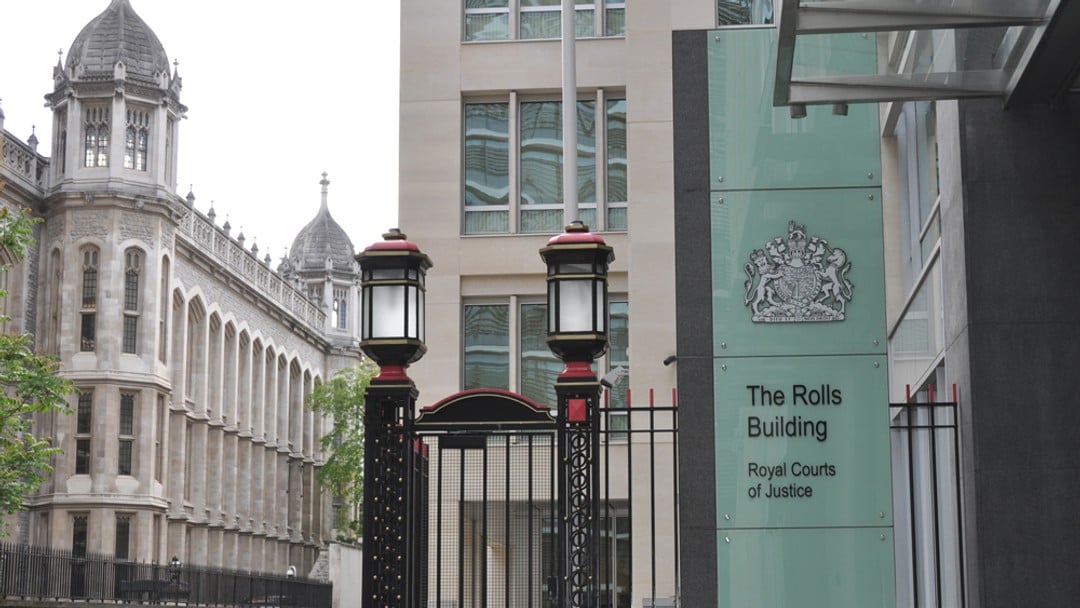
Mr Justice Calver dismisses appeals in ten London arbitration cases arising from container vessel shipbuilding contracts.
In SLB and Others v PAK and Others [2026] EWHC 449 (Comm), Mr Justice Calver dismissed appeals under section 69 of the Arbitration Act 1996 against ten arbitral awards concerning shipbuilding contracts for container vessels of 12,690 and 15,000 TEU. The central question was whether a contractual obligation to provide refund guarantees within 120 days of novation constituted a condition of the contract, breach of which would entitle the buyers to loss of bargain damages.
The Tribunal had unanimously found that the obligation was an innominate term. Although the buyers were entitled to exercise their contractual right of cancellation following the yard's admitted failure to deliver the refund guarantees within 120 days, they were not entitled to loss of bargain damages — claims which ranged between approximately USD 73 million and USD 83 million per vessel.
The applicable principles, drawn from Bunge v Tradax [1981] 1 WLR 711 and the Court of Appeal decisions in The Spar Capella [2016] 2 Lloyd's Rep 447 and The Arctic [2019] 2 Lloyd's Rep 603, were not in dispute. Unless a contract makes clear — by express provision or necessary implication — that a stipulation is a condition, it will be treated as innominate. Courts should not be too ready to classify terms as conditions, and a general label of "mercantile contract" is insufficient of itself to justify doing so. The modern starting point, confirmed by Hamblen LJ in The Spar Capella, is that a term is innominate unless the contrary is clearly indicated.
Several features of the shipbuilding contracts pointed firmly against condition status.
The clause was not expressed as a condition. The "no later than 120 days" language, whilst establishing a deadline, did not transform the term into one. Critically, the clause permitted the buyers to extend that deadline "from time to time" — a feature the Tribunal rightly observed was inconsistent with treating 120 days as an absolute longstop the parties regarded as essential.
Unlike the paradigm case in Bunge v Tradax, the obligations were not interdependent in any material sense. The buyers' obligation to pay instalments was expressly deferred pending receipt of the refund guarantee; they faced no risk of default and their funds were never imperilled. The yard's obligation to construct and deliver the vessels persisted regardless of whether the guarantee had been provided. The absence of a refund guarantee could impede practical progress, but — as the Tribunal found on the facts — it would not cause the contract to fall into unworkable disarray.
The contractual termination clause itself was a strong indicator. Following The Spar Capella, the inclusion of an express right to cancel for non-provision of the guarantee suggests that no equivalent common law right was intended. Article X(3) reinforced this: upon exercise of the cancellation right, all obligations, duties and liabilities of both parties were to be completely discharged — an outcome fundamentally inconsistent with the secondary liability for damages that flows from breach of condition at common law.
Finally, the range of possible breaches weighed against condition status. A failure to provide the guarantee might be trivial — a day late, through no fault — or genuinely serious. Where breach consequences span that range, an innominate term is the appropriate classification.
The buyers' arguments by analogy to documentary credits, performance bonds and deposits were each rejected. In every cited case the condition classification turned on interdependence of obligations or particular contractual features absent here.
The judgement confirms that comprehensive contractual remedies — including express cancellation rights and discharge provisions — may well displace any inference that a time stipulation carries condition status. The decision also reinforces the limits of appellate interference with arbitral fact-findings, the buyers having repeatedly sought to recharacterise or supplement the Tribunal's commercial background findings, which the court firmly declined to permit.
 Copyright & permissions