Could you briefly talk us through your professional background, and the experiences that most shaped how you think about law-firm leadership today?
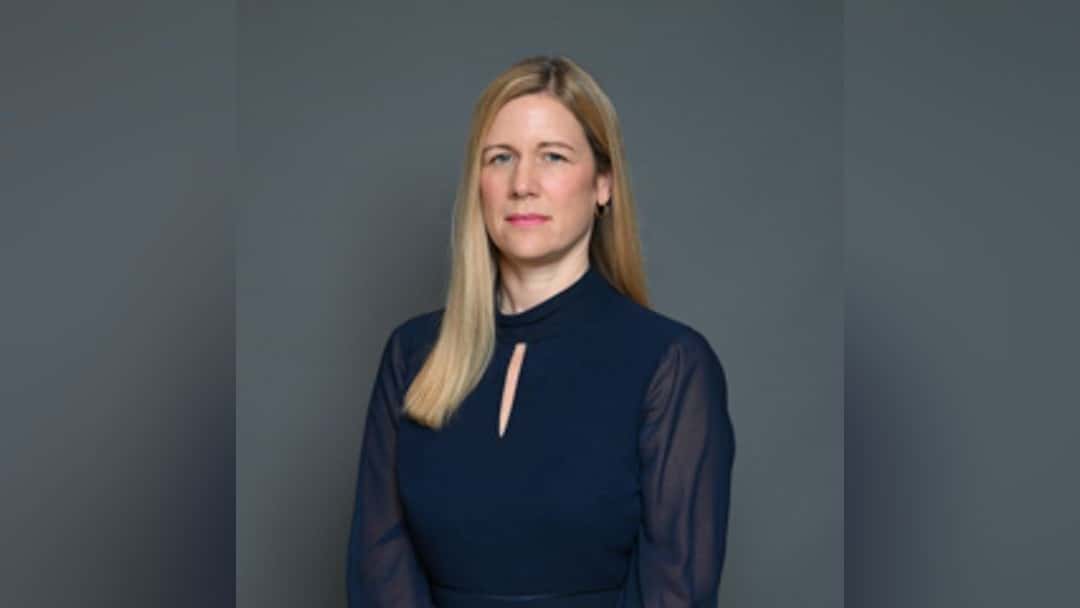
I graduated from the University of Edinburgh in 2005 with an MA in Economics and Law, before furthering my legal qualifications at BPP University Law School. I then began my legal career at Herbert Smith Freehills as a trainee solicitor before joining Kennedys a few years later as an Associate and being promoted to Partner six years after that. I specialise in international arbitration and commercial litigation, handling high-value, cross-border cases.
A highlight of my time at Kennedys was leading a five-year transformation of the firm’s UK Corporate & Commercial practice, helping transform it from a single London-based team operating largely as an adjunct to the insurance offering into a multi-service, standalone practice group. During this period, our UK Corporate & Commercial practice more than tripled its revenue.
In 2024, I helped launch a dedicated ESG practice group, bringing together partners from across Kennedys’ global network to advise insurer and corporate clients on climate-related governance risks and exposures. My journey at Kennedys continues to evolve. One year ago I was appointed UK Managing Partner, a role in which I now oversee 13 UK offices and a large, diverse team of almost 1,700 colleagues.
I come from a diverse background and have lived in multiple countries. This has shaped my own view of the world and the legal business, in particular, where there has traditionally been quite some pressure to “fit in.”
I was never the conventional type and have always sought to do things differently, which remains my approach to this day. I like bold new ideas that don’t necessarily conform with received wisdom and mainstream thinking. In fact, “group think” is, in my view, lethal to business innovation and success.
When you look at how large international firms actually operate day-to-day, what tends to matter more than formal strategy documents?
In practice, it is everyday decisions and behaviours that shape how a firm operates. As they say, culture eats strategy for breakfast!
It begins with our people and by making them see the purpose in what they do, creating meaningful learning opportunities for the lawyers of tomorrow, ensuring that on-the-job training is both fulfilling and genuinely develops the skills and judgement they will need throughout their careers - particularly at a time when technology is rapidly reshaping the landscape across all sectors.
A deep understanding of and respect for different cultures and diversity is essential. Trusted relationships with teams and clients cannot be built or sustained without it.
Prioritising strong operational foundations is essential. A firm must be well-managed internally to perform at its best externally. And making responsible business choices that serve our people, our clients, and the wider marketplace in which we operate is critical.
What have you learned about scaling a practice that isn’t obvious when a firm is still relatively compact?
Scaling a practice requires targeting (and delivering) quick wins that drive profitable growth, and having trusted relationship partners who are willing to make introductions to the right colleagues is essential, while also being able to articulate a persuasive longer-term strategy and narrative that ensures internal and client based support.
While having a global and diverse network can be a major advantage when expanding, coordinating across multiple jurisdictions brings its own challenges. Maintaining a cohesive narrative and securing buy-in from the global network is far from straightforward. One key lesson I’ve learned is that effective, consistent communication is essential to overcoming these hurdles and ensuring successful growth.
How do you think law-firm leadership has changed in practical terms compared with when you first qualified?
Law-firm leadership has evolved significantly. We have seen the next generation, which is also a lot more diverse than the previous one, take over along with a cultural shift that reflects wider societal trends. For instance, leaders now communicate with their partners and staff as peers rather than “subordinates” because there is a realisation that dependencies and preferences have changed power balances and that ruling by threat or fear no longer works. It’s all about adopting a collaborative, inclusive and respectful approach. Things are also a lot more transparent than they used to be.
Leaders are also navigating far greater macroeconomic and geopolitical uncertainty, which continues to test and redefine the role of lawyers as trusted advisers. At the same time, the pace of change and transformation has accelerated dramatically, driven by technology, AI, and the growth of consumer litigation, including large-scale class actions.
What skills do you now see as essential for lawyers who want to progress beyond strong technical ability?
It’s a people business, so it’s all about people skills. The ability to build trust, communicate effectively, and work across cultures makes a real difference, something I have experienced first-hand through working in four languages and representing clients in the courts of the US, UK, Germany, Switzerland and Austria.
Curiosity and a strong awareness of the broader macroeconomic and business landscape are also increasingly important. Lawyers who understand the commercial context in which their clients operate are far better positioned to provide meaningful advice.
Business development and management skills are also essential for long-term progression. Lawyers who want to progress must be able to grow and manage practices, lead teams, and contribute to the wider success of the firm.
Finally, there is a growing expectation that lawyers act as trusted advisers, not just technicians. This increased advisory focus requires sound judgment, commercial insight and the confidence to engage proactively with clients on strategic issues.
Clients often talk about wanting “commercial” advice — how do you interpret that in practice when difficult decisions are being made?
For us, “commercial” advice means guidance that is grounded in a client’s business realities and strategic objectives, not just the legal position. Clients consistently tell us they don’t want their lawyers to sit on the fence. They want clear options, an explanation of the risks and benefits of each, and crucially, a recommendation on which path we believe best aligns with their commercial goals, informed by our understanding of their business and the law.
This often involves having candid and sometimes difficult conversations. When done thoughtfully and respectfully, those conversations strengthen relationships and build trust, even where a client may ultimately choose a different course.
Disputes are increasingly cross-border and multi-disciplinary. How should practitioners think about developing depth without becoming too narrow?
Practitioners need to build deep expertise in their core discipline while remaining intellectually curious and open to adjacent areas. Depth still matters, but it must sit alongside a broad understanding of how legal, regulatory, and commercial issues intersect, particularly in cross-border disputes, where no single specialism operates in isolation. This is one of the key benefits of working in a global law firm like Kennedys, where that breadth of perspective is part of day-to-day practice and where practitioners can draw on the expertise of colleagues around the world.
Exposure to different jurisdictions, industries, and types of work is critical. That breadth not only strengthens technical judgement but also enhances a lawyer’s ability to collaborate effectively with specialists across disciplines and geographies.
Equally important is developing strong client and commercial awareness. Understanding a client’s business, risk profile, and strategic objectives allows lawyers to apply their specialist knowledge in a way that is practical, relevant, and solutions-focused, rather than overly narrow or theoretical.
Ultimately, the most effective practitioners are those who combine deep technical capability with adaptability - able to go deep when required, but with the perspective to see the wider picture and deliver joined-up advice.
ESG now cuts across regulation, litigation and transactional risk. Where do you see lawyers adding the most value for clients navigating that complexity?
As lawyers, it is important to shift our focus from thinking along the lines of internal legal disciplines and instead concentrate on understanding clients' industry-specific challenges. If you think of legal issues as mosaic tiles, we may spend a lot of time focusing on one or two and their connection to neighbouring tiles. Meanwhile, our clients are standing back and seeing the whole picture.
Ensuring a holistic approach, as we have at Kennedys with our global ESG product group, is where lawyers can add the most value. A global product group bundles expertise, making it more accessible for clients and facilitates collaboration between our practitioners around the world.
Technology is changing how legal work is delivered, but adoption varies widely. What tends to separate effective implementation from superficial use?
Effective implementation goes beyond simply adopting technology; it requires prioritising operational excellence and using tools with a clear purpose – it’s all about the impact it will have. While there is a rush to adopt and implement AI, it must be guided by the right business case - for the work itself, for internal teams, and for clients.
Success comes when technology supports well-defined processes, enhances performance, and is fully integrated into the way teams operate - rather than being technology for technology’s sake.
From your experience, what makes a partnership function well over the long term as firms grow larger and more international?
A partnership functions best over the long term when shared values are supported by strong governance and open communication. Trust and transparency between partners are essential. Creating platforms that enable partners around the world to get to know one another, collaborate effectively, and build trust encourages greater sharing of clients and work—benefiting clients and driving sustainable growth.
I spoke earlier about the importance of strong internal management processes - this is absolutely critical.
As firms grow larger and more international, success also depends on cultural awareness, effective knowledge sharing, and the ability to adapt to local markets while maintaining a coherent global strategy. Ultimately, partnerships thrive when there is mutual respect, accountability, and a focus on both client outcomes and the long-term health of the firm.
For students and junior lawyers, what aspects of legal practice do you think are often misunderstood from the outside?
One of the most common misconceptions is that legal practice is only about the law. In reality, fee earners are expected to do far more than “lawyering.” Law degrees rarely prepare students for the importance of business development, people management, or understanding the financials of a law firm - including pricing and profitability. Being a lawyer in private practice is about building trusted relationships and running a business, not just providing legal advice.
Legal practice also bears little resemblance to what is portrayed in television and film. While it is an exciting, intellectually demanding, and rewarding career, it involves long hours and sustained hard work. Having a clear and realistic understanding of this from the outset makes the journey far easier to navigate.





 Copyright & permissions