The prosecution of sexual offending by the Service Justice System (SJS) rightly receives public scrutiny, particularly when a new Armed Forces Act is under consideration.
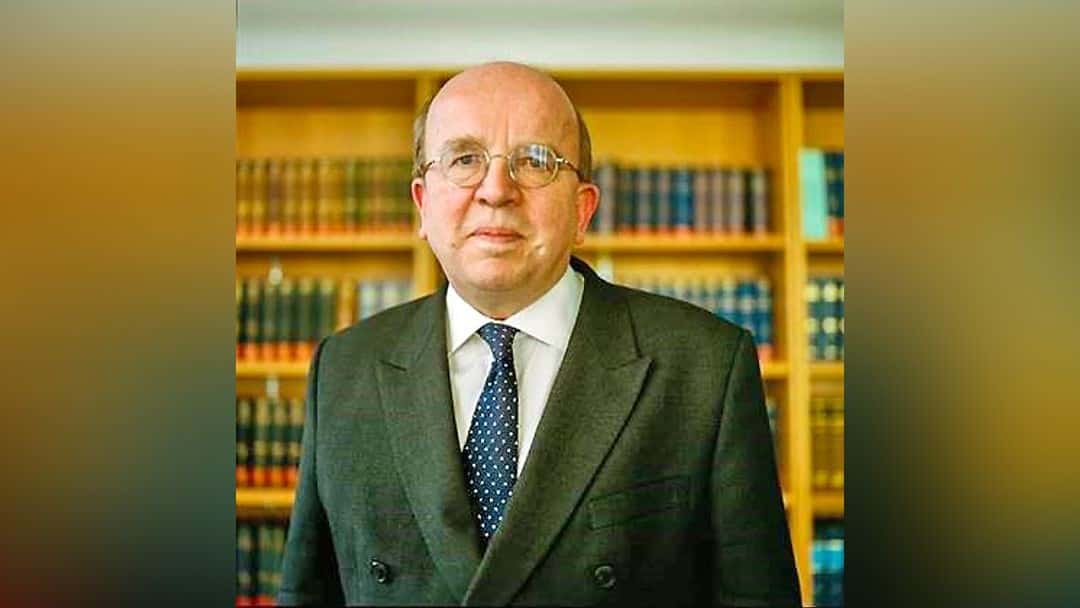
As Director of Service Prosecutions, I do not venture any opinion on the issue of whether cases involving sexual offending should be retained within the SJS: that is a policy decision. It is my job to ensure that whatever cases the Service Prosecuting Authority (SPA) are entrusted to prosecute are prosecuted fairly and rigorously. However, where the SPA has information that tends to disprove claims made by others or to put those claims into context, it seems right to me to share that material. Data can be tested in a way that any mere defence of the system, or indeed, any attack on the system, cannot. I have written this article to share information within my knowledge as the independent head of the SPA: to the extent I express any opinions, they are my own.
Independence and oversight
It is correct but incomplete to say that both the Service Police and the SPA operate within the military structure: both are part of the Ministry of Defence and people in uniform work in these organisations. This is not the full story. The Defence Serious Crime Command (DSCC), a Service Police force which functions like CID and which investigates sexual offending allegations, is independent of the Chain of Command. Similarly, I am fully independent of the Chain of Command. I am a civilian; a criminal barrister who is not and has never been in the military. I do not report to Defence Ministers but operate under the general superintendence of the Attorney General. This means that no military figure, however eminent, can tell me which cases I can and cannot prosecute; and if someone made the attempt to do so, I can call on the government’s chief law officer.
It should also be noted that cases which have been referred to the SPA predominantly remain in the SJS. The SPA can only accept criminal cases from Service Police forces, and these forces can transfer investigations to the civilian police at any point before referral to the SPA without asking for permission from any prosecutor. Once a case is with the SPA, protocols are in place to govern when consultation with civilian prosecuting authorities need to take place. Consultations with CPS must take place in all cases in England and Wales involving, among other offences, rape and sexual assault. Internal data held by the SPA demonstrates that there have been no cases in which the CPS and the SPA disagreed on jurisdiction: one inference from this might be that cases of sexual violence which remain with the SPA are correctly there, considering that a civilian prosecutor, who has no reason to defer to the SPA, has reached agreement with a SPA prosecutor.
Crucially, victims’ wishes about jurisdiction are respected in the overwhelming majority of cases and, by the time their case is referred to the SPA, most victims wish to stay within the SJS. A recent invitational inspection of the SPA by His Majesty’s Crown Prosecution Service Inspectorate (HMCPSI) noted that “victims' views are being obtained and given significant weight in the decision-making process, in some cases being determinative.” Since the jurisdiction protocol was implemented, there has been only one example where a victim’s case was sent to the jurisdiction they did not favour: this was a victim who wished their case to remain within the SJS. Their case had to be transferred to the Crown Court because of live proceedings there against the same defendant related to similar alleged offending.
One might question the extent to which a victim’s was making a free and informed choice in expressing an opinion about jurisdiction. I support the measures proposed in the new Armed Forces Act to answer that question, but it would be wrong simply to assume that victims were being ignored or in some way instructed to express a preference for the SJS. Beyond any lack of evidence to substantiate such a hypothesis, there are two important points that militate against this conclusion: firstly, there are obvious good reasons for victims to wish to remain in the SJS in terms of timeliness. Victims of rape in the SJS will typically have their cases heard within the year in which their case was charged and well within two years of making a complaint, as confirmed by a recent transparency release. As HMCPSI noted, “given the extent of the delay in the civilian system and the impact this can have on victims of serious sexual offences, we are of the view that the SJS may be the better jurisdiction in many cases.” The second point is that, as set out in the transparency release, victims who have their cases charged in the SJS tend to continue to support a prosecution and attend court.
I would suggest that given the high levels of engagement we have with victims and the cogent reasons for wanting one’s case tried quickly, there is every reason to believe that victims are making a real choice. After 19 years in the civilian system, I believe I can also say that victims receive a standard of bespoke, personal care from the Victim and Witness Care Unit in the SJS that compares very favourably to civilian units striving for excellence but often with too many clients and too few staff.
Charging decisions and scrutiny
The SPA actively seeks to assure that charging decisions are correct: all prosecutors in the SPA who make decisions have their work checked by a second lawyer, and I have introduced a mandatory third lawyer check from a specialist senior lawyer in rape cases where non-direction is contemplated. HMCPSI found that “the right people were prosecuted for the right offences in the correct venues. The SPA is delivering a good service.”
In relation to the acceptability of pleas to lesser offences, it should be remembered that sometimes prosecutors must make a choice between prosecuting a lesser offence and prosecuting no offence at all. There is however a clear need to monitor prosecutors and to ensure that they approach the issue of which offences to charge in a consistent and appropriate way: in 2025, a rape scrutiny panel, including independent panel members working with victims and survivors, considered this very issue of acceptability of pleas to lesser offences as part of our efforts to ensure that we are and remain accountable to our stakeholders. We are not perfect, but we are not complacent, and whether by inviting charities to sit on scrutiny panels or by voluntarily inviting an inspection by HMCPSI, we seek to be as transparent as possible.
In relation to rape conviction rates, there is no need to use historic data ranges when newer data is publicly available. It is also important to guard against the unintentional making of unreliable comparisons: one cannot safely compare statistics from two different systems which have been arrived at through two different methodologies. In the civilian system, there are a large number of cases, and conviction rates are often calculated via the ‘rape-flagging’ method: this is a means by which a conviction for any offence is counted as though it were a rape conviction in any flagged case. Data is often calculated more cautiously in relation to the proportionately very small number of rape cases in the SJS. The transparency data mentioned above retrospectively applied the rape flagging method of calculation to SPA data and demonstrated that recent conviction rates across both systems were roughly the same. It also made the important point that SPA data is more volatile given the very small number of cases relative to the criminal justice system.
Progress, challenges and accountability
It is sometimes a feature of critiques of the SJS that they tend to refer to older reports which were more negative and not to more recent, more positive reports such as the post-Lyons Henriques Report, which supported the SJS maintaining a jurisdiction to deal with sexual offending, or to either of the two HMCPSI reports now available which suggest that the SPA is delivering a good service. Similarly, positive changes which have been made in the last few years, such as the development of the independent DSCC or the presence of at least one (and in practice more often two) female members on all Court Martial Boards are rarely mentioned. I mention these features in a bid to tell the whole story, including the progress that has been made, alongside the difficulties that remain.
It is obvious that there is more to do to deliver justice for victims and survivors of sexual violence. Whilst the SJS does have some objective advantages in relation to an absence of a court backlog, there are also unique challenges. I do not intend anything written in this article to discount or diminish the trauma experienced by victims and survivors or to suggest that the concerns expressed on their behalf are expressed anything other than earnestly or that we take them anything less than seriously.
It remains a fact that the data we hold indicates that most victims and survivors actively wish to remain in the SJS. It should be remembered that if offending took place overseas, the Service Justice System may be the only feasible means of their seeking justice at all. It would surely be wrong for anyone contemplating making a report about sexual offending to be dissuaded from doing so because they had only heard one side of the story about the SJS.
The SPA welcomes scrutiny and challenge: we are accountable to the service community and to the wider public and it is only by identifying problems that we can solve them. In relation to those things which we can control and monitor ourselves, such as our decision-making, advocacy, expertise, and independence, we are continually working to improve on our performance. I actively welcome engagement with any firm or body representing victims and survivors who want to tell me how we could do better. We share the aim of promoting fair trials and improving the experience of the justice system for victims and survivors: part of that must be giving them the fullest information and empowering them to make informed decisions. Let us start a conversation about how we do that, rather than risk talking past each other.


-cropped-2ihtt8xx.jpg&w=256&q=75)


 Copyright & permissions